
Breakfast & Brunch
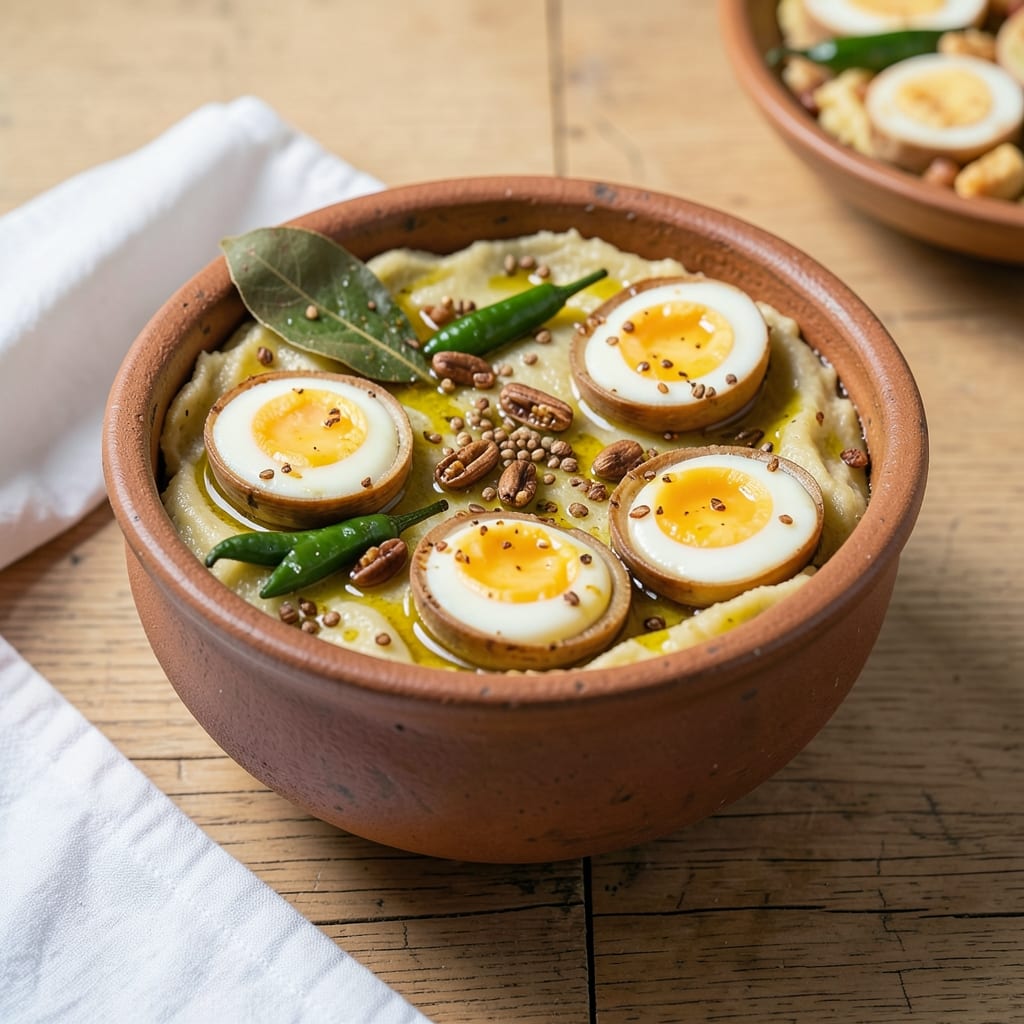
Egg bhapa transforms simple eggs into a luxurious Bengali breakfast—silky, fragrant, and infused with cardamom and mustard oil. This traditional steamed preparation preserves the egg's natural richness while adding layers of aromatic warmth that make every bite feel like a morning ritual. The clay pot (bhapa) creates the perfect gentle heat, ensuring eggs emerge tender and perfectly cooked.
The magic lies in the seasoning: mustard oil, green chilies, and whole spices like cardamom and cumin create a bold, savory profile that cuts through the eggs' creaminess. Unlike boiling, steaming keeps the yolks runny and centers intact, delivering that signature bhapa texture. This dish is as much about technique as it is about flavor—each step matters for achieving that restaurant-quality result at home.
What you'll end up with is a plate of eggs that are fragrant with cardamom, slightly spicy from mustard oil, and so tender they melt on your tongue. The aroma alone—warm spices mingling with the earthy clay—makes this more than just breakfast; it's a sensory experience. Serve with steamed rice or luchi for the full Bengali spread.
Perfect for brunch gatherings or a special weekend morning, this recipe brings a taste of Kolkata to your kitchen. The process is straightforward once you master the steaming technique, and the results are worth every minute of preparation. Let's get started!
Ingredients for egg bhapa
Eight essential ingredients transform ordinary eggs into fragrant, restaurant-quality egg bhapa.
| Ingredient | Amount | Notes |
|---|---|---|
| Large Eggs 🥚 | 8 whole | Freshly laid preferred for creaminess |
| Mustard Oil 🫒 | ½ cup | For authentic flavor profile |
| Green Chilies 🌶️ | 4 whole | Fresh, slit lengthwise for heat |
| Ground Cumin Seeds 🌿 | 1 tbsp | Toasted for aromatic depth |
| Cardamom Pods 🌱 | 6 whole | Lightly crushed for fragrance |
| Bay Leaves 🍃 | 2 whole | Fresh for subtle earthiness |
| Asafoetida (Hing) 🌶️ | ⅛ tsp | Essential for authentic taste |
| Salt 🧂 | 1 tsp | Diamond Crystal preferred |
| Water 💧 | 2 cups | For steaming preparation |
| Clay Pot (Bhapa) 🏺 | 1 whole | Traditional steaming vessel |
| Steamed White Rice 🍚 | 2 cups | For serving with eggs |
Mustard oil is the heart of this dish—look for cold-pressed varieties at Indian specialty stores like Patel Brothers or Apna Bazaar. The oil should be dark amber, not pale yellow, indicating higher quality. Fresh green chilies make all the difference; Mexican serranos or Thai bird's eye work well, but adjust quantity based on heat preference. Cardamom pods should be plump and aromatic—Malabar cardamom from Whole Foods is ideal. Asafoetida (hing) is non-negotiable for that signature umami depth found in authentic Bengali cooking. If unavailable, substitute with 1/4 tsp garlic powder, though results won't be identical. The clay pot (bhapa) can be found at Indian markets or online—essential for proper steaming—though a heatproof bowl works in a pinch.
No mustard oil? Sesame oil or neutral vegetable oil can substitute, though flavor will differ. For cardamom, ground cardamom at half the quantity works but lacks the whole-spice complexity. Fresh bay leaves can be swapped for 1/4 tsp dried bay leaf, though texture changes. The green chilies can be replaced with red chili powder (1/4 tsp) if fresh aren't available. For asafoetida, garlic powder or onion powder are distant but usable alternatives. The rice should be freshly cooked—jasmine or basmati work best, and steamed to perfection for ideal texture contrast. Eggs should be at room temperature for even cooking in the steam.
Mustard oil and whole spices keep for 6-12 months in a cool, dark place. Fresh green chilies last 1 week in the fridge, while cardamom pods stay potent for up to 2 years if sealed properly. The clay pot can be washed and reused indefinitely. Store cooked eggs in an airtight container for 2 days in the fridge—they reheat beautifully in the steamer. For meal prep, cook a double batch and freeze portions for up to 1 month. The aroma alone makes this dish worth the effort—plan to cook when you can enjoy the full sensory experience.
Why You'll Love This Recipe
- Here’s what sold me: those eggs reheat like a dream. Cold or warm, they’re perfect in toast, salads, or even a quick paratha. My lunchbox never looks the same twice.
- Steam-Perfect Texture: Honestly, the way these eggs turn out—soft, fluffy centers with just a hint of firmness—feels like a little victory every time. No overcooking, no rubbery yolks, just that just-right bite from the mustard oil’s smoky punch.
- Spice in a Snap: Between us, the cardamom and cumin seeds do all the heavy lifting. You’re not slaving over complex spice blends—just a quick toast in the oil, and suddenly, every bite tastes like a warm hug from your favorite chai stall.
- Leftover Reinvention: Here’s what sold me: those eggs reheat like a dream. Cold or warm, they’re perfect in toast, salads, or even a quick paratha. My lunchbox never looks the same twice.
Step-by-step instructions for steamed silky eggs with fragrant cardamom heat
Master this traditional technique for eggs that emerge tender, fragrant, and perfectly set.
Prepare the Steaming Base
Begin by placing the 2 whole bay leaves and 6 whole cardamom pods in the bottom of the clay pot (bhapa). Lightly crush the cardamom pods with the flat side of a knife to release their aromatic oils without breaking them open completely. This creates a fragrant base that will infuse the eggs during steaming.
Heat the 0.5 cup mustard oil in a small pan over low heat until it reaches 160°F - just warm enough to release the oil's signature flavor without burning. Remove from heat and stir in the 1 tablespoon ground cumin seeds and 0.125 teaspoon asafoetida (hing). Let this mixture sit for 5 minutes to allow the spices to bloom and develop their full aroma.
Season the Eggs
Crack the 8 whole large eggs into a bowl and whisk them gently but thoroughly until the yolks and whites are fully combined. The eggs should be well-mixed but still slightly thick - not too frothy. Add the warm spiced oil to the eggs and stir gently to distribute evenly throughout the mixture.
Add the 1 teaspoon salt and the 4 whole green chilies, slit lengthwise, to the egg mixture. The chilies should be distributed evenly but not chopped - their whole form adds visual appeal and controlled heat. Taste the mixture and adjust seasoning if needed, though the mustard oil and hing should provide ample flavor depth.
Assemble for Steaming
Pour the seasoned egg mixture into the prepared clay pot, spreading it evenly across the bottom. The eggs should form a thin, even layer about ¼-inch thick throughout the pot. This even distribution is crucial for consistent cooking and prevents some eggs from becoming overcooked while others remain underdone.
Place the clay pot into a steamer basket or directly over the 2 cups water in a large pot. The water should come no higher than halfway up the sides of the clay pot to prevent the eggs from absorbing excess moisture. Bring the water to a gentle simmer - you should see small bubbles forming at the bottom but not a rolling boil. This controlled heat is essential for achieving silky eggs.
Steam to Perfection
Cover the steamer with a tight-fitting lid and steam the eggs over medium-low heat for 12-15 minutes. The eggs are perfectly cooked when they have set completely but remain silky and slightly jiggly in the center - what we call "silky" in this preparation. You'll know they're ready when a toothpick inserted into the center comes out clean but the eggs still have a delicate, custard-like texture.
During the last 2 minutes of steaming, you'll notice the eggs begin to pull away slightly from the edges of the pot. This is normal and indicates they're reaching the perfect consistency. If you're unsure, cut a small section to check - the eggs should be fully set but still hold their shape when gently lifted with a spatula.
Serve Immediately
Remove the clay pot from the steamer and let it sit for 1 minute before carefully lifting out the egg cake. You may need to run a thin knife around the edges to help release it cleanly. The eggs should come out in one perfect, silky layer that holds together beautifully.
Cut the egg cake into 4 equal diamond-shaped pieces and serve immediately with the 2 cups steamed white rice. The contrast between the fragrant, slightly spiced eggs and the mild rice creates a perfect balance of flavors. The eggs should be warm throughout, with a delicate cardamom aroma that lingers on each bite and a subtle heat from the green chilies that enhances rather than overpowers the dish.
Pro Tips For Making Egg Bhapa
- CRACK EGGS GENTLY: Use a spoon to tap the thick end first—no need to smash them. Whole eggs steam better than broken yolks, and you’ll get those perfect, intact yolks that make egg bhapa shine.
- HEAT THE OIL LOW: Mustard oil burns fast. Warm it on the lowest flame until it just starts to shimmer—no smoking. Too hot, and the oil will turn bitter before the eggs even touch it.
- SALT THE WATER RIGHT: Add salt after the water boils, not before. The eggs need to steam first, and salted water too early makes them tough. A pinch of turmeric here also keeps the whites from turning gray.
- STEAM IN BATCHES: Three eggs at once? Too crowded. Cook two at a time so they float freely—this guarantees even cooking. Overloading means some eggs will turn rubbery while others stay runny.
Flavor customization for this recipe
Spice Level Control
Adjust the heat to your preference by modifying the green chilies. For mild heat, use 2 chilies and remove the seeds. For medium heat, keep 4 whole chilies as written. If you love spice, add 2 extra chilies or swap in 1 tsp red chili powder at the end. I find Thai bird's eye chilies add a fruity kick, while serrano peppers give a classic smoky heat. 🌶️
Cardamom Variations
Experiment with cardamom types for different flavor profiles. Green Malabar cardamom (most common) offers a floral, citrusy note. For a darker, earthier taste, try black cardamom—use 3 pods and toast them lightly before crushing. If you can't find whole pods, ½ tsp ground cardamom works but lacks the aromatic punch of whole spices. 🌱
Mustard Oil Alternatives
Mustard oil is non-negotiable for authenticity, but you can adapt if unavailable. Sesame oil (toasted) provides a nutty depth, though it lacks mustard's signature sharpness. For a neutral base, use vegetable oil and add ½ tsp mustard powder to mimic the flavor. If you're feeling adventurous, avocado oil (smoked) adds a modern twist while keeping the dish light. 🫒
Herb & Aroma Boosters
Elevate the dish with fresh herbs for brightness. Stir in 2 tbsp finely chopped cilantro or 1 tbsp fresh mint at the end for a refreshing contrast. For a toasted nutty note, sprinkle 1 tsp crushed peanuts or cashews on top before serving. I love adding 1 tsp grated ginger to the spiced oil for a zesty kick—it pairs beautifully with the cardamom. ✨
Sweet & Tangy Twist
Balance the richness with a touch of sweetness or tang. Drizzle 1 tsp honey or 1 tsp tamarind paste over the eggs before serving. For a citrusy finish, squeeze ½ lime or 1 tsp lemon juice on top. This works especially well if you prefer a milder spice profile—the acidity brightens every bite. 💛
Smoky Depth Addition
For a modern fusion twist, add a smoky element. Swap ½ tsp asafoetida with ½ tsp smoked paprika for a subtle charred note. Or, finish with 1 tsp liquid smoke (just a drop!) for a deep, campfire-like aroma. This works surprisingly well with the traditional flavors—just don’t overdo it! 🔥
Nutrition facts
Frequently asked questions about egg bhapa
Can I make egg bhapa without a clay pot (bhapa)?
A clay pot is traditional, but you can use a heatproof bowl or ramekin that fits in your steamer. The key is maintaining even heat distribution—place the bowl over 2 cups water and ensure the water doesn't touch the eggs. For best results, use a bowl with a tight lid to trap steam.
How do I know when the eggs are perfectly cooked?
Your eggs are done when they're fully set but still silky in the center—like a soft-boiled egg. Insert a toothpick: it should come out clean, but the eggs should still have a slight jiggle. The edges should pull away from the pot slightly in the last 2 minutes of steaming.
What's the secret to preventing the eggs from sticking?
Lightly grease the clay pot with mustard oil before adding the eggs, and spread the mixture evenly in a thin layer. For stubborn sticking, run a thin knife around the edges before lifting. Never overfill the pot—¼-inch thickness ensures even cooking and easy release.
Can I make egg bhapa ahead of time?
Fresh is best, but you can prepare the spiced oil mixture up to 2 days ahead and store it in the fridge. For fully cooked eggs, steam them, cool completely, then refrigerate in an airtight container for 1 day. Reheat gently in the steamer for 3-4 minutes—they'll lose some texture but still taste delicious.
What's the difference between egg bhapa and regular boiled eggs?
Egg bhapa is steamed, not boiled, which preserves the eggs' natural creaminess and runny yolks. The mustard oil, cardamom, and green chilies infuse the eggs with aromatic flavors, while the gentle heat keeps them tender. Regular boiled eggs are firmer and lack this fragrant, spiced profile.