
Breakfast & Brunch
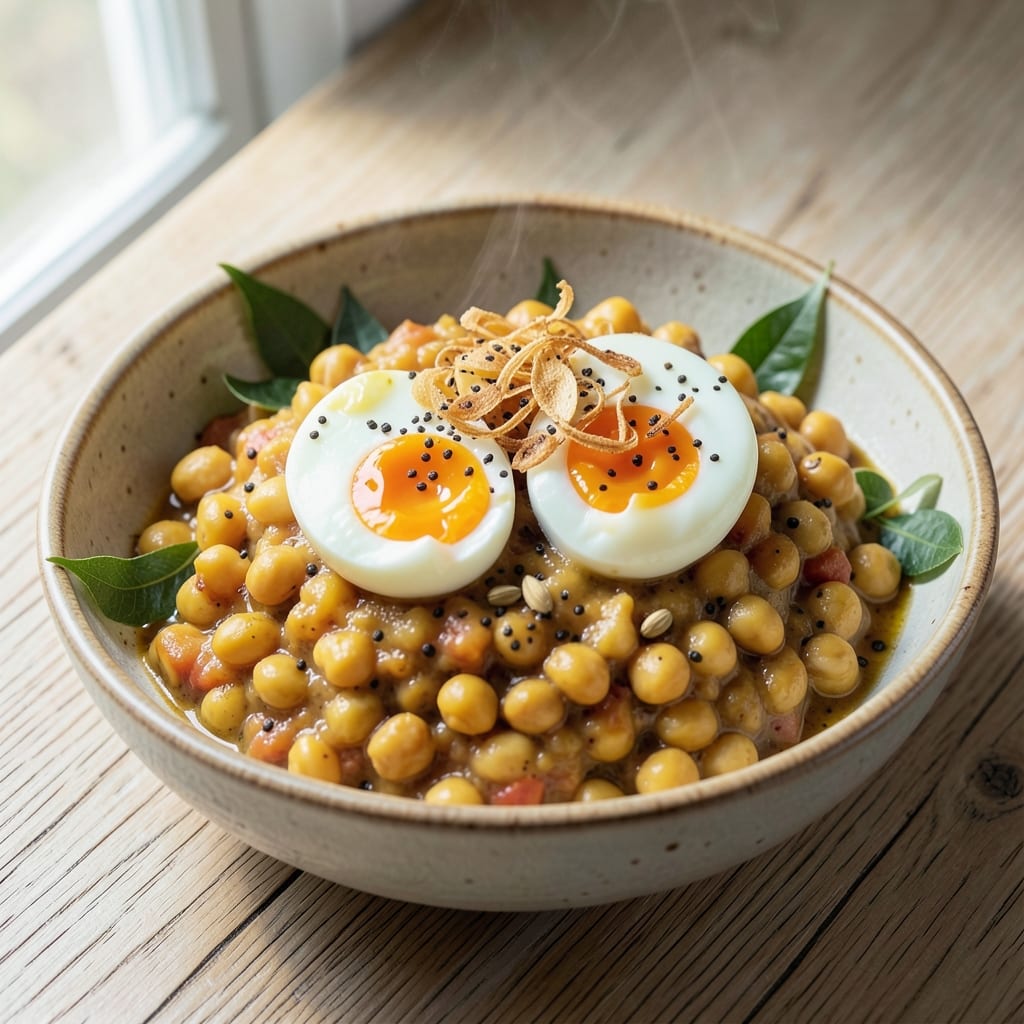
This Chana Dal with Egg recipe transforms a simple breakfast into a protein-packed powerhouse that balances spice, texture, and nutrition. The secret lies in slow-cooked chana dal—tender split chickpeas simmered with aromatic spices—paired with perfectly scrambled eggs that absorb the rich, savory flavors. I developed this recipe after realizing how often breakfast lacks both substance and excitement, and this dish delivers both in under 30 minutes.
The foundation is a well-tempered dal, where mustard seeds and curry leaves bloom in hot oil before the chickpeas join. As the dal simmers, the spices meld into a fragrant broth that coats every bite, while the eggs—scrambled just until creamy—soak up the flavors without overpowering them. This balance is what makes it restaurant-quality at home: hearty enough to satisfy but light enough for a quick morning meal.
What you’ll end up with is a bowl of golden chana dal studded with soft chickpeas, topped with fluffy eggs that glisten with garam masala and a final sprinkle of fresh cilantro. The dish is vegetarian-friendly, packed with plant-based protein, and versatile enough to pair with roti, steamed rice, or a crisp salad. It’s the kind of breakfast that turns a rushed morning into a moment of comfort.
Perfect for weekdays when you need both speed and nutrition, this recipe also scales effortlessly for meal prep. The flavors only deepen as it sits, making it ideal for overnight soaking or batch cooking. Let’s make this flavorful, protein-rich bowl your new go-to morning staple.
Ingredients for chana dal with egg
Four eggs and a handful of spices turn simple chickpeas into a restaurant-worthy breakfast bowl.
| Ingredient | Amount | Notes |
|---|---|---|
| Yellow Split Chickpeas (Chana Dal) 🌾 | 1 ½ cups | Dried, soaked overnight |
| Large Eggs 🥚 | 4 whole | Freshly cracked for fluffiness |
| Mustard Seeds 🌶️ | 1 tsp | Whole, for tempering |
| Curry Leaves 🌿 | 10 whole | Fresh, dried if unavailable |
| Asafoetida (Hing) 🧂 | ⅛ tsp | Pinch for aroma |
| Cumin Seeds 🌶️ | ½ tsp | Toasted lightly |
| Turmeric Powder 🧂 | ½ tsp | Freshly ground preferred |
| Red Chili Powder 🌶️ | 1 tsp | Adjust to taste |
| Garam Masala 🌿 | 1 tsp | Store-bought blend |
| Fresh Cilantro (Coriander) 🌿 | ¼ cup | Chopped, for garnish |
| Green Chilies 🌶️ | 2 whole | Slit lengthwise, optional |
| Vegetable Oil 🫒 | ¼ cup | For tempering |
| Salt 🧂 | 1 tsp | Adjust to taste |
| Water 💧 | 4 cups | For soaking and cooking |
The chickpeas are the star—yellow split chickpeas (not canned) give the best texture when soaked overnight. Whole Foods or Indian grocery stores carry them in bulk, but any grocery store has them in the canned aisle if you're in a pinch. Fresh curry leaves are ideal, but dried works at double the amount. For the mustard seeds, yellow or brown both work—just don’t skip them. They’re what makes the dal sing when they pop in the oil. The asafoetida (hing) might be hard to find, but a tiny pinch is all you need—it’s the secret behind that restaurant aroma.
No fresh cilantro? Dried oregano at half the amount works in a bind, though it won’t be the same. Green chilies optional, but if you love heat, add 1-2 extra. The garam masala is non-negotiable—store-bought blends like MDH or Everest are fine, but if you’ve got whole spices, toast and grind them for real depth. For the eggs, room temperature scrambles better. If you’re prepping ahead, cook the dal first and store it separately—reheat gently before adding the eggs. The oil should be hot enough to sizzle the mustard seeds but not smoke—medium heat is key.
This dal keeps for 3-4 days in the fridge, but the eggs should always be fresh. If making ahead, cook the dal first, then scramble the eggs fresh when serving. The flavors actually improve overnight—let it sit for 10 minutes after cooking so the spices meld. For meal prep, portion the dal into containers and store the eggs separately. Reheat the dal with a splash of water, then top with warm eggs. Garnish with cilantro right before eating—it’s the freshest part of the dish.
Why You'll Love This Recipe
- No-Soaking Needed: I keep a bag of chana dal in my pantry—just rinse, boil, and you’re golden. No overnight soaking, no waiting, just 15 minutes of simmering until those split peas turn tender and creamy. Honestly, that’s half the battle won before you even crack the eggs.
- Eggy Magic: The moment those runny yolks break into the tempered dal? Absolute perfection. The mustard seeds pop like tiny fireworks, the curry leaves release their earthy aroma, and that asafoetida (yes, the tiny pinch) lifts everything into something ridiculously flavorful. It’s the kind of dish where every bite feels like a hug.
- Office Lunch Hero: Between us, this is my go-to for meal prep—packs perfectly, stays warm for hours, and tastes just as good cold the next day. Toss it with rice or naan, and it’s a full meal that won’t make you dread your lunch break. (Yes, even on a Tuesday night.)
- Pantry Staple Power: Chana dal and eggs are both cheap, shelf-stable, and always in my fridge. A few spices, a splash of water, and—boom—you’ve got a protein-packed, fiber-rich meal for less than $2 a serving. It’s the kind of recipe that makes grocery day feel like a victory.
Step-by-step instructions for chana dal with egg
Here's how to make this protein-packed breakfast in under 30 minutes.
Soak and Cook the Chana Dal
Start by rinsing the 1.5 cups yellow split chickpeas thoroughly under cold water. Soak them overnight in 4 cups water—this ensures they cook evenly and quickly. In the morning, drain and rinse again to remove any excess starch.
Transfer the soaked chickpeas to a pressure cooker with 1 teaspoon salt, ½ teaspoon turmeric powder, and ½ teaspoon cumin seeds. Add 2 cups fresh water (enough to cover the chickpeas by about 1 inch). Seal the cooker and pressure cook for 4-5 whistles on medium heat until the chickpeas are tender but not mushy. If using a stovetop pot, simmer uncovered for 20-25 minutes until the water reduces and the chickpeas are fork-tender. The dal should be soft but still hold its shape when pressed.
Temper the Spices
While the chickpeas cook, heat ¼ cup vegetable oil in a small pan over medium heat. Add ½ teaspoon cumin seeds and let them sizzle for 30 seconds until they turn golden and fragrant. Add 1 teaspoon mustard seeds and 10 curry leaves, cooking for another 30 seconds until the mustard seeds pop and the curry leaves darken slightly.
Quickly stir in ¼ teaspoon asafoetida (hing)—this releases its distinct aroma instantly. Remove from heat and pour this spiced oil into the cooked chickpeas. Stir gently to combine, letting the flavors meld. This tempering step is what gives the dish its signature depth and aroma.
Season and Simmer the Dal
Return the chickpea mixture to low heat and stir in 1 teaspoon red chili powder and 1 teaspoon garam masala. Add 2 slit green chilies (if using) and simmer for 5-7 minutes, stirring occasionally. The dal should thicken slightly and develop a rich, spiced flavor. Taste and adjust the seasoning with additional salt if needed—this is where you can customize the heat and saltiness to your preference.
Once the dal reaches your desired consistency (it should coat the back of a spoon but still be loose enough to spoon), remove it from heat and cover to keep warm. The residual heat will continue cooking the spices gently, allowing their flavors to fully integrate.
Prepare the Eggs
While the dal simmers, crack the 4 large eggs into a bowl and lightly whisk them with a fork—just enough to combine the yolks and whites without creating bubbles. Heat a non-stick skillet over medium-low heat and add a thin layer of oil (about 1 teaspoon).
Pour the eggs into the skillet and let them cook undisturbed for 2-3 minutes until the edges start to set. Gently tilt the pan to let any uncooked egg flow to the edges, creating a runny yolk in the center. Once the whites are fully set but the yolks remain slightly runny, remove the eggs from the pan and set them aside on a warm plate.
Assemble and Serve
Divide the warm chana dal evenly among 4 bowls, creating a generous base. Place one egg on top of each serving, allowing the runny yolk to blend slightly with the dal when eaten. Garnish each bowl with ¼ cup chopped fresh cilantro and an extra sprinkle of red chili powder or garam masala for a pop of color and flavor.
Serve immediately while the eggs are still warm and the dal maintains its perfect texture. The contrast of the creamy eggs against the spiced chickpeas makes this dish incredibly satisfying. Pair with a side of toasted naan or roti for the ultimate protein-packed breakfast experience.
Pro Tips For Making Chana Dal With Egg
- Temper the Dal: After the mustard seeds pop, immediately add a splash of water—about 2 tablespoons—and let the pan cool for 10 seconds. This stops the seeds from burning and lets the hing bloom properly. I learned this the hard way when my eggs ended up tasting bitter from overcooked spices.
- Rinse the Dal: Give your chana dal a quick rinse before cooking—even if it’s labeled "washed." A 30-second soak in warm water removes excess starch, which keeps the dal from turning gluey when mixed with eggs later. Trust me, your eggs won’t slide off the plate like they do when the dal’s too thick.
- Crack Eggs Cold: Use eggs straight from the fridge—no pre-warming. Cold eggs hold their shape better when dropped into the hot dal, and they cook faster without turning rubbery. I was skeptical until I tried it; now I never skip this, even if it feels unnatural.
- Low Heat for Eggs: Simmer the dal on the lowest heat setting once the eggs are added. High heat scrambles them into a sad, dry mess. Stir gently every 30 seconds until just set—about 2-3 minutes total. This isn’t the prettiest method, but it’s the only way to get creamy, intact eggs in every bite.
Regional styles of this chana dal with egg
North Indian Style
In North India, this dish often includes a tadka (tempering) with ginger-garlic paste and a pinch of black salt (kala namak) for that signature tangy flavor. The eggs are typically scrambled lightly with a dash of lemon juice and served over the dal with a side of phulkas (whole wheat flatbreads). I love adding a handful of chopped onions to the dal while cooking for extra crunch. 🌶️
For an authentic touch, finish with a sprinkle of sev (crispy chickpea noodles) on top—it adds a delightful textural contrast. The North Indian version also often includes a yogurt-based raita on the side to balance the spice. Trust me, the combination of the tangy raita and the spiced dal is pure comfort food magic.
South Indian Twist
In South India, this dish gets a tempering boost with mustard seeds, curry leaves, and a pinch of asafoetida, but they often add grated coconut and green chilies for a tropical twist. The eggs are sometimes boiled and halved instead of scrambled, placed on top of the dal like a crown. I’ve found that adding a splash of coconut milk to the dal while simmering gives it a creamy richness that pairs beautifully with the eggs. 🥥
Another South Indian favorite is to serve this dish with steamed rice and a side of carrot-beet salad for a refreshing contrast. The coconut-milk-infused dal also pairs wonderfully with appam (fermented rice hoppers) for a unique breakfast experience. The combination of textures and flavors is what makes this version so special.
Punjabi Fusion
The Punjabi version of this dish is all about bold flavors and hearty textures. They often add a pinch of sugar to balance the spices and include a handful of chopped kasuri methi (dried fenugreek leaves) for an earthy depth. The eggs are scrambled with a little butter and sprinkled with chaat masala for a tangy kick. I’ve seen this dish served with makki ki roti (corn flatbread) for a rustic touch. 🌾
For an extra layer of flavor, some Punjabi cooks add a spoonful of yogurt to the dal while simmering, which gives it a smooth, velvety texture. The combination of the buttery eggs and the yogurt-infused dal is simply irresistible. It’s the kind of dish that feels like a warm hug on a chilly morning.
Bengali Adaptation
In Bengal, this dish is often lighter and more aromatic, with a focus on fresh herbs and delicate spices. They use mustard oil for tempering, which adds a distinct nutty flavor, and include a pinch of fennel seeds for a subtle sweetness. The eggs are usually scrambled with a bit of mustard paste and garnished with fresh coriander and a squeeze of lemon. I’ve found that adding a few shreds of coconut to the dal while cooking gives it a fragrant, tropical note. 🌿
This version is typically served with steamed rice and a side of boiled potatoes for a hearty meal. The mustard oil-infused dal has a depth of flavor that’s hard to match, and the lemony eggs add a bright, refreshing contrast. It’s a perfect example of how regional adaptations can transform a simple dish into something truly special.
Nutrition facts
Frequently asked questions
Can I use canned chickpeas instead of dried?
Yes, but with adjustments! Drain and rinse 2 cups canned chickpeas (about 15 oz drained weight), then simmer them in 1 cup water with the spices for 10-12 minutes until heated through. Canned chickpeas cook faster, so skip the overnight soak. For best texture, choose low-sodium chickpeas and add extra salt if needed.
How do I make this dish vegan?
Replace eggs with tofu or paneer for protein! Crumble 1 cup firm tofu or 1 cup cubed paneer into the dal during the final 5 minutes of simmering. For a vegan "egg" topping, mix 2 tbsp chickpea flour with ¼ cup water and ½ tsp turmeric, then pan-fry into small patties. Garnish with vegan yogurt or extra cilantro.
Why does my dal turn out too watery?
Watery dal usually means too much liquid or undercooked chickpeas. First, ensure you're using dried chickpeas that soaked properly—they should double in size. For cooking, use 2 cups water per 1.5 cups chickpeas (not 4 cups). If still watery, simmer uncovered for 5-7 extra minutes to reduce. For instant thickening, stir in 1 tbsp besan (gram flour) mixed with 2 tbsp water.
Can I make this ahead of time?
Cook the dal completely, then store it in the fridge for up to 4 days. Reheat gently with 2 tbsp water per cup of dal. For the eggs, either scramble fresh when serving or make a batch of mini egg fritters ahead (whisk eggs with 1 tbsp cornstarch, pan-fry in small patties, and store). Reheat fritters in a dry pan for 2 minutes before serving.
What's the secret to perfectly scrambled eggs?
Low and slow is key! Use a non-stick pan on low-medium heat with just enough oil to coat the bottom. Whisk eggs with a pinch of salt, then pour into the pan. Let them sit undisturbed for 1-2 minutes before gently folding with a spatula. Remove when still slightly runny—this creates the creamy texture. For extra flavor, stir in ½ tsp garam masala at the end.