
Desserts
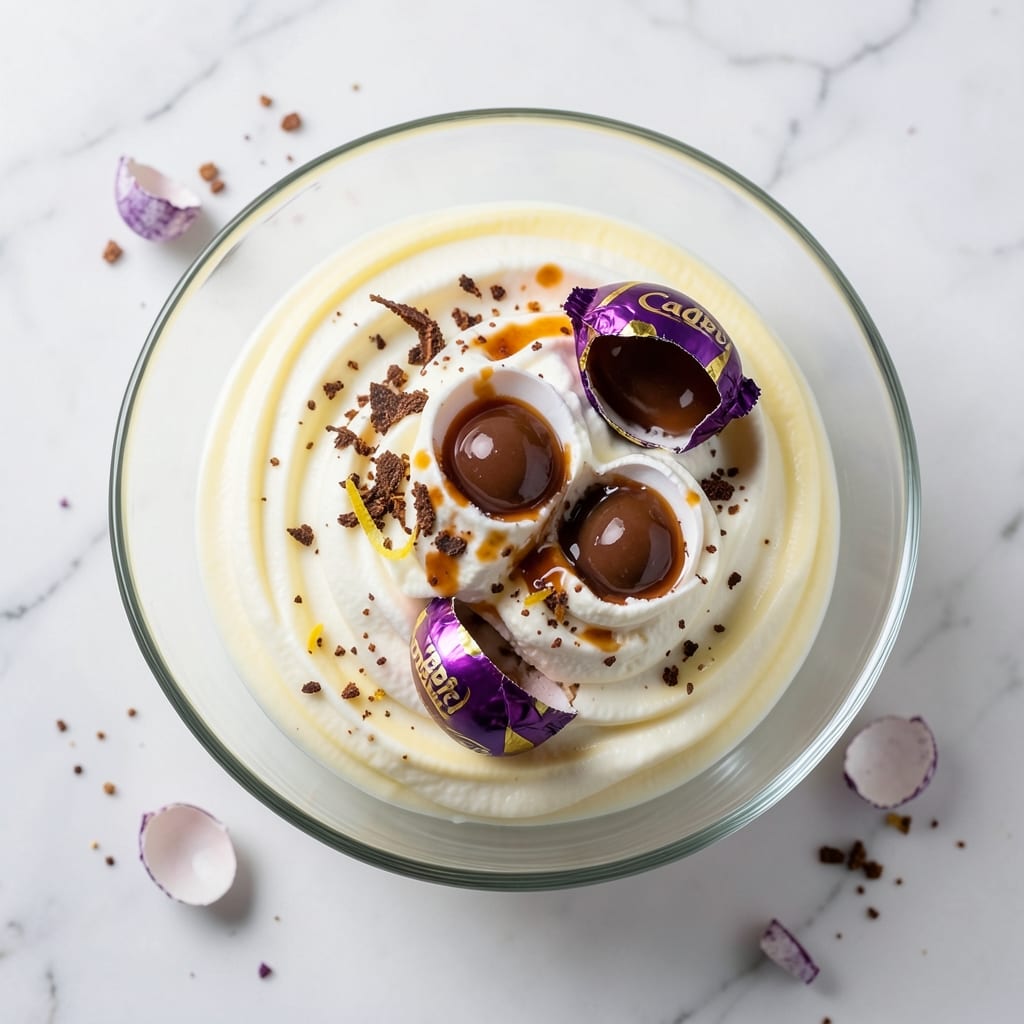
This Cadbury egg ice cream recipe transforms a nostalgic childhood treat into a luxurious dessert with velvety swirls and crunchy chocolate eggs throughout. The secret lies in a simple custard base that perfectly balances the rich, creamy texture with the sharp crunch of broken Cadbury eggs—no ice cream maker required. What makes this recipe special is how the eggs stay intact during churning, delivering that iconic snap with every bite.
The process is straightforward: cook a smooth vanilla custard, then fold in broken Cadbury eggs and let it freeze. A foolproof no-churn method ensures creamy results without graininess, while the eggs add a playful surprise at every spoonful. For extra indulgence, consider adding crushed biscuits or caramel swirls to complement the chocolate.
By the time you're done, you'll have a dessert that's equal parts nostalgic and sophisticated—rich, creamy, and crunchy all at once. The Cadbury eggs remain perfectly intact, offering that satisfying contrast with every bite. This recipe is perfect for special occasions or when you want to impress guests with a dessert that feels both familiar and extraordinary.
Store leftovers in an airtight container for up to a week, though it won't last that long. The texture remains smooth and the eggs stay crunchy, making it ideal for meal prep or last-minute entertaining. Let's get started on creating this decadent treat!
Ingredients for cadbury egg ice cream
Rich custard meets nostalgic crunch—just twelve ingredients transform simple pantry staples into luxurious dessert.
| Ingredient | Amount | Notes |
|---|---|---|
| Whole Milk 🥛 | 4 cups | Full-fat for creaminess |
| Heavy Whipping Cream 🥛 | 1 cup | Full-fat for stability |
| Granulated Sugar 🍚 | 1 cup | White or brown preferred |
| Vanilla Extract 🌿 | 2 tsp | Pure, high-quality extract |
| Unflavored Gelatin 🍬 | 1 tbsp | For texture stability |
| Cadbury Eggs 🍫 | 12 whole | Mini eggs, crushed lightly |
| Unsalted Butter 🧈 | ½ cup | Cold, cubed for folding |
| Dark Chocolate Chips 🍫 | ½ cup | Optional for extra richness |
| Salt 🧂 | ¼ tsp | Fine sea salt preferred |
| Crushed Digestive Biscuits 🍪 | ½ cup | For crunchy base layer |
| Caramel Sauce 🍯 | ¼ cup | Store-bought or homemade |
The Cadbury eggs are non-negotiable for that signature crunch. Mini eggs work best—they stay intact during freezing, delivering that satisfying snap. Look for the classic chocolate-coated eggs at grocery stores during Easter season or specialty candy shops year-round. If you can't find them, high-quality chocolate eggs from brands like Guylian or Lindt are excellent substitutes. Store them in an airtight container to preserve freshness, though they'll keep their crunch better when frozen in the ice cream. For the custard base, full-fat dairy is essential—it prevents iciness and ensures a velvety texture. If you're using powdered milk, opt for the whole milk variety to maintain richness.
No Cadbury eggs? Crushed chocolate-covered biscuits or freeze-dried chocolate bits can mimic the crunch, though nothing beats the authentic texture. The gelatin is crucial for preventing graininess—unflavored powdered gelatin dissolves cleanly, while pre-made sheets may leave a slight chewiness. For a dairy-free option, coconut cream can replace the heavy cream, though the texture will be slightly lighter. The vanilla extract should be pure—imitation extracts lack the depth needed to complement the chocolate. If you're adding chocolate chips, use high-cocoa content dark chocolate (70% or higher) to avoid overpowering the Cadbury flavor. The crushed biscuits at the bottom? Digestives or graham crackers work best—their mild sweetness balances the richness without competing.
This ice cream is best enjoyed immediately, but it keeps beautifully for up to 1 week in an airtight container. For longer storage, freeze in portions—it reheats beautifully when thawed in the fridge for 1-2 hours. To prevent freezer burn, wrap tightly in plastic wrap before sealing the container. The Cadbury eggs stay crunchy for 3-4 days in the freezer, though their texture softens slightly over time. For serving, let the ice cream sit at room temperature for 5-10 minutes before scooping to maintain its creamy consistency. Leftovers can be reheated gently in the microwave for 15-20 seconds to restore smoothness, though the eggs may lose some crunch—worth it for a quick treat.
Why You'll Love This Recipe
- No-Churn Magic: I swear by this recipe because it skips the ice cream maker entirely. Just heat, whip, and freeze—no fancy equipment, no waiting for an ice cream base to churn. The gelatin gives it that perfect creamy texture without a single scoop of effort.
- Easter Nostalgia Fix: That first bite of Cadbury egg flavor—rich, chocolatey, with just a hint of vanilla—takes me straight back to childhood. Honestly, it’s the kind of dessert that makes you feel like you’re indulging in a treat, not just eating ice cream.
- Party Crowd-Pleaser: Between us, this is the dessert I always bring to gatherings because it’s foolproof and universally loved. Serve it in little cups with crushed Cadbury eggs on top, and you’ll have people asking for seconds before the first scoop’s even gone.
- Leftovers That Taste Better: I make a big batch because the flavor actually improves after a day or two in the freezer. It’s my secret weapon for late-night cravings—no one will guess it’s been sitting there for days. Plus, the ingredients are basic and cheap, so you’re not breaking the bank for dessert.
Step-by-step instructions for Cadbury egg ice cream
This method delivers perfectly smooth ice cream with signature Cadbury egg crunch and swirls.
Bloom and Dissolve the Gelatin
In a small bowl, sprinkle the 1 tablespoon unflavored gelatin evenly over ¼ cup cold water from the ingredients. Let it bloom for 5 minutes until it thickens noticeably. This activation step is crucial—gelatin won't set properly if you skip it.
Once bloomed, transfer the bowl to a microwave-safe container and heat in 20-second bursts until completely dissolved. The mixture should be clear and fully liquid with no remaining granules. Let it cool slightly to room temperature before using—this prevents the gelatin from setting prematurely in the ice cream base.
Prepare the Ice Cream Base
In a medium saucepan, combine the 4 cups whole milk, 1 cup heavy whipping cream, 1 cup granulated sugar, and 0.25 teaspoon salt. Heat over medium heat until the mixture reaches 180°F, stirring constantly to dissolve the sugar completely. The mixture should be hot but not boiling.
Remove from heat and stir in the dissolved gelatin until fully incorporated. Let the mixture cool to 100°F before adding the 2 teaspoons vanilla extract. This temperature check ensures the gelatin remains active while preventing the dairy from curdling. The base should now be smooth and slightly thicker than milk.
Chill and Incorporate the Butter
Transfer the cooled base to a clean bowl and refrigerate for 2 hours until completely chilled and slightly thickened. This step develops the proper texture for churning. While it chills, prepare the Cadbury eggs by gently crushing them with a rolling pin until they resemble fine crumbs—just enough to break the shells without turning them into powder.
Once chilled, add the 0.5 cup cold unsalted butter, cut into small cubes, to the base. Mix gently until fully incorporated. The butter should melt completely, creating a velvety texture. This is where the ice cream's rich mouthfeel comes from—don't rush this step or you'll end up with icy butter pockets.
Churn the Ice Cream
Pour the mixture into an ice cream maker and churn according to the manufacturer's instructions, typically 20-25 minutes, until it reaches a thick, creamy consistency that holds its shape when scooped. The ice cream should look smooth with no visible liquid—this indicates proper freezing.
During the last 2 minutes of churning, add the crushed Cadbury eggs, 0.5 cup dark chocolate chips, and 0.5 cup crushed digestive biscuits. Fold these in gently to distribute them evenly. The eggs should remain distinct pieces for texture, while the chocolate and biscuits create pockets of crunch throughout.
Freeze and Swirl the Finishing Touches
Transfer the churned ice cream to a loaf pan and freeze for 4 hours until completely firm. Before serving, remove from the freezer and let sit at room temperature for 5 minutes to soften slightly. This makes it easier to create the signature swirls.
Using a knife, gently swirl the ice cream in the pan, creating a marbled effect. Drizzle the 0.25 cup caramel sauce over the top in zigzag patterns and return to the freezer for 30 minutes to set. Serve immediately for the perfect balance of creamy, crunchy, and caramelized textures.
Pro Tips For Making Cadbury Egg Ice Cream
- Bloom the gelatin properly: The recipe fails if you skip this—sprinkle the gelatin over cold milk and let it sit for 10 minutes before heating. I learned this the hard way when my ice cream turned grainy because I rushed the blooming. No shortcut here; patience prevents texture disasters.
- Use a candy thermometer: When melting the chocolate for the Cadbury egg swirls, aim for 110°F (43°C)—not boiling. I used to eyeball it and either burned the chocolate or ended up with clumpy streaks. A cheap thermometer makes this foolproof.
- Chill the base overnight: This isn’t just about freezing time—chilling the custard base (milk, cream, sugar, vanilla) for at least 4 hours before churning means your ice cream will be creamier, not icy. I tried skipping it once; the result was sad, grainy, and required a spoon to eat.
- Strain the melted chocolate: No matter how good your chocolate, straining it through a fine-mesh sieve removes any lumps and gives you silky swirls. I was lazy once and got chewy bits in my ice cream—now I strain every time, even with high-quality chocolate. Takes 30 seconds, saves hours of disappointment.
Common mistakes when making great cadbury egg ice cream
Over-Churning Risks
I’ve seen many home cooks accidentally over-churn their ice cream, turning it into a grainy, icy mess. The key is stopping when the mixture reaches a thick, creamy consistency that holds its shape when scooped—usually after 20-25 minutes in an ice cream maker. If you continue churning past this point, the ice crystals will form, ruining the silky texture. To avoid this, keep an eye on the ice cream maker’s time indicator and taste-test a small spoonful when it starts to look thick. 🌡️
Crushing Eggs Too Finely
The Cadbury eggs are the star of this dessert, so crushing them properly is essential. If you grind them into fine powder, you’ll lose that satisfying crunch. Use a rolling pin to gently break them into pebble-sized pieces—just enough to crack the shells without turning them into dust. I like to press them lightly in a plastic bag for even distribution. If you accidentally over-crush, sprinkle in a few whole eggs before freezing to restore texture.
Skipping the Gelatin Step
Gelatin is what keeps this ice cream smooth and prevents iciness, so don’t skip it! If you forget to bloom the gelatin properly or add it to hot liquid, it won’t dissolve fully, leading to a chewy or grainy texture. Always bloom the 1 tablespoon gelatin in ¼ cup cold water for 5 minutes before dissolving it gently in warm liquid. Pro tip: Let the dissolved gelatin cool to room temperature before mixing it into the custard base to maintain its effectiveness.
Not Chilling the Base
A properly chilled ice cream base is non-negotiable for creamy results. If you skip the 2-hour refrigeration step, the butter won’t incorporate smoothly, and the final texture will be icy or buttery. Place the base in the fridge until it’s thickened but still pourable—this ensures the gelatin activates fully and the butter melts evenly. I like to check the consistency by dipping a spoon in; it should coat the back smoothly without dripping.
Adding Eggs Too Early
If you add the crushed Cadbury eggs too soon during churning, they’ll get overworked and turn into a paste, losing their crunch. Always fold them in during the last 2 minutes of churning to preserve their texture. The same goes for the chocolate chips and crushed biscuits—adding them late ensures they stay distinct and crunchy. Think of it like folding in delicate ingredients in a cake batter: timing is everything for texture.
Freezing Too Quickly
Rushing the freezing process can create large ice crystals, making the ice cream grainy. After churning, transfer the mixture to a loaf pan and freeze for 4 hours to let it set gradually. If you’re in a hurry, place the pan in the freezer on a stable surface—vibrations from an uneven freezer shelf can disrupt the texture. For extra smoothness, let the ice cream sit at room temperature for 5 minutes before swirling the caramel sauce to avoid cracking the surface.
Nutrition facts
Frequently asked questions
Can I make this Cadbury egg ice cream without an ice cream maker?
Yes! For a no-churn version, simply mix the chilled custard base with 1 cup whipped heavy cream (whipped to stiff peaks) and fold in the crushed Cadbury eggs. Freeze in an airtight container for 6 hours, stirring once after 2 hours to break up ice crystals. The texture will be slightly softer but still delicious.
How do I store leftovers to keep the eggs crunchy?
Wrap the ice cream tightly in plastic wrap (directly touching the surface), then place in an airtight container. Store in the freezer for up to 1 week. For best crunch, avoid refreezing thawed portions. If you must reheat, microwave for 15 seconds—the eggs will soften slightly but remain edible.
What if I can't find Cadbury eggs? What's the best substitute?
Use crushed chocolate-covered biscuits (like Oreos) or freeze-dried chocolate bits for crunch. For authenticity, try Guylian or Lindt chocolate eggs—break them into similar-sized pieces. If using store-bought chocolate eggs, check for dairy content if avoiding lactose. The texture won't be identical, but it'll still add great flavor!
Can I make this recipe dairy-free?
Yes, but with adjustments. Replace the milk and cream with coconut cream (chilled overnight) and use agar-agar instead of gelatin (follow package instructions). For the Cadbury eggs, ensure they're dairy-free or use vegan chocolate eggs. The texture will be lighter, but still creamy. The caramel sauce should also be dairy-free.
Why did my ice cream turn icy after freezing?
This usually happens from one of three issues: over-churning (stop when thick but scoopable), not chilling the base enough (must be 2 hours in fridge), or adding liquid ingredients late (like caramel sauce after freezing). For a quick fix, let the ice cream sit at room temperature for 5 minutes before serving to soften ice crystals slightly.