
Desserts
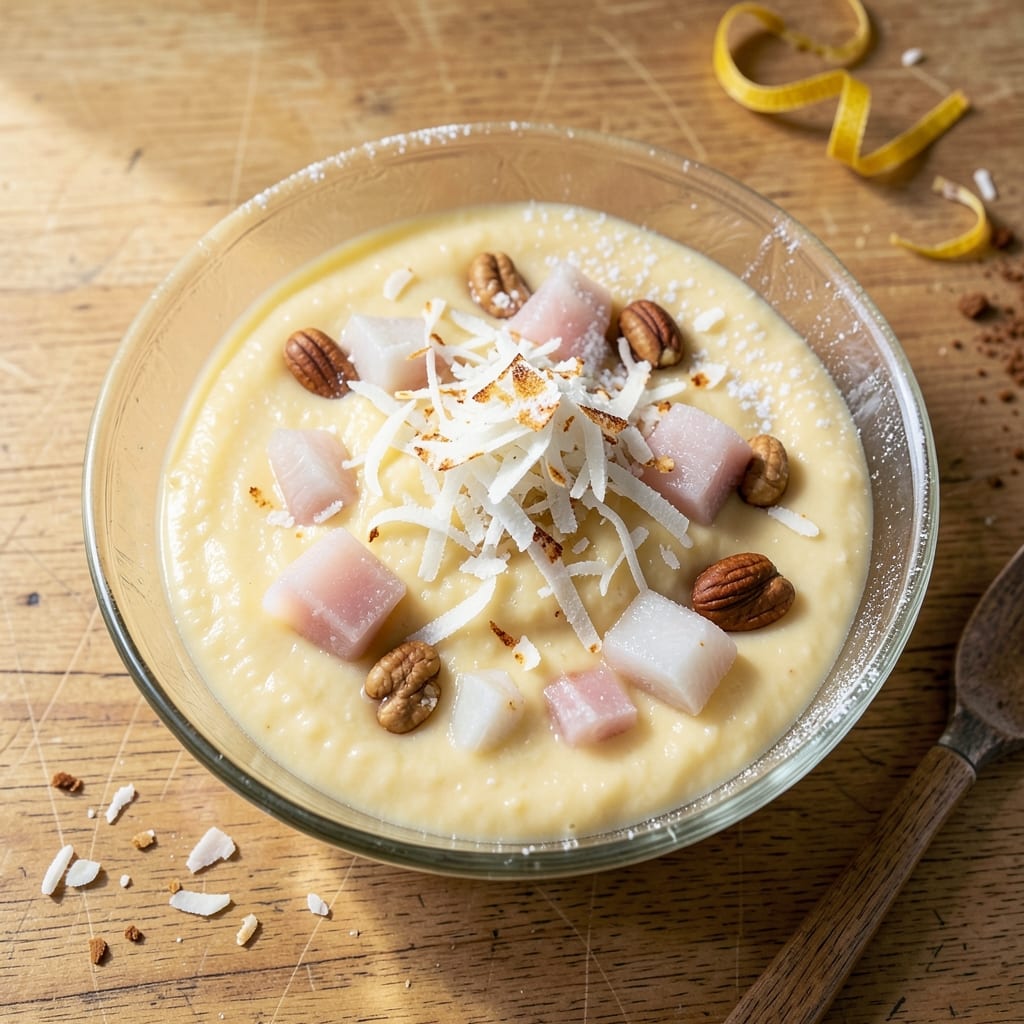
This buko egg pie recipe delivers the creamy, dreamy texture of Filipino comfort food in every bite—silky coconut custard layered with sweet buko and crunchy nuts. The secret lies in the slow-baked custard that stays velvety smooth while the coconut and fruit absorb its richness, creating a dessert that’s both elegant and nostalgic. I’ve perfected this version to balance traditional techniques with foolproof execution, so you get restaurant-quality results at home.
The custard base is where the magic happens—a blend of eggs, coconut milk, and sugar that steams gently to create that signature silky consistency. Layered with shredded coconut (buko), sweetened jackfruit or young coconut, and toasted nuts, it transforms into a dessert that’s visually stunning and irresistibly comforting. What makes this recipe special is how it captures the essence of Filipino desserts without requiring special equipment—just patience and attention to detail.
By the time it emerges from the oven, you’ll have a golden custard pie with a delicate crust, tender buko pieces, and a top layer of caramelized coconut and nuts. The aroma alone will transport you to a Filipino bakery, but the first bite delivers that perfect harmony of textures—creamy custard, chewy coconut, and crunchy nuts. It’s vegetarian, naturally sweetened, and perfect for special occasions or when you crave a taste of home.
Serve it warm or at room temperature for the best experience, and don’t forget the dusting of powdered sugar or a drizzle of coconut cream. This pie is as beautiful as it is delicious, making it ideal for gatherings or when you want to impress with a dessert that feels like a hug. Let’s get started!
Ingredients for buko egg pie
Six ingredients create the custard, plus four more for the layers—simple but magical.
| Ingredient | Amount | Notes |
|---|---|---|
| Large Eggs 🥚 | 8 whole | Room temperature for even baking |
| Coconut Milk (Full-Fat) 🥥 | 1 ½ cups | Canned, well-shaken before using |
| Granulated Sugar 🍚 | 1 ½ cups | White or light brown preferred |
| Shredded Coconut (Buko) 🥥 | 2 cups | Fresh or frozen, thawed completely |
| Sweetened Young Coconut (Jackfruit) 🍈 | 1 ½ cups | Canned, drained and chopped |
| Toasted Mixed Nuts 🌰 | 1 cup | Pecans or macadamias preferred |
| All-Purpose Flour 🌾 | ½ cup | For pie crust (or store-bought) |
| Unsalted Butter 🧈 | ½ cup | Cold, cubed for crust |
| Vanilla Extract 🌸 | 1 tbsp | Pure, high-quality preferred |
| Cornstarch 🌾 | 2 tbsp | For custard thickness |
| Salt 🧂 | ½ tsp | Fine sea salt |
| Powdered Sugar 🍚 | ¼ cup | For dusting, plus extra |
The eggs are the heart of this pie, so use large, fresh ones—they’ll give you that signature silky texture. For the coconut milk, full-fat canned works best—it’s richer and gives that authentic Filipino flavor. I grab mine from Asian grocery stores (like 99 Ranch or H Mart), but any brand in a cartoned can works too. The buko? Fresh is ideal, but frozen is fine—just thaw it completely first. If you’re using canned jackfruit, drain and rinse it well to remove excess syrup, or the custard might get too sweet. Toast your nuts yourself (10 minutes at 350°F) for maximum crunch—Trader Joe’s sells pre-toasted pecans if you’re short on time.
No fresh buko? Substitute with canned young coconut—just drain it well. Short on eggs? Use aquafaba (chickpea brine) at half the amount for a vegan version (though texture will differ). The pie crust can be store-bought if you’re in a hurry, but homemade makes it feel special. For the sugar, light brown adds subtle depth, but white works perfectly fine. If you’re making this ahead, assemble the pie but don’t bake it—it keeps for 2 days in the fridge, unbaked. The custard mixture can be prepped 1 day ahead and stored in the fridge, covered tightly.
This pie is best served warm, straight from the oven, but it’s just as delicious at room temperature. Store leftovers covered in the fridge for up to 3 days, though it’s so good, it rarely lasts that long. For make-ahead gifting, bake the pie, cool it completely, then wrap it tightly in plastic wrap. It’ll keep for up to 1 week at room temperature. The custard layer freezes beautifully too—just reheat gently in the microwave or oven. And trust me, everyone will ask for seconds—make an extra pie if you can!
Why You'll Love This Recipe
- No-Bake Magic: I swear by this recipe when I’m too tired to preheat the oven. Just whisk eggs with coconut milk, fold in buko and young coconut, then bake—no fuss, no stress, and zero cleanup beyond a single pie dish.
- Creamy Chew Combo: That first bite? The tender egg custard hugs the chewy buko and sweet young coconut like it was made for each other. Honestly, the texture alone makes me forget about "healthy eating" for a second.
- Party in a Pie: Between us, this is my go-to for potlucks or family gatherings. It’s easy to double, fits in any pie dish, and even my picky uncle asks for seconds. (Yes, even on a Tuesday night.)
- Budget Bliss: Full-fat coconut milk and eggs stretch far, and the buko adds that tropical flair without breaking the bank. Leftovers? They’re just as good cold the next day—perfect for lunchboxes or a lazy afternoon snack.
Step-by-step instructions for buko egg pie
Here's how to create that dreamy coconut custard with perfect texture and flavor.
Prepare the Custard Filling
In a large mixing bowl, whisk together the 8 whole Large Eggs until the yolks and whites are fully combined. Gradually add the 1.5 cups Granulated Sugar while whisking constantly until the mixture becomes pale and slightly thickened. This step creates the perfect base for that signature silky texture.
In a separate bowl, combine the 1.5 cups Coconut Milk (Full-Fat), 2 tbsp Cornstarch, and 0.5 tsp Salt. Whisk vigorously until smooth, then gradually pour this mixture into the egg mixture while continuing to whisk. Add the 1 tbsp Vanilla Extract and mix well. The custard should be thick but still pourable - if it's too thick, add 1-2 tablespoons of water to reach the right consistency.
Layer the Fruit and Nuts
In your pie dish (9-inch preferred), spread a thin layer of the custard mixture to coat the bottom. Then alternate layers of 2 cups Shredded Coconut (Buko), 1.5 cups Sweetened Young Coconut (Jackfruit), and 1 cup Toasted Mixed Nuts. I like to distribute them evenly so each slice gets that perfect mix of textures and flavors. The nuts should be sprinkled throughout rather than concentrated in one area.
After the final layer of nuts, pour the remaining custard mixture over the top, making sure it covers all the fruit and nuts completely. The custard should reach about halfway up the sides of your pie dish. This layering creates that signature buko pie texture where every bite has both creamy custard and chewy fruit.
Prepare and Bake the Crust
For the crust, pulse the 0.5 cup All-Purpose Flour and 0.5 cup Unsalted Butter (cold, cubed) in a food processor until it resembles coarse crumbs. Press this mixture firmly into the bottom of a second pie dish (same size as your first) to create a crust. I use my fingers to press it down evenly, making sure there are no gaps.
Place the custard-filled pie dish on top of the crust-lined dish. This creates a double-layered effect that prevents leaks during baking. Bake both dishes together in a 350°F oven for 50-55 minutes, until the custard is set but still slightly jiggly in the center. You'll know it's done when the edges are golden and the center has a slight wobble - it should look like a perfectly set custard but not completely firm.
Chill and Serve
Remove the pie from the oven and let it cool for 10 minutes before carefully transferring it to the refrigerator to chill for at least 4 hours (overnight is even better). This chilling time is crucial - it allows the custard to fully set and develop its signature silky texture. Don't skip this step or your pie might be too soft.
Before serving, dust the top generously with 0.25 cup Powdered Sugar for that classic presentation. The contrast between the creamy custard, chewy coconut, and crunchy nuts makes every bite unforgettable. Serve chilled with a dollop of whipped cream or a scoop of vanilla ice cream for the ultimate dessert experience.
Pro Tips For Making Buko Egg Pie
- Whisk Eggs Cold: Crack eggs straight from the fridge into a chilled bowl—this keeps them from scrambling into a sad, rubbery mess. I learned this the hard way after making a custard so thick it looked like glue, and now my pie always sets smooth as silk.
- Drain Jackfruit Dry: Sweetened young coconut (jackfruit) hides more water than you’d think. After draining the can, pat it thoroughly with paper towels—extra moisture turns your pie into a soggy pudding. (Yes, even if you’re impatient like me.)
- Simmer, Don’t Boil: The moment your custard starts to bubble, drop the heat to a whisper. Boiling eggs curdles them faster than you can say "buko," and you’ll end up with a grainy texture no one wants. A gentle simmer keeps the custard creamy and the buko intact.
- Toast Coconut First: Dry-toast your shredded coconut in a pan for 2–3 minutes until golden—it adds a nutty depth that raw buko just can’t match. Skip this, and your pie tastes like dessert should but misses that little something special. (Your future self will notice.)
Make-ahead tips for this recipe
Prep Ahead Strategy
Assemble the entire pie—layers and custard—up to 24 hours before baking. Store it uncovered in the fridge to prevent condensation from making the crust soggy. I like to prep mine the night before so it bakes fresh in the morning, filling my kitchen with that irresistible coconut aroma. 🥥
Custard Prep
Make the custard mixture 1 day ahead and refrigerate it in an airtight container. When ready to bake, simply layer it with the buko and nuts. This saves you time on baking day and ensures the custard is perfectly chilled before going into the oven. Just whisk it briefly to recombine before using.
Freezer-Friendly
For long-term storage, bake the pie as directed, then cool it completely. Wrap tightly in plastic wrap and store in the freezer for up to 3 months. To serve, thaw overnight in the fridge and reheat gently in the oven at 300°F for 15-20 minutes until warmed through. The texture stays creamy, not rubbery!
Gifting Ready
Bake the pie, let it cool completely, then wrap it in plastic wrap followed by a decorative box. It stays fresh at room temperature for up to 1 week, making it perfect for holidays or potlucks. I always make an extra pie when hosting—it disappears fast! 🎁
Crust Shortcut
Use a store-bought pie crust if you're short on time. Press it into a 9-inch pie dish, then place your custard-filled dish on top. Bake as directed, but reduce the time by 5-10 minutes since the crust won’t need to bake through. This trick saves 30 minutes of prep without sacrificing flavor.
Make-Ahead Serving
Bake the pie a day ahead, then store it covered in the fridge. Reheat individual slices in the microwave for 20-30 seconds or warm the whole pie in the oven at 325°F for 10 minutes. The custard reheats beautifully, and the buko stays tender. Perfect for busy weekends or last-minute dessert needs!
Nutrition facts
Frequently asked questions
Can I make buko egg pie without a crust?
This recipe works beautifully as a coconut custard tart without a crust. Simply pour the custard mixture into a greased baking dish, layer with buko and nuts, then bake until set. The texture will be lighter and more jiggly—like a cross between flan and pie. For extra flair, top with toasted coconut flakes before baking.
What's the best way to store leftover buko egg pie?
Store leftovers in an airtight container in the fridge for up to 4 days. The custard stays creamy when reheated gently—warm slices in the microwave for 15-20 seconds or bake the whole pie at 325°F for 10 minutes. For longer storage, freeze baked slices for up to 3 months. Thaw overnight in the fridge before reheating.
Can I substitute canned coconut milk for fresh?
Yes, but with one key adjustment: use full-fat canned coconut milk (like Goya or Thai Kitchen brands) for authentic flavor. Fresh coconut milk is creamier, but canned works perfectly—just shake the can well before measuring. For extra richness, add 1 tablespoon of coconut cream to the custard mixture. Avoid light coconut milk; it won't give the same texture.
Why did my custard turn out grainy?
Grainy custard usually means the eggs weren't beaten enough or the mixture was overheated. Next time, whisk the eggs and sugar until completely smooth and pale, then temper the custard by gradually adding the hot coconut mixture while whisking constantly. Also, ensure your oven isn't too hot—350°F is ideal. If it happens, blend the custard briefly before baking to smooth it out.
How do I make this pie vegan?
Replace the eggs with 8 tablespoons of aquafaba (chickpea brine) and 2 tablespoons of cornstarch mixed with 1/4 cup water. Whisk until frothy, then proceed with the recipe. For the crust, use a vegan shortcrust recipe or a store-bought vegan crust. The texture will be slightly different but still delicious—expect a lighter, more custard-like result without the traditional eggy richness.