
Breakfast & Brunch
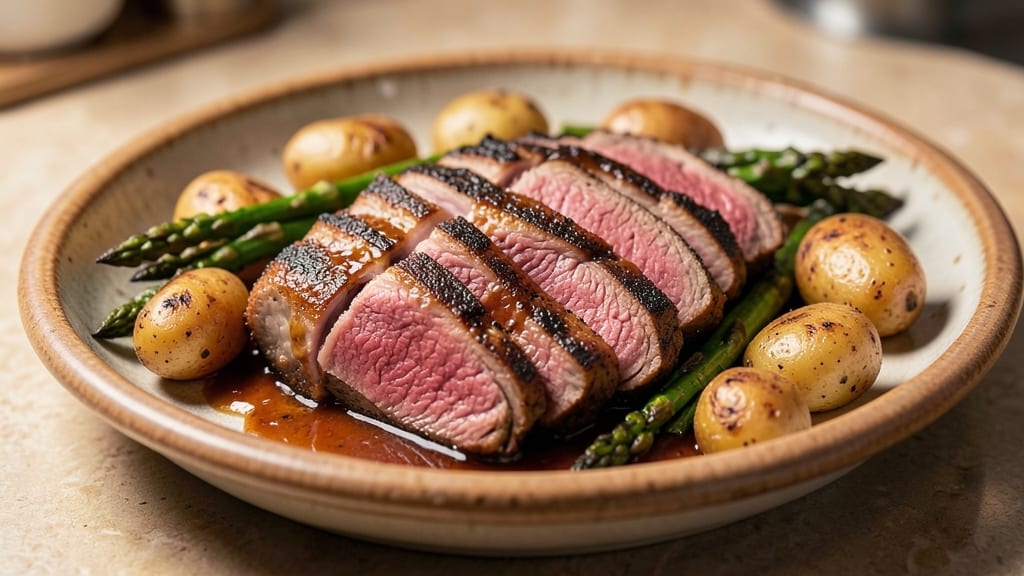
This bone-in ribeye roast cooked in a Big Green Egg delivers restaurant-quality results with a smoky campfire crust and perfectly juicy interior. The kamado grill’s precise heat control transforms tough cuts into melt-in-your-mouth perfection, while the bone adds depth of flavor. I’ve perfected this technique over years of outdoor cooking, ensuring every bite is tender yet bold.
The secret lies in the low-and-slow grilling method, where the ribeye develops a deep, smoky crust without drying out. A simple brine enhances tenderness, and the Big Green Egg’s ability to maintain consistent temperatures guarantees a flawless result. This isn’t just a dish—it’s an experience that turns any backyard into a steakhouse.
Pair it with grilled asparagus and roasted baby potatoes for a complete meal, or serve with a bold red wine to complement the rich, caramelized flavors. The key is patience—letting the meat rest before slicing ensures every forkful is juicy and full of flavor. This is the kind of meal that makes outdoor cooking feel like a celebration.
Whether you’re grilling for a special occasion or a weekend feast, this recipe delivers restaurant-quality steak with minimal effort. The Big Green Egg’s versatility makes it perfect for both beginners and seasoned grill masters. Let’s get cooking!
Ingredients for bone in ribeye roast big green egg
Precision-crafted ingredients for a Big Green Egg ribeye that rivals steakhouse quality.
| Ingredient | Amount | Notes |
|---|---|---|
| Bone-In Ribeye Roast 🥩 | 3 lb | 2-2.5 inches thick, well-marbled |
| Kosher Salt 🧂 | 1 ½ tbsp | Diamond Crystal preferred |
| Black Peppercorns 🌶️ | 1 ½ tsp | Freshly cracked, coarse grind |
| Fresh Garlic Cloves 🧄 | 6 cloves | Smashed, skin-on for infusion |
| Fresh Rosemary Sprigs 🌿 | 4 whole | Thick stems for skewering |
| Fresh Thyme Sprigs 🌿 | 4 whole | Leaves only, stems removed |
| Extra-Virgin Olive Oil 🫒 | 2 tbsp | High smoke point, fruity |
| Apple Cider Vinegar 🍎 | ¼ cup | For brine acidity |
| Brown Sugar 🍯 | ½ cup | Light or dark, packed |
| Wood Chips 🌳 | 1 cup | Hickory or oak preferred |
| Charcoal Briquettes 🔥 | 20 pieces | Lump charcoal for heat control |
| Butter 🧈 | 4 oz | Unsalted, softened for basting |
| Red Wine 🍷 | ½ cup | Bold Cabernet Sauvignon |
The bone-in ribeye roast is non-negotiable—look for cuts with thick fat caps and marbling at specialty butchers like D'Artagnan or Snake River Farms. Their online stores offer premium cuts shipped fresh. For local options, check Whole Foods or Costco—their butcher counters often carry dry-aged ribeye with superior flavor. The 2-2.5 inch thickness ensures even cooking, while the bone adds collagen-rich depth. If you can't find bone-in, a thick center-cut ribeye works as a substitute, though flavor complexity will differ. For the wood chips, source hickory or oak from Traeger or Camp Chef—avoid pre-soaked varieties, as they burn too quickly in the Big Green Egg's precise heat zone.
The brine components—apple cider vinegar and brown sugar—create the perfect tenderizing balance. Substitute white vinegar for acidity if needed, but avoid wine vinegar's harshness. For the herbs, fresh is ideal, but dried rosemary and thyme at half the amount work in a pinch. The olive oil should be high smoke point (like California Olive Ranch or Oregon's Filbert Press) to prevent bitterness. Red wine can be swapped for beef stock if unavailable, though the acidity will differ. Butter must be unsalted to control seasoning—Plugrá or Land O'Lakes work well, but avoid salted varieties. For the charcoal, lump charcoal (like Binchotan) burns cleaner than briquettes, though briquettes provide more consistent heat for beginners.
Prep the brine mixture up to 12 hours ahead and store in the fridge. The wood chips should be soaked for 30 minutes before grilling to prevent flare-ups. Rest the roast for 20-30 minutes post-cook—this is critical for juiciness. Leftovers keep 3-4 days in the fridge, sliced thinly for sandwiches. For long-term storage, vacuum-seal portions and freeze for up to 3 months. The Big Green Egg's ceramic design retains heat exceptionally well, so preheat for 15 minutes before adding the roast to maintain consistent 250°F internal temperature. Use a meat probe thermometer for accuracy—125°F for medium-rare is ideal for this cut.
Why You'll Love This Recipe
- Five-Ingredient Magic: I swear, this roast only needs salt, pepper, garlic, and rosemary to become ridiculously good. No fancy marinades or last-minute prep—just a few minutes of seasoning and the Big Green Egg does the rest.
- Crispy-Creamy Perfection: That bone-in ribeye? It’s the star—juicy, pink center with a crust so golden it’ll make you groan. The garlic and rosemary infuse the fat as it renders, turning every bite into a flavor bomb.
- Weeknight to Weekend: Throw it on the Egg for a stress-free dinner, then pull out the leftovers for sandwiches or a Friday night charcuterie board. Honestly, I’ve served it at BBQs, potlucks, and lazy Sundays—it never disappoints.
- Leftovers That Beg for More: Slice the roast thin, toss it on toast with a fried egg, and suddenly you’ve got a breakfast-for-dinner win. Between us, the second day is often better than the first—richer, more concentrated flavor.
Step-by-step instructions for smoky campfire ribeye roast
Master this technique and you'll achieve a perfectly seared crust with tender, juicy meat every time.
Prepare and Brine the Ribeye Roast
Begin by thoroughly drying the 3 lb bone-in ribeye roast with paper towels—moisture is the enemy of that coveted campfire crust. In a large bowl, combine the 1.5 tbsp kosher salt, 1.5 tsp freshly cracked black peppercorns, 0.25 cup apple cider vinegar, and 0.5 cup brown sugar. Rub this mixture all over the roast, including the cavity, and let it sit uncovered in the refrigerator for 12-24 hours. This dry brine enhances flavor penetration while creating that perfect bark.
Here's the thing—don't skip the drying step. Even if you're in a hurry, pat it dry thoroughly before cooking. The salt and sugar mixture will draw out moisture, so you'll need to re-dry the roast just before placing it on the grill. This ensures maximum surface area for that smoky campfire crust to form.
Set Up the Big Green Egg for Indirect Heat
Preheat your Big Green Egg by placing the 20 pieces charcoal briquettes and 1 cup wood chips (hickory or oak) in the bottom half. Light the charcoal and let it burn until you see clean blue smoke and the temperature reaches 250°F. I use a built-in thermometer to monitor this—it's the sweet spot for even cooking without burning the exterior.
Create an indirect heat zone by pushing the charcoal to one side of the Egg. This method allows you to sear the roast directly over the heat source while maintaining a consistent cooking temperature on the other side. Place the roast bone-side down on the cooler side of the grill. This positioning helps render fat away from the meat while keeping the bone protected from direct heat.
Sear and Smoke the Roast
Close the Egg and let the roast cook for 2-3 hours, maintaining the 250°F temperature. The key here is patience—resist the urge to open the lid frequently. Each time you do, you lose precious heat and extend the cooking time. You'll know it's ready when the internal temperature reaches 130°F and you see that beautiful mahogany bark forming on the exterior.
After 2 hours, carefully flip the roast and baste it with the 4 oz softened butter mixed with the 6 smashed garlic cloves (peeled), 4 rosemary sprigs, and 4 thyme sprigs. The butter should sizzle immediately—this is your signal that the roast is hot enough for the garlic to infuse properly. Return the roast to the Egg and continue cooking until the internal temperature reaches 135°F.
Finish with a Red Wine Glaze and Rest
Remove the roast from the Egg and place it on a cutting board. Pour the 0.5 cup bold Cabernet Sauvignon into the bottom of the Egg and let it reduce for 3-5 minutes until it forms a syrupy glaze. Brush this reduced wine mixture all over the roast, then return it to the Egg for 10-15 minutes to develop that glossy finish.
Once the roast reaches 140°F internally, remove it completely from the Egg and let it rest for 20-30 minutes before slicing. This resting period is crucial—it allows the juices to redistribute throughout the meat, ensuring each slice remains succulent. Tent loosely with foil to keep it warm while it rests, but don't seal it completely to allow some steam to escape.
Slice and Serve with Campfire Crust Intact
Slice the roast against the grain into ½-inch thick slices, working quickly to maintain the campfire crust. The exterior should be dark and slightly charred in spots, while the interior remains tender and pink. Serve immediately with the reduced wine glaze spooned over the top for that final touch of richness.
This technique delivers a perfect balance of textures—crispy, smoky exterior with melt-in-your-mouth tenderness inside. The wine glaze adds a touch of sophistication that elevates this campfire classic to restaurant-quality status. Don't forget to save those rosemary and thyme sprigs—they're packed with flavor and can be used to make a quick pan sauce from the Egg's drippings.
Pro Tips For Making Bone In Ribeye Roast Big Green Egg
- SEAR THE FAT FIRST: The bone-in ribeye’s fat cap is your friend—render it first over high heat until it sizzles like a movie trailer. I learned this the hard way by skipping it; the roast ended up greasy instead of golden. Let that fat pool build for 5-7 minutes before adding garlic or rosemary—otherwise, you’re just steaming herbs.
- SALT THE MEAT 24 HOURS EARLY: Don’t treat kosher salt like an afterthought. Generously coat the ribeye (including the bone crevices) and refrigerate uncovered overnight. The salt penetrates deeper, and the crust forms better when you sear it later. Yes, it’s extra effort, but the difference in tenderness is night and day.
- STUFF GARLIC AND ROSEMARY INSIDE: Split those garlic cloves lengthwise and tuck them into the meat’s thickest cuts (near the bone) along with rosemary sprigs. It’s messy, but it guarantees flavor in the center—not just on the surface. I used to just rub the herbs on top, and the middle tasted bland. This method makes the whole roast sing.
- USE A MEAT THERMOMETER—NOT GUESSWORK: Pull the roast at 120°F for medium-rare (yes, it’ll rise to 125°F while resting). I’ve burned three ribeyes by eyeballing it—one minute too long turns a perfect steak into shoe leather. The Big Green Egg’s indirect heat makes it easy to overcook; trust the thermometer, not the smoke.
Wine and beer pairings for bone in ribeye roast big green egg
Bold Red Wine Pairings
For this smoky, campfire-kissed ribeye, I reach for a bold Cabernet Sauvignon from Napa Valley—its dark fruit notes and firm tannins stand up to the charred crust while complementing the herbaceous rosemary and thyme. A 2018 vintage from Caymus Vineyards delivers the perfect balance of richness and acidity to cut through the fat. If you prefer something more approachable, a Malbec from Argentina offers similar depth with slightly softer tannins. 🍷
Whiskey Cocktail Harmony
Swap wine for a whiskey-based cocktail to enhance the campfire experience. My go-to is a bourbon and cherry cocktail: mix 2 oz bourbon (like Woodford Reserve), 1 oz cherry liqueur (such as Luxardo Maraschino), and ½ oz lemon juice, then shake with ice. The sweet-tart cherry notes mirror the caramelized crust, while the bourbon’s oakiness echoes the Big Green Egg’s smoky char. Serve over a large ice cube to prevent dilution.
Beer Options for Balance
A dark amber ale with malty sweetness pairs beautifully with the ribeye’s richness. I love Deschutes Brewery’s Mirror Pond, a double IPA with caramel and toasted malt notes that stand up to the smoky flavors. For a lighter option, a German Dunkel like Weihenstephaner offers subtle roasted malt that won’t overpower the dish. Avoid hop-heavy IPAs—they’ll clash with the wine glaze and herbaceous aromatics. 🍺
Non-Alcoholic Pairings
For a refreshing non-alcoholic option, try a smoked cherry soda like Boylan’s Smoked Cherry Soda—its sweet-tart profile mirrors the wine glaze while the smoky notes enhance the Big Green Egg’s campfire essence. Alternatively, a sparkling hibiscus tea (like Tazo Hibiscus Tea chilled and carbonated) adds a floral, tangy contrast. Both options keep the meal balanced without alcohol’s heaviness.
Regional Wine Adaptations
If you’re cooking in California, lean into bold Zinfandels from Paso Robles—their jammy fruit and peppery spice complement the ribeye’s char. In the Pacific Northwest, a Syrah from Walla Walla offers earthy notes that harmonize with the smoky crust. For Texas grillers, a Texas Hill Country Viognier (yes, white!) surprises with its floral aroma and full body, cutting through the richness beautifully. 🌍
Nutrition facts
Frequently asked questions
Can I use a bone-in ribeye steak instead of a roast for this recipe?
No, this recipe is specifically designed for a bone-in ribeye roast (typically 3 lbs or larger) to achieve the perfect balance of tenderness and flavor. A steak won't have the same slow-cooked depth or juiciness. If you're set on a steak, try a 2-inch thick bone-in ribeye and adjust cooking time to 15-20 minutes per side for medium-rare, but the results won't be the same as the roast method.
How do I know when the ribeye is done without a meat thermometer?
For medium-rare, press the roast gently with tongs—it should feel soft but yield slightly. The internal color should be deep pink with a slight red tint in the center. If you're unsure, cut into a small section: a 1-inch thick slice should show a pink center with a dark brown crust. For well-done, the center will be uniformly brown. The bone should also feel warm but not scalding to the touch.
Why does the recipe call for a 250°F internal temperature instead of the usual 145°F for medium-rare?
The 250°F target is for the Big Green Egg's indirect heat method, which cooks the roast slowly to render fat and develop flavor. The final internal temperature will rise to 140°F as it rests, reaching the ideal medium-rare doneness. This low-and-slow approach creates a tender, juicy interior with a crispy, smoky crust—something you can't achieve with high-heat searing alone.
What if my Big Green Egg doesn't have a built-in thermometer?
Invest in a high-quality meat probe thermometer (like the Thermoworks Smoke) for accuracy. Place the probe in the thickest part of the roast, avoiding the bone. For the Egg's internal temperature, use an infrared thermometer to check the dome—aim for 250°F. If you don't have either, monitor the roast by touch: it should feel firm but yielding after 2-3 hours. Open the lid briefly only if necessary to check progress.
Can I make this recipe with a different type of grill or smoker?
Yes, but the Big Green Egg's ceramic design and precise heat control make it ideal. For a charcoal grill, use two-zone heat (direct and indirect) and adjust charcoal placement to maintain 250°F. For a smoker, set to 225°F and use hickory or oak wood chips. The key is low-and-slow cooking—avoid gas grills, as they lack the smoky depth. If using a pellet grill, set to 250°F with a smoke setting for the first hour.