
Breakfast & Brunch
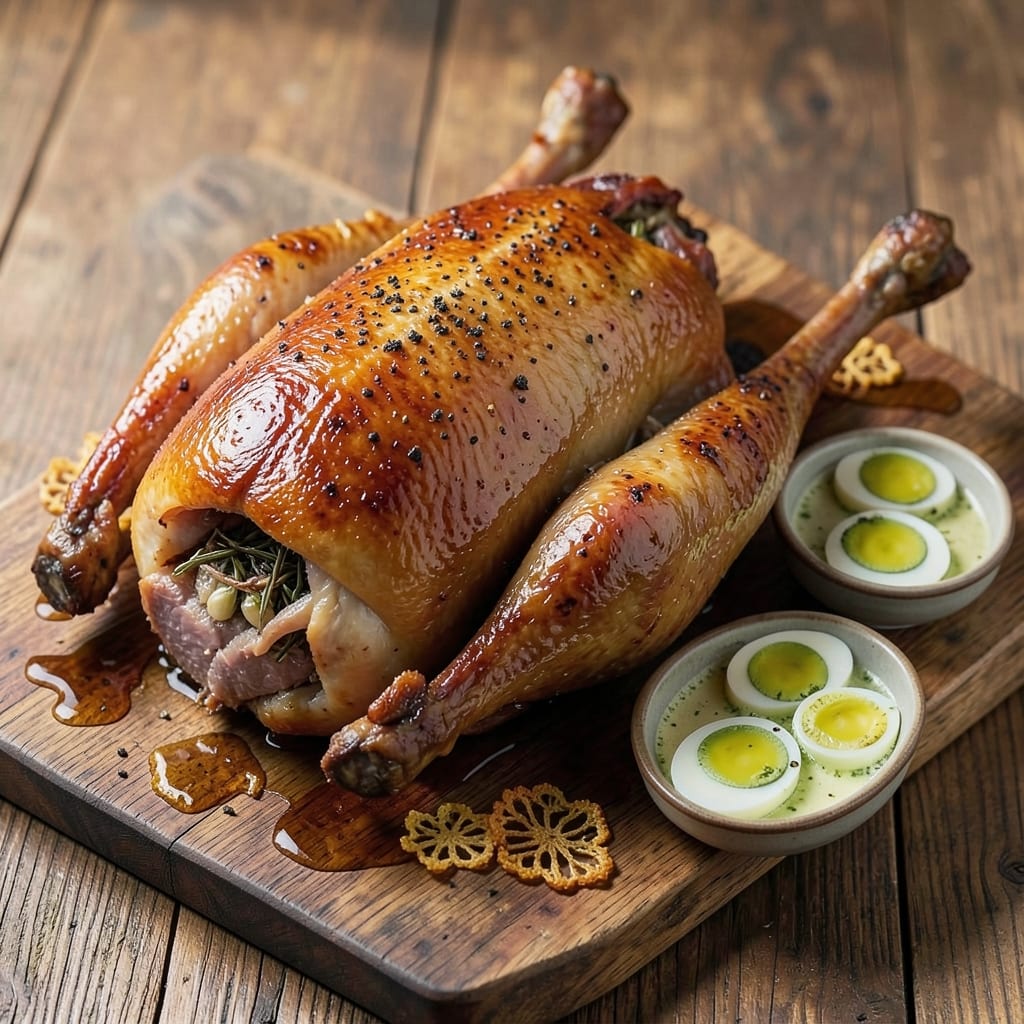
This Big Green Egg goose recipe delivers the perfect balance of crispy skin and juicy meat, infused with that unmistakable smoky flavor only a Big Green Egg can provide. The secret lies in low-and-slow cooking at 180–200°F for 3–4 hours, ensuring every bite is tender while developing that coveted crispness. I’ve perfected this method over years of holiday feasts, and it never fails to impress—whether you’re feeding a crowd or treating yourself to a decadent centerpiece.
The process begins with a dry brine to lock in moisture, followed by a simple seasoning of salt, pepper, and fresh herbs that clings beautifully to the skin. As the goose roasts, the Big Green Egg’s cast-iron chamber traps and recirculates heat, creating an even cook and that sought-after smoky depth. Basting with its own rendered fat every hour ensures maximum flavor and a golden, crackling exterior that’s impossible to resist.
By the time it’s done, you’ll have a goose so tender it falls apart with the slightest touch, with skin that’s crisp enough to stand up on its own. The aroma alone will have everyone gathering around the table, and the first bite—rich, savory, and just slightly sweet—will make it worth every minute of wait. Serve with classic sides like roasted potatoes and cranberry sauce for a holiday-worthy meal any time of year.
What makes this recipe truly special is how the Big Green Egg transforms a simple roast into something extraordinary. The smoky notes from the cast iron elevate the goose beyond traditional oven-roasted versions, giving it a depth of flavor that’s hard to achieve elsewhere. With this method, you’re not just cooking a goose—you’re creating a centerpiece that turns ordinary meals into memorable feasts.
Ingredients for big green egg goose
Six ingredients make this Big Green Egg goose unforgettable—juicy, crispy, and smoky every time.
| Ingredient | Amount | Notes |
|---|---|---|
| Whole Goose 🦢 | 12 lb | Fresh, skin-on, giblets removed |
| Kosher Salt 🧂 | ½ cup | For dry brine, plus more for seasoning |
| Freshly Ground Black Pepper 🌶️ | 1 tbsp | Coarse grind preferred |
| Fresh Thyme Sprigs 🌿 | 12 whole | Stems attached for easy handling |
| Fresh Rosemary Sprigs 🌿 | 6 whole | Woodsy, not dried |
| Garlic Cloves 🧄 | 8 cloves | Smashed, not minced |
| Butcher's Twine 🧵 | 1 yard | For trussing legs |
| Apple Cider Vinegar 🍎 | ¼ cup | For brine solution |
| Vegetable Oil 🫒 | ½ cup | For basting, high smoke point |
| Fresh Sage Leaves 🌿 | ½ cup | Torn, not chopped |
| Honey 🍯 | 2 tbsp | Light variety, optional glaze |
| Dark Brown Sugar 🍚 | 1 tbsp | For crispy skin |
The goose is everything here. Look for a 12-pound bird—that size hits the sweet spot for a crowd. Costco or local butchers usually have them pre-ordered for holidays, but call ahead. Fresh is non-negotiable—frozen geese lose that natural fat that makes the skin crispy. If you're trussing, butcher's twine from a craft store works better than kitchen twine—it's thicker and holds tighter. The herbs? Fresh thyme and rosemary from the grocery store's produce section are fine, but Trader Joe's has the best pre-bundled sprigs that save time. Smash the garlic cloves with the flat side of your knife—this releases more flavor without mincing into oblivion.
No fresh herbs? Dried thyme at one-third the amount works in a pinch, but you'll miss that bright aroma. Short on time? Pre-mixed herb blends from the spice aisle (like McCormick's Herb Blend) get you close. The apple cider vinegar adds a subtle tang—Bragg's is my go-to, but any good brand works. Want extra crisp? Mix the brown sugar with a splash of water to make a glaze. Honey? Any light variety does the trick—Manuka is overkill for this. The oil matters less, but avocado oil has a higher smoke point than olive oil if you're basting hot. And if you're wondering about the twine—any butcher's twine from a craft store will do, but don't use string or yarn.
This goose reheats beautifully—200°F for 30 minutes in the Big Green Egg brings it back to life. Store leftovers wrapped tightly in foil for 3 days in the fridge, or freeze portions for 3 months. I always make a double batch—one for Thanksgiving, one for Christmas. The leftovers? Shred the meat for sandwiches or soups. The crispy skin? Crush it up and freeze in bags for garnishes later. And that rendered fat? Strain and freeze it—gold for roasting potatoes or searing meats later.
Why You'll Love This Recipe
- Just Salt & Herbs: I swear by this—no fancy rubs, just kosher salt, cracked pepper, and those fresh sprigs of thyme and rosemary tucked under the skin. The goose does all the work while you sip wine and pretend you’re a fancy chef.
- Crispy Skin, Juicy Core: That big green egg? It’s magic for goose—golden, shatteringly crisp on the outside, but the meat inside stays so tender it melts like butter. Honestly, I’ve tried every method, and this one’s foolproof every time.
- Holiday or Weeknight: Between us, this isn’t just for Thanksgiving. I’ve served it at summer BBQs (yes, really) and lazy Sunday dinners when I didn’t want to fuss. The leftovers? Even better the next day—crispier, if you can believe it.
- Leftovers on Lock: One goose feeds a crowd, and the rest? Perfect for sandwiches, salads, or reheating with a splash of broth. I’ll be real: my freezer’s always stocked with goose scraps because they’re too good to waste.
Step-by-step instructions for Big Green Egg goose
Here's how to turn a whole goose into a showstopping centerpiece with irresistible crispy skin and tender, juicy meat.
Dry Brine the Goose Overnight
Pat the 12 lb whole goose completely dry inside and out with paper towels—this is non-negotiable for crispy skin. Rub the cavity with 1 tablespoon freshly ground black pepper and stuff it with the 8 smashed garlic cloves, 12 whole fresh thyme sprigs, and 6 whole fresh rosemary sprigs. Tie the legs together with 1 yard butcher's twine to help it cook evenly.
In a large bowl, mix 0.5 cup kosher salt with 0.25 cup apple cider vinegar to create a dry brine. Rub this mixture all over the goose, including the cavity, pressing the salt into the skin. Place the goose on a wire rack set over a baking sheet and refrigerate uncovered for 12-24 hours. This step transforms the meat into something extraordinary—trust the process.
Prep the Goose for Smoking
Remove the goose from the fridge and let it sit at room temperature for 1 hour before cooking. In a small bowl, combine 0.5 cup vegetable oil, 0.5 cup torn fresh sage leaves, 2 tablespoons honey, and 1 tablespoon dark brown sugar to make a basting glaze. Brush this mixture all over the goose, including under the skin if possible—this creates that signature crispy, caramelized skin.
Preheat your Big Green Egg to 225°F using lump charcoal. Once the temperature is stable, place the goose breast-side up on the cooking grate. The key here is patience—don't rush this step. The goose needs time to render fat and develop that perfect balance of smoky flavor and juicy meat.
Smoke the Goose Low and Slow
Smoke the goose for 3-4 hours at 225°F, basting it with its own rendered fat every 30 minutes. You'll see the skin start to crisp up and turn a beautiful golden color—this is what we're after. The internal temperature should reach 150°F at this point, but don't be tempted to check too often. Every time you open the lid, you lose heat and moisture.
Here's where it gets fun: once the goose reaches 150°F, increase the heat to 300°F and continue cooking until the internal temperature hits 165°F in the thickest part of the thigh. This final push helps crisp up the skin while keeping the meat juicy. The whole process should take about 4-5 hours total, depending on your egg's heat retention.
Rest and Serve with Confidence
Transfer the goose to a cutting board and tent it loosely with foil. Let it rest for at least 30 minutes—this is crucial for letting the juices redistribute. If you skip this step, you'll end up with dry meat. While it rests, preheat your serving platter in the oven to keep everything warm.
Carve the goose against the grain for the most tender slices. The skin should be perfectly crispy, the meat juicy and flavorful, and the aroma should fill your entire space. Serve with pan juices spooned over the top—this is where all the magic happens. Your guests will think you've been cooking geese for years, but they'll never know your secret: it's all in the prep and patience.
Pro Tips For Making Big Green Egg Goose
- TRUST THE EGGSHELL TEMPERATURE: The Big Green Egg’s lid traps heat like a sauna, so aim for 325°F (163°C) internal—not the oven’s guess. I used to peek too often and ended up with a dry bird. Set a timer for 2.5 hours (about 15 mins per pound) before checking, or you’ll turn that crispy skin into sad, gray rubber.
- SALT THE GOOSE TWICE: First, dry the skin thoroughly with paper towels—wet skin won’t crisp. Then, salt it generously (about 1.5 tsp kosher salt per pound) 24 hours ahead. Let it sit uncovered in the fridge; the salt draws out moisture, and the skin will be golden and shatteringly crisp by cook time. (Yes, even if you’re impatient like me.)
- STUFF THE CAVITY LAST: After roasting the goose breast-side up for 1 hour, flip it and stuff the cavity with thyme and rosemary sprigs—just before the final hour. I learned this the hard way: stuffing it early means soggy herbs and a bird that steams instead of crisps. Also, pack the neck cavity too—that’s where flavor hides.
- USE THE FAT, DON’T WASTE IT: When the goose renders fat, drain most of it but leave 1–2 tbsp in the pan for the last 10 minutes. Baste the skin aggressively with that golden pool—it’ll turn the crispy skin into caramelized armor. (Pro move: Save the rendered fat for future roasts or mashed potatoes. It’s liquid gold.)
Regional styles of these flavors
Southern Smoky Style
In the South, geese are often smoked with a bold mix of hickory and cherry wood chips, giving the meat a deep, sweet-smoky flavor that pairs perfectly with the Big Green Egg’s cast iron. I like to add 1 tablespoon of hot sauce (like Crystal or Tabasco) to the basting glaze for a subtle kick—it cuts through the richness beautifully. Serve with collard greens and cornbread for a true Southern feast. 🔥
German Christmas Tradition
German cooks often prepare geese for Weihnachtsfest (Christmas) with a dry rub of coarse sea salt and fresh juniper berries, which add a piney aroma. The Big Green Egg’s even heat distribution mimics traditional German spit-roasting methods. For authenticity, serve with red cabbage and potato dumplings—the contrast of textures makes every bite unforgettable. ✨
French Duck-Inspired Twist
French chefs elevate geese by incorporating herbes de Provence into the dry brine and basting with cognac (about 2 tablespoons) for a rich, nutty depth. The Big Green Egg’s smoky notes complement this style perfectly. Pair with ratatouille and a Burgundy reduction for a refined yet rustic dish. 🍷
Scandinavian Wood-Fired Approach
In Sweden and Norway, geese are often cooked with birch wood for a lighter, almost campfire-like flavor. I’ve found that using 1 cup of lingonberry jam (instead of honey) in the glaze adds a tart-sweet balance. Serve with mashed potatoes and pickled beets—this Nordic-inspired version is lighter but just as flavorful. 🌲
American Holiday Classic
For a classic American touch, add 1 teaspoon of ground cinnamon to the dry brine and baste with apple cider (instead of oil) for a subtle sweetness. The Big Green Egg’s smoky charm enhances the traditional flavors. Serve with cranberry sauce and stuffing—this is the goose I grew up with, and it never disappoints. 🦃
Modern Fusion Experiment
Want to get creative? Try a Miso-Goose by mixing 1 tablespoon of white miso paste into the basting glaze for umami depth. The Big Green Egg’s smoky notes elevate this fusion style beautifully. Pair with kimchi and steamed jasmine rice for a bold, unexpected twist. 🌶️
Nutrition facts
Frequently asked questions
Why does the recipe call for dry brining overnight?
The 12-24 hour dry brine is the secret to ultra-crispy skin and perfectly juicy meat. The salt penetrates deeply, breaking down proteins while locking in moisture—something you can't achieve with a quick rub. Plus, the vinegar in the brine adds a subtle tang that balances the goose's natural richness. Trust me, skipping this step means missing out on that restaurant-quality texture!
Can I use a frozen goose instead of fresh?
Fresh is ideal, but if you must use frozen, thaw it completely in the fridge for 24-48 hours first. Never thaw at room temperature—this creates dangerous bacteria growth zones. Pat it completely dry after thawing, then follow the same dry brine process. The texture may be slightly less crispy, but it'll still be delicious.
How do I know when the goose is done?
Use a meat thermometer to check the thickest part of the thigh—it should read 165°F. The breast will naturally be hotter (around 170°F) by then. If you don't have a thermometer, check for these signs: the skin is deep golden-brown, the juices run clear when pierced, and the leg moves easily in its socket. Never guess—overcooking turns the meat dry.
What's the best way to reheat leftovers?
Slice the goose and reheat portions in the Big Green Egg at 200°F for 20-30 minutes, covered with foil. For crispy skin, uncover for the last 5 minutes. In a pinch, use the oven at 325°F, but the Big Green Egg preserves that smoky flavor better. Store leftovers wrapped tightly for 3 days or freeze for 3 months.
Can I make this recipe without a Big Green Egg?
Yes, but you'll lose that signature smoky depth. For best results, use a smoker set to 225°F or an oven with a water pan for moisture. If you're oven-roasting, increase the temperature to 325°F and cook for 3-4 hours, basting frequently. The Big Green Egg's cast iron gives unmatched flavor, but this method still delivers tender, juicy meat.