
Breakfast & Brunch
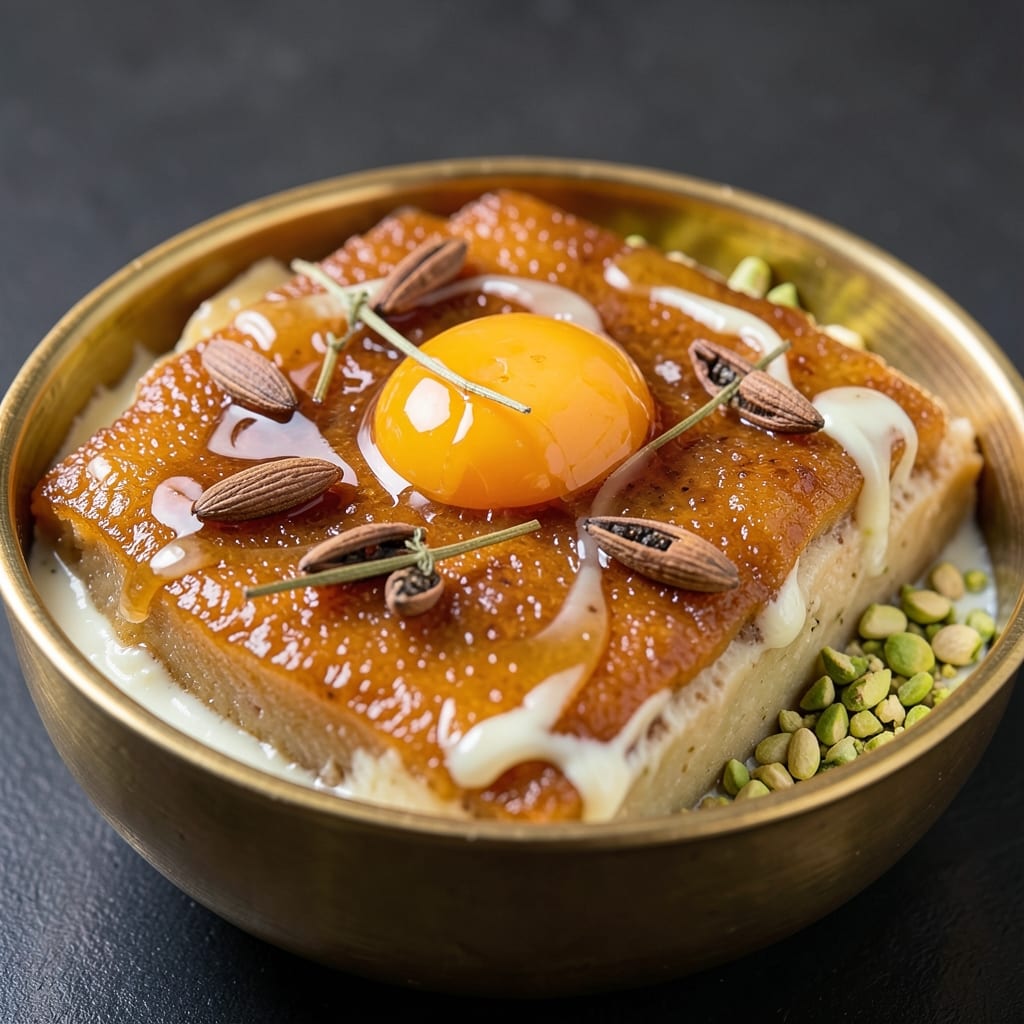
Bangladeshi egg halwa transforms simple ingredients into a luxurious dessert that balances silky smoothness with delicate graininess—perfect for special occasions or indulgent weeknight treats. This traditional recipe relies on slow-cooked milk and eggs, infused with warm cardamom and subtle rose water, creating a texture that's both comforting and elegant. The key lies in patience: letting the milk reduce to a thick, velvety consistency before gently folding in the tempered eggs ensures that signature melt-in-your-mouth quality.
The process begins with whole milk simmered until it thickens into a rich, caramelized base, where cardamom pods release their aromatic oils. Eggs, lightly tempered in warm milk, are then folded in to create that signature grainy-smooth contrast—neither too firm nor too runny. This method preserves the eggs' natural richness while blending seamlessly with the spiced milk. The result is a dessert that's equally satisfying when served warm or chilled, making it versatile for any gathering.
What makes this halwa truly special is its balance of textures and flavors: the cardamom adds a fragrant warmth, while rose water introduces a delicate floral note that brightens each spoonful. Garnished with chopped pistachios or a sprinkle of saffron, it becomes a visually stunning dish that feels both nostalgic and refined. Whether you're serving it at a festive celebration or enjoying it as a quiet dessert, this recipe delivers comfort in every bite.
For those looking to adapt the recipe, consider adding a pinch of nutmeg or a drizzle of honey for extra depth. The halwa also keeps well in the refrigerator for up to 5 days, making it an ideal make-ahead dessert. Let’s create this timeless treat that captures the essence of Bangladeshi sweetness.
Ingredients for bangladeshi egg halwa
Whole milk, cardamom, and eggs create this luxurious dessert's signature texture and aroma.
| Ingredient | Amount | Notes |
|---|---|---|
| Whole Milk 🥛 | 4 cups | Full-fat for richness |
| Large Eggs 🥚 | 4 whole | Room temperature preferred |
| Granulated Sugar 🍚 | 1 ½ cups | White or light brown |
| Cardamom Pods 🌿 | 6 whole | Lightly crushed, not powdered |
| Rose Water 🌸 | 1 tsp | Pure, food-grade only |
| Unsalted Butter 🧈 | ½ cup | Cold, cubed for folding |
| Chopped Pistachios 🥜 | ¼ cup | For garnish, optional |
| Saffron Threads 🌼 | ⅛ tsp | Soaked in 1 tbsp warm water |
| Vanilla Extract 🌸 | ½ tsp | Pure, optional enhancement |
| Ground Nutmeg 🌿 | ¼ tsp | Freshly grated preferred |
| Salt 🧂 | ¼ tsp | Fine sea salt |
The milk is the foundation—whole milk ensures that rich, velvety texture. Organic Valley or any full-fat brand works best, but avoid ultra-pasteurized if possible. Cardamom pods should be lightly crushed (not ground) to release their oils without bitterness. Whole Foods or Indian grocery stores often carry high-quality pods. For rose water, Bormes or Al Wadi brands are reliable—avoid perfumed varieties. The eggs must be room temperature for even tempering, so take them out 30 minutes before starting. Pistachios should be unsalted for best flavor, and Trader Joe's or bulk bins are cost-effective options.
No cardamom pods? Ground cardamom at half the amount works, but the texture will differ slightly. Substitute rose water with vanilla extract at double the amount (1 tsp) for a floral note, though it won’t be identical. For a nutmeg-free version, cinnamon at one-quarter the amount adds warmth. The butter must be cold when folded in—softened butter creates a greasy texture. If you’re short on sugar, honey or maple syrup can replace up to half, but reduce the milk slightly to compensate for moisture. The saffron soak is critical—don’t skip the warm water or the threads won’t release their color.
This halwa keeps beautifully in an airtight container for 5 days in the fridge or 3 months frozen. For freezing, portion into ramekins before chilling completely—it reheats beautifully. The texture improves after 24 hours as flavors meld. Garnish with pistachios or saffron threads just before serving to keep them vibrant. Reheat gently in the microwave or over a water bath to maintain its silky consistency. Leftovers make perfect breakfast pudding the next morning—just reheat and add a pinch of cinnamon.
Why You'll Love This Recipe
- No-Fuss Ingredients: I swear by this recipe because it uses exactly what’s already in my pantry—whole milk, eggs, sugar, and a few cardamom pods. No weird substitutions, no last-minute grocery runs. Honestly, the simplicity of blending warm milk with beaten eggs until it thickens like a dream? That’s the magic.
- Velvet-Smooth Texture: The moment the halwa pulls away from the pan with that glossy, caramelized top? I lose my mind. The eggs turn it rich and custardy, while the sugar caramelizes just enough to give it that perfect balance—creamy inside, slightly crisp at the edges. (Yes, even on a Tuesday night, I’ll make this.)
- Sweet Comfort Any Time: Between us, this is my go-to for breakfast, dessert, or even a midnight snack. Serve it warm with a sprinkle of crushed cardamom and a few drops of rose water, and suddenly, you’ve got something that feels fancy without trying. My kids ask for it after school—no questions asked.
- Leftovers That Don’t Suck: Unlike some desserts that turn rubbery, this halwa actually improves the next day. Store it in the fridge, and reheat a slice in the microwave—still creamy, still delicious. And because it’s egg-based, it’s way cheaper than buying store-bought sweets. (My wallet thanks me.)
Step-by-step instructions for Bangladeshi egg halwa
Here's how to create the perfect balance of silky texture and aromatic spices in this classic dessert.
Prepare the Milk Mixture
In a heavy-bottomed saucepan, combine the 4 cups whole milk, 6 lightly crushed cardamom pods, 0.25 tsp salt, and 0.25 tsp ground nutmeg. Bring to a gentle boil over medium heat, then immediately reduce to low heat and let it simmer uncovered for 15-20 minutes. This slow reduction concentrates the milk's richness and infuses the spices deeply.
Stir occasionally to prevent scorching—the milk should reduce by about half, turning thick and creamy. You'll notice the aroma intensify as the cardamom releases its warm, citrusy notes. Once the mixture reaches a pudding-like consistency, remove it from heat and let it cool slightly. This step is crucial for developing the halwa's signature texture.
Cook the Egg Custard
In a separate bowl, whisk together the 4 whole eggs, 1.5 cups granulated sugar, 0.5 tsp vanilla extract, and 1 tsp rose water until smooth and pale. The mixture should be well combined but still slightly thick. Gradually pour this egg mixture into the reduced milk while whisking continuously to prevent curdling.
Return the combined mixture to the saucepan and cook over low heat, stirring constantly with a wooden spoon or silicone spatula. The custard will thicken gradually—this can take 10-15 minutes. You'll know it's ready when it coats the back of the spoon and leaves a distinct trail when you run your finger through it. Be patient; rushing this step can make the halwa grainy instead of silky.
Finish with Butter and Saffron
Remove the saucepan from heat and stir in the 0.5 cup cold unsalted butter, cubed, until fully melted and incorporated. The butter adds richness and helps create that signature grainy texture. Then, add the 0.125 tsp saffron threads (previously soaked in 1 tbsp warm water) and mix well. The saffron will impart a delicate golden hue and floral aroma.
For the final texture, transfer the halwa to a heatproof bowl and let it cool slightly while stirring occasionally. This resting period allows the halwa to thicken further. Once it reaches a spreadable but still warm consistency, fold in the 0.25 cup chopped pistachios for a delightful crunch and visual contrast. Serve warm in small bowls, garnished with extra pistachios if desired.
Rest and Serve for Optimal Texture
Allow the halwa to rest for 10-15 minutes before serving. This resting time is essential—it lets the flavors meld and the texture set properly. The halwa should be thick enough to hold its shape when spooned but still silky and smooth. If it becomes too firm while cooling, gently reheat it over low heat, stirring constantly, until it reaches the perfect spreadable consistency.
Serve immediately in small portions, as the halwa continues to thicken as it cools. The combination of warm cardamom, floral saffron, and nutty pistachios creates a symphony of flavors that perfectly complements the creamy texture. This traditional dessert is best enjoyed warm, straight from the pot, with a cup of chai for the ultimate experience.
Pro Tips For Making Bangladeshi Egg Halwa
- Whisk Eggs Like a Pro: Beat the eggs until they’re light and airy—no streaks, no lumps—before folding them into the milk-sugar mix. I learned this the hard way: under-whisked eggs make the halwa dense and gummy. Use a fork first, then a whisk for those last stubborn bits.
- Toast the Cardamom: Lightly crush the cardamom pods and toast them in a dry pan for 30 seconds until fragrant—this releases their oils and deepens the flavor. Skip this, and your halwa will taste like you just sprinkled whole pods on top.
- Simmer Slow and Steady: Once the sugar dissolves, reduce the heat to low and let the mixture thicken gradually—about 15-20 minutes. Rushing it turns the halwa into glue. Stir often, but not constantly; let it bubble gently.
- Strain the Milk First: Heat the whole milk until it’s steaming (not boiling), then strain it through a fine sieve to remove any sediment. This keeps the halwa silky smooth—no gritty surprises. (Yes, even if you use store-bought milk.)
Regional styles of this recipe
West Bengal Style
In West Bengal, egg halwa often features a lighter texture with a touch of saffron and rose water as the star flavors. The recipe here uses whole milk reduced to a thick consistency, then enriched with egg yolks (instead of whole eggs) for a smoother finish. Locals add a pinch of nutmeg and a drizzle of honey at the end, creating a delicate balance between floral and sweet. This version is traditionally served during Durga Puja celebrations, where it's paired with mango lassi for contrast. 🌸
Dhaka Special Touch
Dhaka’s take on egg halwa incorporates ground cardamom instead of pods, giving it a more intense spice profile. The key difference is the use of ghee (instead of butter) for the final step, adding a nutty depth that’s signature to this region. The halwa is often less sweet—just 1 cup sugar instead of 1.5—letting the cardamom and saffron shine. Garnish with crushed almonds or silver leaf (varak) for a festive look, perfect for Eid celebrations. 🌿
Chittagong Coastal Twist
In coastal Chittagong, egg halwa gets a citrusy twist with lemon zest and a splash of lime juice in the milk mixture. The recipe also uses coconut milk (mixed with whole milk) for a lighter, almost custard-like texture. This version is often served chilled with a sprinkle of toasted coconut flakes on top. The addition of a pinch of turmeric gives it a soft golden hue, making it visually striking. It’s a popular dessert after seafood feasts in this region. 🍋
Rural Sylhet Variation
Sylhet’s egg halwa is simpler but heartier, using less sugar (just 1 cup) and more whole milk (5 cups) for a richer, almost pudding-like consistency. The recipe skips saffron but adds a generous amount of vanilla extract (1 tsp) for warmth. Locals often fold in chopped dates or figs for natural sweetness and texture. This version is commonly made in clay pots over low flames, giving it a slightly caramelized edge. It’s a staple during harvest festivals and family gatherings. 🌾
Urban Dhaka Fusion
Modern Dhaka chefs are putting a fusion twist on egg halwa by adding dark chocolate shavings or caramelized bananas as toppings. Some versions even incorporate matcha powder for a green tea flavor, blending tradition with contemporary tastes. The base remains the same—cardamom-infused milk and eggs—but the garnishes reflect global influences. This version is popular in high-end restaurants and brunch menus, proving the dish’s adaptability. 🍫
Nutrition facts
Frequently asked questions
Why does Bangladeshi egg halwa have that unique grainy texture?
The signature graininess comes from gently tempering eggs in warm milk before folding them into the custard. This creates small, soft curds that contrast beautifully with the silky smooth milk base. The butter added at the end also contributes to that delicate texture—it shouldn't be fully melted when folding it in!
Can I make this halwa without cardamom?
Yes! You can substitute with 1/2 tsp ground cardamom or try 1/4 tsp cinnamon for warmth, though the flavor will differ. For floral notes, add an extra 1/2 tsp rose water or 1 tsp vanilla extract. The texture will remain the same, but the aroma will change slightly.
How do I fix if my halwa becomes too runny?
If your halwa is too thin, return it to low heat and stir continuously until it thickens. For extra richness, stir in 1-2 tablespoons of cold butter** or 1 tablespoon of cornstarch mixed with water. Never boil it—just warm gently to avoid curdling. The resting time after cooking also helps it set properly.
Is this halwa suitable for vegetarians?
Yes, this traditional recipe is completely vegetarian as it contains no meat or fish. The main ingredients—milk, eggs, sugar, and spices—are all plant-based or dairy/egg-based. Just ensure your butter and saffron are vegetarian-certified if needed.
Can I make this halwa ahead of time?
This halwa actually tastes better after resting. Store it in an airtight container in the fridge for up to 5 days or freeze for 3 months. Reheat gently over low heat or microwave in short bursts, stirring between each, until smooth. The flavors develop beautifully overnight!