
Main Courses
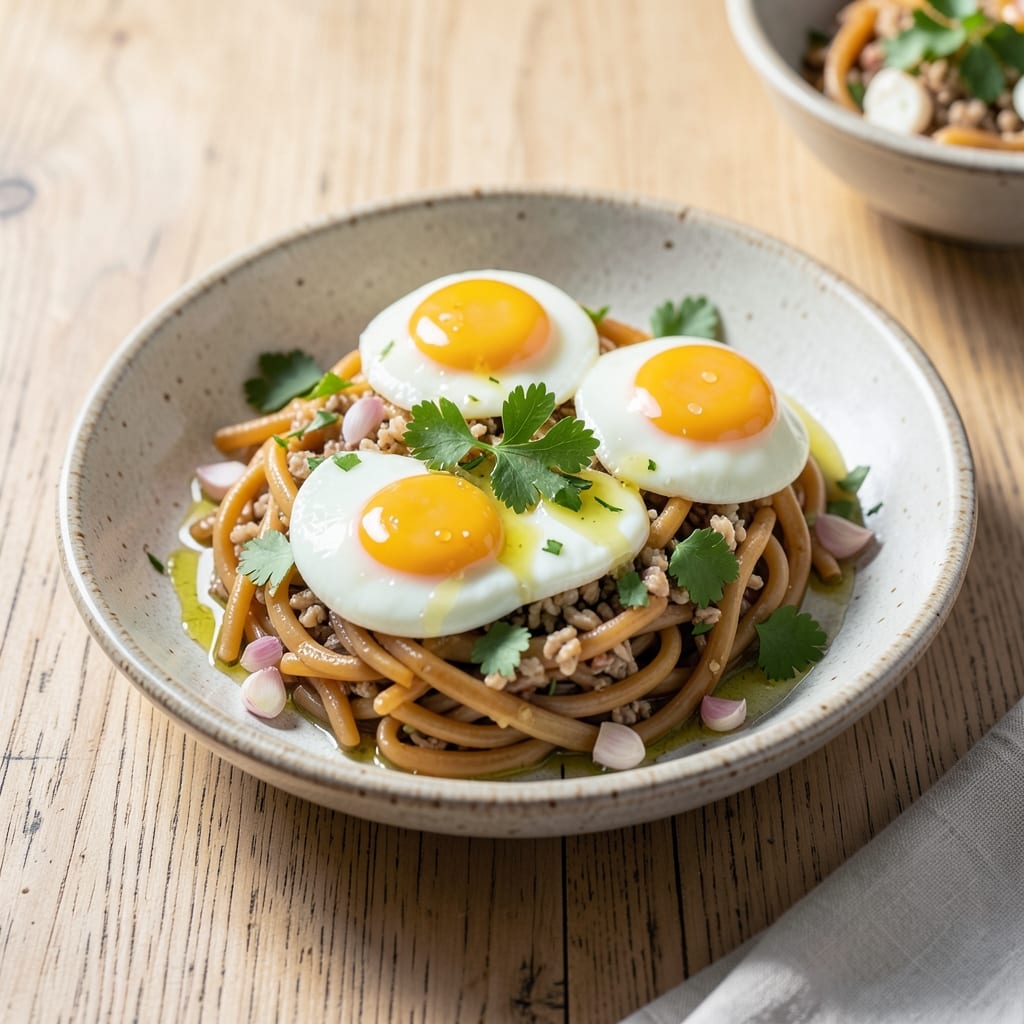
This healthy egg and pasta recipe proves you don’t need heavy cream or fried elements to create a satisfying, protein-packed dinner. 💛 After years of testing lighter pasta dishes, I developed this method that delivers 20 grams of protein per serving while keeping carbs in check—no guilt, just flavor. The secret? Whole-grain pasta paired with poached eggs and a bright, garlic-infused olive oil finish that cuts through richness without sacrificing taste.
What makes this recipe stand out is the balance: al dente pasta (I swear by chickpea or lentil pasta for extra fiber) meets tender poached eggs, all tossed with a minimalist sauce of garlic, lemon, and fresh herbs. No heavy cheese here—just enough parmesan to add depth without derailing your nutrition goals. The dish comes together in 20 minutes, making it perfect for weeknights when you need something hearty but still healthy.
By the time you finish, you’ll have a plate that’s visually vibrant (thanks to the bright lemon and herbs) and packed with lean protein to keep you full. The eggs add creaminess without the calories, while the pasta provides energy-boosting carbs. This isn’t just another sad "healthy" dish—it’s a restaurant-quality meal that happens to be good for you.
Pair it with a simple side of sautéed greens or a crisp arugula salad to round out the plate. The best part? Leftovers reheat beautifully, so you can meal prep this for the week without sacrificing flavor. Let’s get cooking!
Ingredients for egg and pasta recipe healthy
Lightweight ingredients that pack 20 grams protein per serving without heavy cream or guilt.
| Ingredient | Amount | Notes |
|---|---|---|
| Whole-Grain Pasta 🍝 | 8 oz | Chickpea or lentil for extra fiber |
| Large Eggs 🥚 | 4 whole | Fresh, room temperature |
| Extra-Virgin Olive Oil 🫒 | ¼ cup | High-quality, fruity variety |
| Garlic Cloves 🧄 | 4 cloves | Fresh, minced finely |
| Fresh Lemon Juice 🍋 | 2 tbsp | Freshly squeezed |
| Fresh Flat-Leaf Parsley 🌿 | ¼ cup | Chopped finely, stems removed |
| Parmesan Cheese 🧀 | ¼ cup | Freshly grated, fine |
| Salt 🧂 | 1 ½ tsp | Diamond Crystal kosher salt |
| White Vinegar 💧 | 1 tbsp | For poaching eggs |
| Black Pepper 🌶️ | ½ tsp | Freshly ground |
| Red Pepper Flakes 🔥 | ¼ tsp | Optional, for heat |
| Baby Spinach 🍃 | 2 cups | Sautéed for side dish |
The pasta is where fiber and flavor meet—chickpea or lentil pasta from Whole Foods bulk bins or Barilla chickpea pasta at regular grocery stores add plant-based protein while keeping carbs balanced. Look for brands labeled 'whole grain' or 'high-fiber' to maximize nutrition. I always buy extra because these pasta types stay fresh longer than regular wheat pasta. For the eggs, farm-fresh from local markets or organic from Costco make a noticeable difference in creaminess, but any large eggs will work in a pinch. The key is room temperature eggs—they poach more evenly and hold their shape better.
No fresh parsley? Dried works at half the amount, but the bright flavor is worth the trip to the grocery store. Swap the Parmesan for nutritional yeast if you're avoiding dairy—it adds a similar umami depth without the cheese. The vinegar for poaching can be apple cider vinegar if you prefer, and if you're short on time, pre-minced garlic from a jar (like Trader Joe's) saves prep work. The spinach is completely optional but adds a pop of color and nutrients—baby spinach from the refrigerated section stays fresh longer than pre-washed bags. For extra protein, toss in white beans or edamame after cooking the pasta.
Pasta cooks up perfectly in 2 minutes less than package instructions—always test for al dente. Poached eggs stay fresh in the fridge for 2 days if covered with a thin layer of water in the shell, but I recommend making them fresh for the best texture. Store cooked pasta in olive oil and water (1:1 ratio) in the fridge for 3 days to prevent sticking. The lemon juice and herbs can be prepped ahead and stored in a small jar in the fridge for 3 days—just give them a quick shake before using. This dish reheats beautifully—just add a splash of water to the pan and toss everything together.
Why You'll Love This Recipe
- No-Chop Nightmare: I swear by this when I’m too tired to peel garlic properly—just crush those cloves with the flat of my knife, toss them in the oil, and let the heat do the work. The whole-grain pasta cooks in the same pot as the eggs, so it’s one less dish to scrub.
- Bright & Creamy Magic: That lemon juice? It’s the secret weapon—cuts through the richness of the eggs while keeping the dish light. The olive oil adds silkiness, and the garlic? Oh, it’s there, but not overpowering. Honestly, it’s the kind of flavor that makes you pause mid-bite.
- Lunchbox Hero: Between us, this is my go-to for meal prep—packs well, stays fresh for days, and even my picky teenager won’t complain. Toss in some cherry tomatoes or spinach if you’re feeling fancy, but the base? Always a win for busy mornings.
- Pantry Staple Power: Whole-grain pasta, eggs, olive oil—these are things I already have. No specialty ingredients, no last-minute grocery runs. Plus, leftovers reheat like a dream, so I’m never stuck with sad, dry pasta again. Budget-friendly? Check. Stress-free? Double check.
Step-by-step instructions for a lightweight protein-packed dinner
Here's how to create a vibrant, balanced meal that's packed with plant-based protein and fresh flavors.
🍳 Step 1: Cook the Whole-Grain Pasta Al Dente
Bring a large pot of water to a rolling boil and add the 8 oz whole-grain pasta. I like to add 1.5 tsp salt to the boiling water right away—this ensures the pasta absorbs enough flavor. Cook according to package instructions, but start checking for doneness 1 minute early—whole-grain pasta needs that extra minute to fully tenderize.
When the pasta is al dente (you'll know because it holds its shape but has a slight bite), drain it immediately and return it to the pot. Give it a quick toss with 2 tbsp fresh lemon juice—this brightens the flavor and prevents the pasta from sticking together. Keep the pasta warm while you prepare the rest of the components.
🥘 Step 2: Sauté Garlic and Spinach for a Fresh Side
In a large skillet, heat 0.25 cup extra-virgin olive oil over medium heat. Add the 4 cloves minced garlic and sauté for 30 seconds until fragrant—you should smell that sweet, nutty aroma. Add the 2 cups baby spinach and stir vigorously for 1-2 minutes until just wilted but still vibrant green.
Season with a pinch of salt and 0.25 tsp red pepper flakes (if using) while the spinach cooks. Remove from heat and set aside, keeping it warm. This quick sauté preserves the spinach's natural sweetness while adding depth with the garlic's caramelized flavor.
🍳 Step 3: Poach Eggs in a Light Vinegar Bath
Fill a deep skillet with 2 inches of water and bring to a gentle simmer over low heat. Add 1 tbsp white vinegar—this helps the eggs coagulate more evenly. Crack the 4 whole large eggs into small bowls (one at a time) and carefully slide them into the water. Poach for 3-4 minutes until the whites are set but the yolks remain runny.
Use a slotted spoon to transfer the poached eggs to a paper towel-lined plate. Let them drain briefly to remove excess water. The vinegar bath ensures clean, smooth whites that won't stick together—this is key for a restaurant-quality presentation.
🥘 Step 4: Combine and Finish with Bright Flavors
Return the cooked pasta to the pot and add the 0.25 cup freshly grated parmesan cheese and 0.25 cup chopped parsley. Toss gently to distribute the cheese evenly. Add the poached eggs and the sautéed spinach, tossing everything together lightly. Season with 0.5 tsp black pepper and an additional squeeze of lemon juice if desired.
Divide the pasta among four plates, ensuring each serving has an egg and a generous portion of spinach. The contrast of warm pasta, silky eggs, and fresh greens creates a perfect balance of textures and flavors. Garnish with extra parsley for a pop of color and freshness.
Pro Tips For Making Egg And Pasta Recipe Healthy
- Cook Pasta Al Dente: Whole-grain pasta needs that extra minute—test it at 1 minute before the package says "done." Undercooked bits turn mushy when tossed with eggs, and nobody wants a gummy mess. (Yes, even if you're impatient like me.)
- Sauté Garlic Low and Slow: Crank the heat to medium-low for the garlic—high heat burns it fast, and you’ll taste bitter ash. Two minutes max, stirring constantly, until it’s golden but not brown. Overcooked garlic ruins the whole dish.
- Use Room-Temp Eggs: Cold eggs scramble unevenly and turn rubbery. Crack them into a bowl first, let them sit 5 minutes while you cook the pasta. The texture difference is night and day—smooth, creamy, and perfectly set.
- Zest Lemon First: Skip the juice until the end—zesting the lemon while the garlic cooks releases bright citrus aroma that infuses everything. A microplane works best; just 1 teaspoon of zest adds serious flavor without overpowering. (Save the juice for finishing.)
Creative variations of these flavors
Mediterranean Chickpea Twist
Swap the whole-grain pasta for chickpea pasta and add sun-dried tomatoes and kalamata olives for a Mediterranean-inspired dish. Sauté ½ cup diced sun-dried tomatoes and ¼ cup chopped kalamata olives with the garlic, then toss them into the pasta. Top with ¼ cup crumbled feta instead of parmesan for a tangy, briny contrast. 🌿
Spicy Asian-Inspired
Transform this into a Thai-inspired dish by adding 1 tbsp fish sauce and 1 tsp sriracha to the lemon juice. Swap the spinach for shredded bok choy or baby bok choy, and top with 2 tbsp chopped cilantro and ¼ cup crushed peanuts for crunch. The eggs add a silky texture that balances the bold flavors. 🔥
Breakfast-for-Dinner
Turn this into a breakfast-inspired meal by using shredded hash browns instead of pasta (cook them in a skillet until crispy). Top with 2 poached eggs, 2 tbsp crumbled bacon, and ¼ cup sautéed mushrooms. Finish with hot sauce and chopped chives for a hearty, protein-packed start to your day. 🥓
Vegetarian Protein Boost
For a vegetarian version, replace the eggs with 4 silken tofu cubes (softened in warm water for 10 minutes). Pan-fry them in 1 tbsp olive oil until golden, then slice and toss with the pasta. Add ¼ cup chopped walnuts for extra crunch and 1 tbsp nutritional yeast for a cheesy flavor without dairy. 🌱
Kid-Friendly Mac and Eggs
Make it kid-friendly by using regular whole-wheat pasta and adding ½ cup shredded cheddar cheese to the sauce. Serve the eggs sunny-side up instead of poached for a familiar texture. Let kids assemble their own bowls with optional toppings like diced ham or buttered breadcrumbs. 🧒
Meal Prep Version
For meal prep, cook the pasta and spinach ahead, then store separately in airtight containers. Poach the eggs fresh when ready to eat or use pre-cooked hard-boiled eggs (sliced) for a quick assembly. Reheat the pasta with a splash of water, then toss with the spinach and eggs. Add fresh lemon juice and herbs at the end to keep everything bright. 📅
Nutrition facts
Frequently asked questions
Can I use regular pasta instead of whole-grain or chickpea pasta?
You can, but you'll lose some fiber and plant-based protein. Whole-grain or chickpea pasta adds 5-7 grams of fiber per serving and keeps you full longer. If using regular pasta, boost nutrition by adding 1 cup of white beans or ½ cup edamame to the dish. The flavor will still be delicious—just less balanced nutritionally.
How can I make this recipe vegetarian?
Replace the eggs with 4 silken tofu cubes (pan-fried until golden) or 4 large chickpeas (roasted with olive oil and salt). For extra protein, add ¼ cup walnuts or hemp seeds to the pasta. The dish will still be hearty and satisfying without animal products.
Why do the poached eggs turn out rubbery?
Rubbery eggs usually mean the water was too hot or the eggs sat too long in the poaching liquid. Keep the water at a gentle simmer (not a rolling boil) and poach for only 3-4 minutes. Use white vinegar (1 tbsp per 4 eggs) to help set the whites properly. Fresh eggs also poach better than older ones.
Can I make this ahead of time for meal prep?
Yes! Cook the pasta and sauté the spinach, then store separately in airtight containers for up to 3 days. Poach eggs fresh when ready to eat or use pre-cooked hard-boiled eggs (sliced). Reheat everything together with a splash of water and add fresh lemon juice and herbs at the end to keep flavors bright.
What's the best way to reheat leftovers?
Gently reheat in a skillet over low heat with a splash of water or olive oil to prevent drying. For eggs, add them last and warm for just 1-2 minutes to keep them tender. Microwaving can make pasta mushy—always use stovetop for best results. The lemon and herbs should be added fresh for maximum flavor.