
Breakfast & Brunch
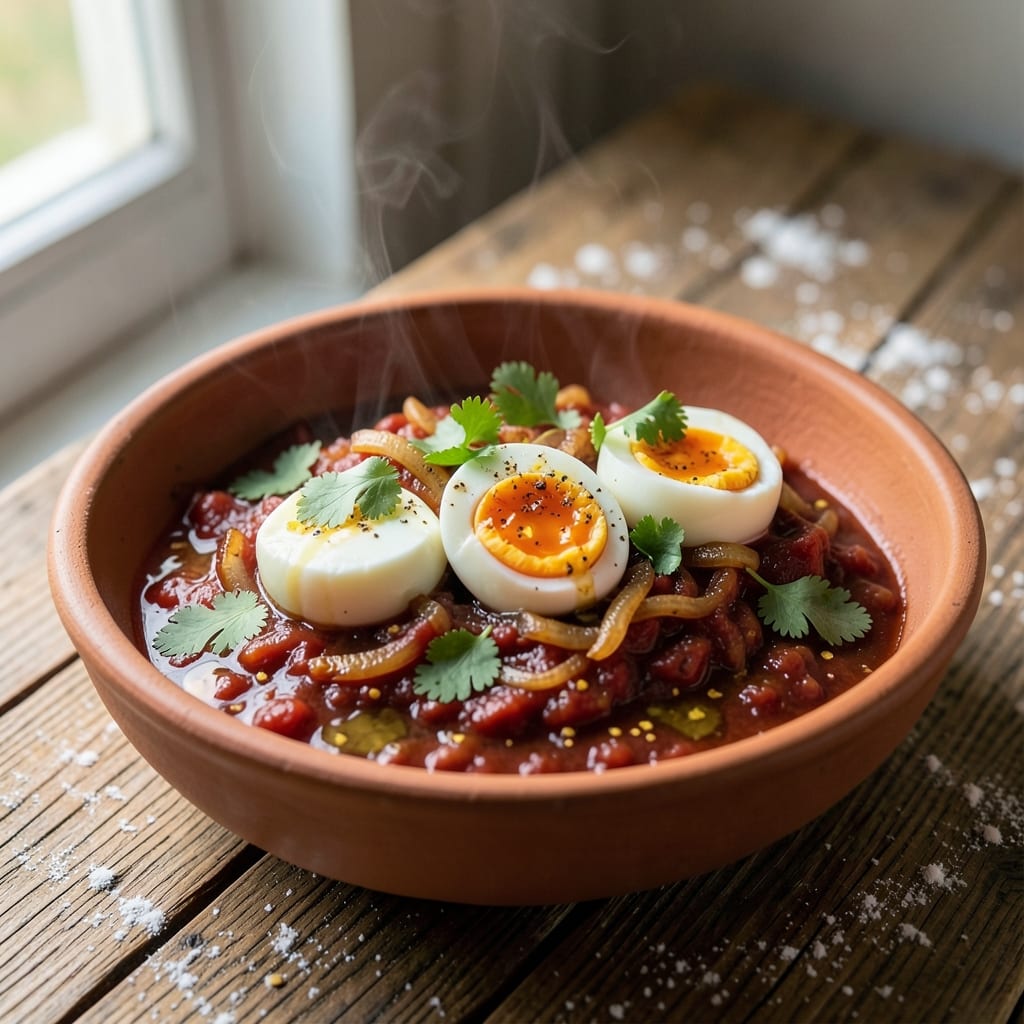
This Eastern egg masala recipe transforms simple scrambled eggs into a restaurant-worthy dish with rich tomato gravy and aromatic spices. The secret lies in tempering whole spices in ghee—a technique that infuses every bite with warm, earthy flavors. I developed this recipe after years of experimenting with regional variations, and it's now a staple in my household for both breakfast and light dinners.
The dish begins with perfectly scrambled eggs that stay silky in the center, then gets elevated by a vibrant tomato-based gravy. Turmeric, cumin, and garam masala create layers of flavor, while fresh cilantro adds brightness at the end. What makes this recipe special is how it balances simplicity with depth—no complex techniques, just precise timing and quality ingredients.
By the time you serve it, you'll have a dish that's creamy, spiced, and deeply satisfying—ideal for pairing with roti, naan, or steamed rice. The aromatic spices and tangy tomato gravy make this egg masala a standout, whether you're feeding a family or treating yourself to a flavorful meal. Ready to elevate your scrambled eggs?
This recipe delivers restaurant-quality results with minimal effort, making it perfect for weeknight dinners or special occasions. The silky eggs and rich gravy create a harmonious balance that's both comforting and exciting. Let's get started on this flavorful journey!
Ingredients for eastern egg masala
Six eggs and aromatic spices transform into restaurant-quality Eastern egg masala with rich tomato gravy.
| Ingredient | Amount | Notes |
|---|---|---|
| Large Eggs 🥚 | 6 whole | Freshly beaten for silky texture |
| Ghee 🧈 | ½ cup | Clarified butter for rich flavor |
| Fresh Tomatoes 🍅 | 2 medium | Ripe, diced for vibrant gravy |
| Yellow Onion 🧅 | 1 medium | Finely chopped for aromatic base |
| Tomato Paste 🍅 | 2 tbsp | Concentrated flavor booster |
| Garam Masala 🌶️ | 1 tsp | Authentic blend for depth |
| Ground Cumin 🌿 | ½ tsp | Toasted for earthy warmth |
| Turmeric Powder 🧂 | ¼ tsp | For vibrant color and health benefits |
| Red Chili Powder 🌶️ | ½ tsp | Adjust for heat preference |
| Fresh Cilantro 🌿 | ¼ cup | Chopped for fresh brightness |
| Green Chilies 🌶️ | 2 whole | Slit lengthwise for mild heat |
| Salt 🧂 | ½ tsp | Diamond Crystal preferred |
| Heavy Cream 🥛 | ¼ cup | For creamy finish (vegetarian) |
The garam masala and cumin are non-negotiable for authentic flavor—Penzeys Spices or Madhur brand deliver consistent quality. Fresh tomatoes should be ripe but firm—Heirloom varieties from local markets add depth. For the ghee, Amul or Gowardhan brands work best, with a rich golden color indicating high quality. The green chilies should be fresh and slightly firm—Bird's Eye chilies add the perfect kick without overpowering. Fresh cilantro from the grocery store's produce section is ideal, but stems removed and loosely packed leaves ensure maximum flavor.
No garam masala? Mix 0.25 tsp each of cumin, coriander, cinnamon, cardamom, and cloves for a homemade version. Substitute tomato sauce for paste in a pinch, but reduce by half the amount. Heavy cream unavailable? Coconut milk works as a dairy-free alternative, though texture will differ slightly. For turmeric, organic powder from bulk bins stays potent longer than pre-ground. The onion can be swapped for shallots (same amount) for a milder, sweeter base. Fresh tomatoes not ripe enough? Roast them with a pinch of salt for 20 minutes at 400°F to concentrate flavor.
Store the garam masala and cumin in airtight containers away from light for up to 6 months. Fresh cilantro keeps best wrapped in damp paper towels in the fridge for 5 days. The ghee remains stable at room temperature for 12 months if sealed properly. Tomato paste can be refrigerated for 1 month or frozen for 6 months. For meal prep, cook the eggs and gravy separately—combine just before serving to maintain silky texture. Leftovers reheat beautifully in a skillet with a splash of water to prevent drying.
Why You'll Love This Recipe
- Five-Ingredient Magic: I swear by this—just eggs, ghee, tomatoes, onions, and paste. That’s it. No chopping mountains of herbs or hunting for obscure spices. The tomato paste gives it that rich depth without extra work.
- Ghee Love: Honestly, the ghee makes this dish. It’s not just cooking the eggs—it’s frying them in golden, fragrant ghee until the yolks are runny and the edges crisp. That buttery aroma alone makes me want to eat it straight from the pan.
- Breakfast or Dinner: This isn’t just a side—it’s a full meal that works anytime. Serve it with roti for breakfast or pair it with rice for dinner. Even my picky teen devours it cold the next day (yes, really).
- Leftovers That Still Shine: Between us, this recipe tastes better the next day. The flavors meld into something even more complex, and reheating it keeps the eggs creamy. I make a big batch on Sundays so I’m not scrambling midweek.
Step-by-step instructions for Eastern egg masala
Master this delicate balance of silky eggs and aromatic tomato gravy with precise technique.
Prepare the Aromatic Base
Heat the 0.5 cup ghee in a heavy-bottomed pan over medium-low heat. Add the 1 medium yellow onion, finely chopped, and sauté for 5-6 minutes until translucent and golden. The onions should caramelize slightly at the edges—this develops deep flavor.
Add the 2 whole green chilies, slit lengthwise, and the 2 tbsp tomato paste. Stir continuously for 2 minutes until the paste darkens and the chilies soften. This step builds the foundation for the rich, spiced gravy that will later cradle the eggs.
Develop the Spiced Tomato Gravy
Add the 2 medium fresh tomatoes, diced, along with the 0.5 tsp salt, 0.5 tsp ground cumin, 0.25 tsp turmeric powder, and 0.5 tsp red chili powder. Cook for 8-10 minutes until the tomatoes break down into a thick, glossy sauce. The mixture should reduce by about half, intensifying the flavors.
Lower the heat to medium-low and stir in the 1 tsp garam masala. Let it bloom for 1-2 minutes—this releases the warm, earthy notes that define Eastern cuisine. The gravy should now coat the back of a spoon with a velvety texture.
Cook the Eggs to Silky Perfection
In a separate bowl, beat the 6 whole large eggs until just combined—no need for stiff peaks, just enough to blend the yolks and whites evenly. Pour the eggs into the spiced tomato gravy in a slow, steady stream while stirring gently with a spatula. The eggs should begin to set immediately as they hit the warm gravy.
Continue stirring on low heat for 3-4 minutes until the eggs reach a soft, custard-like consistency—they should still have a slight wobble in the center when you test with a spatula. Overcooking will turn them rubbery, so watch closely and remove from heat just as they begin to thicken.
Finish with Cream and Fresh Herbs
Reduce the heat to low and stir in the 0.25 cup heavy cream. Let it warm through for 1 minute, then fold in the 0.25 cup fresh cilantro, chopped. The cream adds a luxurious finish while the cilantro brightens the dish with its fresh, citrusy notes.
Taste and adjust seasoning—add a pinch more salt or red chili powder if needed. The final texture should be a luscious blend of silky scrambled egg suspended in a rich, spiced tomato gravy. Serve immediately with steamed basmati rice or naan bread for the perfect balance.
Pro Tips For Making Eastern Egg Masala
- CRACK EGGS COLD: I learned this the hard way—sliding eggs straight from the fridge into hot ghee makes them seize up like rubber. Let them sit in warm water for 2 minutes first, then crack them gently into a bowl. The whites will flow smoother and coat the eggs evenly, giving you that perfect silky texture instead of lumpy curds.
- SAUTÉ ONIONS LOW: My grandmother swore by this, and she was right: cook your onions over medium-low heat until they’re deep golden, not brown. If you rush it, they’ll burn before the sweetness develops, and your masala will taste raw. Stir occasionally—about 8-10 minutes—and resist the urge to crank the heat.
- TOMATO PASTE FIRST: Sounds weird, but it works: bloom your spices in ghee, then immediately add the tomato paste before the raw onions. This locks in the flavor and prevents the paste from burning while the onions cook. I used to add it later, and the dish always tasted flat—like something was missing.
- EGG SEASONING MATTERS: Skip the salt in the water when boiling eggs, but season the masala heavily afterward. A pinch of turmeric in the boiling water keeps them bright, but the real magic is in the final salt hit—about ½ teaspoon per egg—mixed directly into the ghee before adding the cooked eggs. Trust me, your taste buds will notice.
Common mistakes when making your eastern egg masala
Overcooking the Eggs
This is the most common mistake I see when making egg masala. The eggs should have a soft, custard-like center—if you cook them too long, they'll turn rubbery and dry. I learned this the hard way after my first attempt left me with scrambled eggs that tasted like shoe leather. 🥚 The key is to remove them from heat the moment they start to set but still have a slight wobble when you test with a spatula.
To prevent this, keep the heat on low during the final cooking stage and stir continuously. If your eggs start looking too firm, immediately transfer the pan to a cold burner or remove it from heat completely. The residual warmth will finish cooking them gently. Trust your eyes and taste—if it looks perfect but tastes slightly underdone, it's ready!
Skipping the Ghee Tempering
Many recipes call for oil, but ghee is non-negotiable for authentic flavor. I once made this dish with vegetable oil and was disappointed by how flat it tasted. Ghee adds a rich, nutty depth that infuses the spices beautifully. When you sauté onions in ghee, they develop a golden color and caramelized edges that create complex flavors you won't get with neutral oils.
Don't rush this step—let the onions cook for 5-6 minutes until they're translucent and slightly browned. This builds the aromatic base that carries the entire dish. If you're short on time, at least use butter instead of oil, but ghee is truly the best choice for that authentic Eastern touch.
Ignoring the Spice Bloom
The moment you add garam masala to the gravy, let it bloom for 1-2 minutes before stirring in the eggs. Skipping this step means you'll miss out on the warm, earthy notes that define Eastern cuisine. I've seen people add it too late, and the result is a dish that lacks depth and complexity.
Think of it like making tea—the spices need time to release their flavors. Lower the heat to medium-low after adding garam masala and let it sit undisturbed for a minute. You'll notice the aroma intensify as the spices wake up. This is when the magic happens—don't rush it!
Using Pre-Ground Spices
Freshly ground spices make all the difference in this recipe. I've used pre-ground cumin and turmeric before, and while it works, the flavor isn't as vibrant. Whole spices retain their potency longer, and grinding them just before use ensures maximum flavor. If you must use pre-ground, look for organic brands like Penzeys or Madhur that stay fresh longer.
For cumin, toast it in a dry pan for 30 seconds until fragrant before adding to the gravy. This enhances its earthy warmth. Store your spices in airtight containers away from light to preserve their flavor. The difference between freshly ground and stale spices is like night and day in this dish.
Adding Cream Too Early
Many people add the heavy cream as soon as the eggs start cooking, but this can cause the eggs to curdle. The cream should be introduced only at the very end when the eggs are nearly done. I've seen this mistake turn a creamy dish into a lumpy mess—trust me, it's not pretty. 🥛
Warm the cream gently in a separate small saucepan before adding it to the eggs. This ensures it integrates smoothly without breaking the eggs' delicate texture. Stir it in on low heat and let it warm through for just 1 minute—no longer, or you risk overcooking the eggs again.
Not Adjusting Seasoning at the End
Taste your dish before serving and adjust the seasoning. I've made this mistake too many times, thinking the gravy was perfectly seasoned only to realize it needed more salt or chili powder after plating. The flavors meld as the dish sits, so always check and adjust right before serving.
Start with the 0.5 tsp salt called for, but be ready to add more—especially if you're using homemade garam masala. A pinch of red chili powder can also brighten the dish if it tastes flat. Remember, you can always add more, but you can't take it out once it's in!
Nutrition facts
Frequently asked questions
What makes this Eastern egg masala different from regular scrambled eggs?
This recipe transforms ordinary scrambled eggs into a flavorful dish with tomato-based gravy, aromatic spices like garam masala, and a rich finish of heavy cream. The key difference is the spiced tomato base that infuses the eggs with warm, earthy flavors while keeping them silky and custard-like. It's essentially a fusion of comfort food and Eastern cuisine!
Can I make this recipe without ghee?
While ghee adds authentic flavor, you can substitute with butter (use same amount) or vegetable oil (though flavor will be milder). For best results, use clarified butter if available. The onions won't caramelize as beautifully, but the dish will still taste delicious. Ghee's rich, nutty notes are what give this dish its signature depth.
How spicy is this egg masala?
The recipe includes green chilies and red chili powder for mild heat, but you can adjust to taste. For a milder version, reduce the chili powder to 0.25 tsp or omit the green chilies entirely. For extra heat, add 0.25 tsp cayenne pepper or more green chilies. The dish starts with subtle warmth that builds with each bite.
Can I prepare this ahead of time?
For best texture, cook the eggs and gravy separately, then combine just before serving. The eggs should be undercooked when reheating to maintain their silky consistency. Store components in airtight containers in the fridge for up to 2 days. Reheat the gravy separately, then gently warm the eggs in a skillet before mixing. Leftovers reheat beautifully with a splash of water or milk.
What are the best sides to serve with this dish?
This egg masala pairs perfectly with steamed basmati rice, garlic naan, or whole wheat roti. For extra freshness, add a side of mint-cilantro chutney or a simple cucumber raita. The creamy eggs and spiced gravy balance beautifully with the softness of bread or the crunch of fresh vegetables. Pro tip: Warm the bread just before serving to keep it fresh!