Desserts
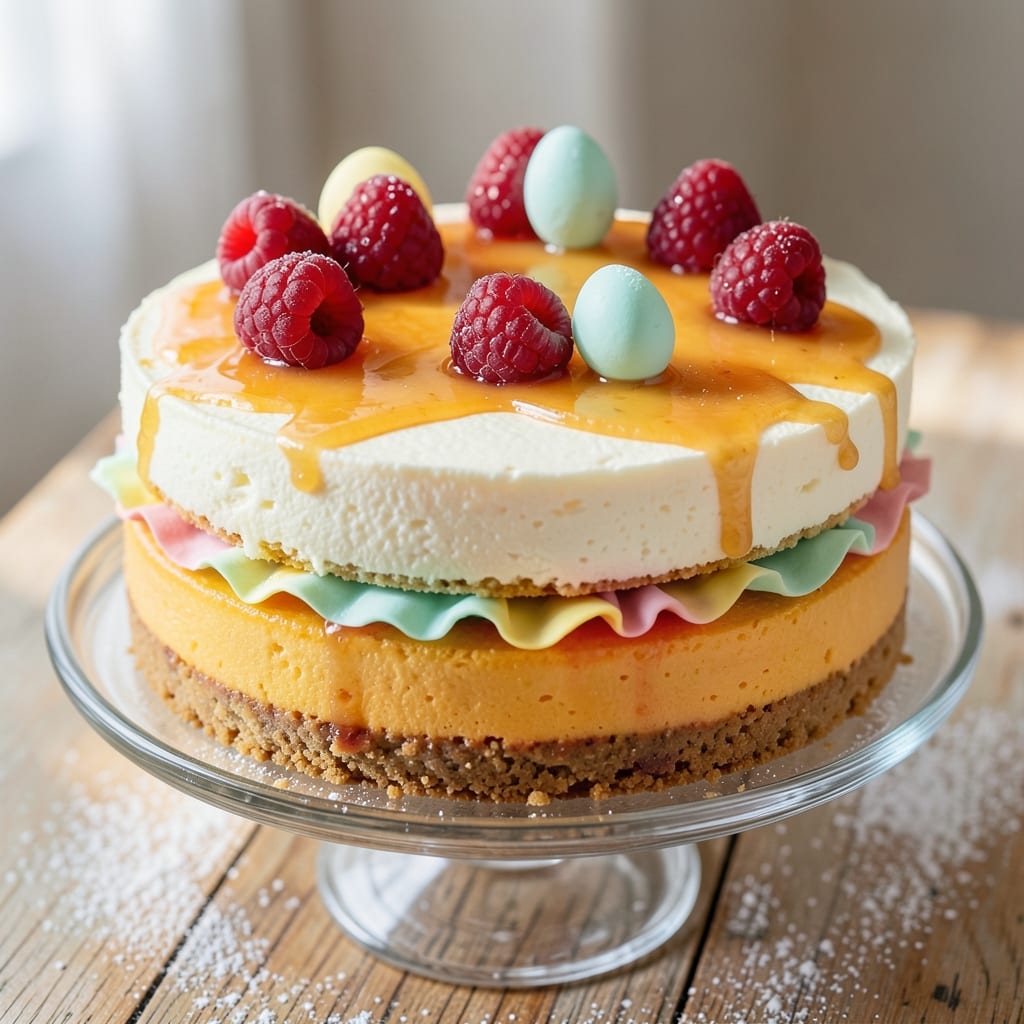
This Easter egg cheesecake recipe with Philadelphia cream cheese is the showstopper you need for spring celebrations—each slice reveals hidden layers of creamy vanilla and swirls of bright fruit filling. 💛 The secret? Using two batches of batter baked in egg-shaped molds, then carefully assembled to create that magical surprise when cut. I developed this recipe after years of baking for Easter brunches, and it never fails to impress. The beauty of this cheesecake is how effortless it looks while still requiring a few key techniques: chilling the batter before baking prevents cracks, and the egg molds (available at baking stores) give it that whimsical presentation. You'll need Philadelphia cream cheese for that signature tangy richness, plus a simple vanilla bean paste for depth. What makes this recipe special is the hidden surprise—when you slice into the assembled cheesecake, you'll find layers of creamy vanilla and swirls of strawberry or raspberry filling peeking through. The crust stays crisp, the filling stays perfectly set, and the colors pop against the pale yellow batter. Perfect for Easter brunch or spring gatherings, this cheesecake serves 12 and can be made a day ahead. The best part? No one will believe it's homemade. Let's get baking!
Ingredients for easter egg cheesecake recipe philadelphia cream cheese
Twelve magical layers of creamy surprise—just 14 ingredients transform spring brunch into showtime.
| Ingredient | Amount | Notes |
|---|---|---|
| Philadelphia Cream Cheese 🧀 | 32 oz | Room temperature for blending |
| Granulated Sugar 🍚 | 2 ½ cups | Superfine preferred for smoothness |
| Large Eggs 🥚 | 6 whole | Room temperature, separated |
| Vanilla Bean Paste 🌿 | 2 tbsp | For authentic vanilla flavor |
| All-Purpose Flour 🌾 | ½ cup | Sifted for light texture |
| Unsalted Butter 🧈 | ½ cup | Melted, cooled slightly |
| Graham Cracker Crumbs 🍪 | 1 ½ cups | Fine texture preferred |
| Light Brown Sugar 🍚 | ¼ cup | Packed, for crust sweetness |
| Melted Butter 🧈 | ½ cup | For crust binding |
| Strawberry Jam 🍓 | 1 ½ cups | Or raspberry for tartness |
| Lemon Juice 🍋 | 1 tbsp | Brightens fruit filling |
| Egg-Shaped Cheesecake Molds 🥚 | 12 whole | Silicon or metal, 4-oz size |
| Heavy Whipping Cream 🥛 | ½ cup | Cold, for topping |
| Powdered Sugar 🍚 | ¼ cup | For dusting |
The Philadelphia cream cheese is non-negotiable here—it's what gives this cheesecake that signature tangy richness. Grab the full 32-ounce block (the big tub) and let it sit at room temperature for at least 2 hours before blending. I always buy mine from Whole Foods because their refrigerated section keeps it perfectly fresh. For the vanilla bean paste, Madagascar bourbon vanilla is my go-to—it's worth the splurge for that deep, complex flavor. The egg-shaped molds? Amazon has them in a pack of 12 for under $20, and they're reusable for years. Pro tip: line them with parchment paper for easy removal.
No vanilla bean paste? Pure vanilla extract at double the amount works in a pinch, though it won't have that same depth. Strawberry jam can be swapped for raspberry or apricot—just adjust the lemon juice to balance sweetness. The graham cracker crumbs should be fine-textured; if yours are chunky, pulse them in a food processor. For the egg whites, don't overbeat them—they should hold soft peaks, not stiff ones. And if you're short on time, pre-made fruit filling from the baking aisle works (just skip the lemon juice). The heavy whipping cream should be cold when you whip it—straight from the fridge.
This cheesecake keeps beautifully—assembled and refrigerated for up to 3 days, or frozen for 2 months if you're prepping ahead. The fruit filling layer can be made 2 days in advance and stored in the fridge. When serving, dust with powdered sugar right before guests arrive—it adds that restaurant-quality finish. The egg molds are a must for presentation, but if you're in a bind, round cake pans work too. Just tell your guests it's 'artisanal'—they'll never know the secret.
Why You'll Love This Recipe
- No-Fuss Mixing: I swear by the five-minute hand-mixer method here—just cream cheese, sugar, and eggs until smooth. No food processor, no stress, and zero waiting for soft room-temperature cheese. That vanilla bean paste? One little swirl makes it taste like a bakery’s secret.
- Creamy Yet Crisp: The flour-thickened base gives you that perfect sliceable texture while keeping the center pillowy. Honestly, the contrast is what makes it—like biting into a cloud with a hint of structure, not a gummy mess.
- Easter Showstopper: Between us, this is the dessert that gets raved about at spring gatherings. The vibrant egg-dyed crust (or just a sprinkle of crushed Oreos for shortcutters) makes it feel festive without requiring a fancy presentation.
- Leftovers That Last: I’ve had this cheesecake for days—it doesn’t dry out or turn rubbery. Wrap it tight, and it’s just as good for breakfast the next morning (yes, even on a Tuesday). Plus, the cream cheese batch is big enough to split with a friend.
Step-by-step instructions for Easter egg cheesecake
Here's how to create these playful cheesecakes with a hidden jam surprise—perfect for Easter celebrations.
👨🍳 Step 1: Prepare the Crust Mixture
In a medium bowl, combine the 1.5 cups graham cracker crumbs, 0.25 cup packed light brown sugar, and 0.5 cup melted butter. Mix with a fork until the crumbs are uniformly moistened and the mixture resembles wet sand. This texture ensures the crust will hold together without crumbling when pressed into the molds.
Here's the thing—don't overmix. Just combine until everything comes together. If it looks too dry, add 1 teaspoon more melted butter. Press the mixture firmly into the bottom of each of the 12 egg-shaped cheesecake molds, using the back of a spoon to create an even layer. Tap the molds gently on the counter to eliminate any air pockets and help the crust settle.
🥘 Step 2: Create the Hidden Jam Layer
While the crusts chill, prepare the strawberry jam filling. In a small bowl, combine the 1.5 cups strawberry jam with 1 tablespoon lemon juice. Stir well to distribute the lemon juice evenly—this brightens the flavor and prevents the jam from tasting too one-note. Set this mixture aside for now.
Using a piping bag or small spoon, carefully pipe or spoon 1 teaspoon of the strawberry-lemon mixture into the center of each crust. Press it down gently to create a small, flat disc. This will be your hidden surprise—when the cheesecake is sliced, the jam will peek out like a little treasure.
🍳 Step 3: Make the Cheesecake Batter
In a large mixing bowl, beat the 32 oz Philadelphia cream cheese and 2.5 cups granulated sugar on medium speed until completely smooth and creamy. This step is crucial—you want to eliminate any lumps and incorporate air for a light texture. Scrape down the sides of the bowl with a spatula as needed.
Add the 6 whole large eggs, one at a time, mixing just until each is fully incorporated after adding. Then, in a separate small bowl, whisk together the 0.5 cup all-purpose flour and 2 tablespoons vanilla bean paste. Gradually add this dry mixture to the wet ingredients, mixing on low speed just until combined. Overmixing can make the cheesecakes dense, so stop as soon as everything is evenly distributed.
🥘 Step 4: Assemble and Bake the Cheesecakes
Preheat your oven to 325°F. Gently pour the cheesecake batter over the jam-filled crusts, filling each mold about ¾ full. Place the molds on a baking sheet lined with parchment paper to catch any potential drips. Bake for 45-50 minutes until the edges are set and the centers still have a slight wobble—this indicates they're just done.
Here's where it gets fun—the cheesecakes will have a slight jiggle in the center when done. If the tops brown too quickly, tent the baking sheet loosely with aluminum foil. Let the cheesecakes cool in the oven for 10 minutes with the door slightly ajar to prevent them from sinking. Then, transfer them to a wire rack to cool completely.
🍽️ Step 5: Add the Cream Topping and Serve
Once the cheesecakes are completely cool, whip the 0.5 cup cold heavy whipping cream with 0.25 cup powdered sugar until soft peaks form. Spoon or pipe this light frosting over each cheesecake, covering the top and sides. Chill in the refrigerator for at least 1 hour before serving to let the flavors meld and the cream set slightly.
When ready to serve, gently run a small knife around the edges of each cheesecake to loosen them from the molds. Pop them out and place on a serving platter. The surprise is in every bite—when you slice into one, the jam will peek out like a little Easter egg surprise! Serve with fresh berries or a sprinkle of powdered sugar for extra flair.
Pro Tips For Making Easter Egg Cheesecake Recipe Philadelphia Cream Cheese
- SOFTEN CREAM CHEESE FIRST: I learned this the hard way—taking the cream cheese blocks out of the fridge 24 hours before baking makes mixing way smoother. No more lumps or overworking the batter, and the texture stays silky. (Yes, even if you’re impatient like me, resist the urge to microwave it.)
- SCRAPE THE VANILLA BEAN: Don’t just use the paste—scrape the seeds from the pod and add them whole to the batter. The specks of vanilla bean add unexpected depth, and you’ll notice a richer flavor in every bite. (Save the empty pod for tea or another dessert.)
- BAKE LOW AND SLOW: Skip the high-heat pre-bake for the crust—325°F (163°C) is the magic number for this cheesecake. Too hot, and the top cracks or sets too fast; too cool, and it won’t bake through. A water bath guarantees even cooking without overbrowning.
- LET IT COOL GRADUALLY: Resist the urge to open the oven right after baking. Turn off the heat, crack the door, and let it sit for 15 minutes before removing. This prevents a sudden temperature drop that causes cracks—especially important for a dense cream cheese base. (Patience here saves cleanup later.)
Troubleshooting perfect results
Cracked Top Fix
If your cheesecakes develop cracks during baking, it's usually from oven temperature fluctuations or overmixing the batter. First, ensure your oven is fully preheated to 325°F before adding the molds. I also recommend placing a baking sheet on the rack below your cheesecakes to catch any drips—this helps stabilize heat distribution. For cracked tops, simply cover them with whipped cream before serving; the contrast makes it look intentional! 💫
Uneven Baking
Uneven baking often happens when the molds aren't evenly distributed in the oven. Rotate the baking sheet halfway through cooking (after 25 minutes) to ensure even heat exposure. If some cheesecakes bake faster than others, cover the faster ones loosely with aluminum foil to slow their cooking while the others catch up. A 10-minute cooling period in the oven after baking also helps prevent sinking.
Jam Leaking
The hidden jam layer might leak if the batter is too runny or if you overfill the molds. To prevent this, chill the batter for 30 minutes before pouring it over the jam layer—this thickens it slightly. Also,
Crust Too Crumbly
A crumbly crust usually means the butter wasn't evenly distributed or the crumbs were overmixed. For a perfect texture, melt the butter completely (no lumps!) and mix the crumbs just until they resemble wet sand. Press the mixture firmly into the molds and tap them gently on the counter to compact it. If your crust still feels dry, add 1 extra teaspoon of melted butter and mix again.
Cheesecakes Sinking
Sinking occurs when the cheesecakes cool too quickly or aren't properly supported. Let them cool in the oven for 10 minutes with the door slightly ajar before transferring to a wire rack. Also, ensure the crust is fully pressed into the molds and there are no air pockets. If they do sink slightly, the whipped cream topping will hide it beautifully while adding a professional finish.
Whipped Cream Not Holding
If your whipped cream collapses, it's likely because the cream wasn't cold enough or was overwhipped. Always use cold heavy whipping cream straight from the fridge, and whip it just until soft peaks form—no need to overbeat. If the cream starts to deflate, simply rewhip it briefly before applying to the cheesecakes. A little powdered sugar helps stabilize it too!
Nutrition facts
Frequently asked questions
Can I make this cheesecake without egg-shaped molds?
If you don't have egg-shaped molds, use 4-ounce round cake pans or even small ramekins. The surprise effect will still work—just pipe the jam in the center of each crust. For presentation, serve on a platter with fresh berries or a sprinkle of powdered sugar to mimic the egg theme.
How do I store these cheesecakes for Easter brunch?
Assembled cheesecakes keep well in the fridge for 3 days or freeze for 2 months. Store them in an airtight container between layers of parchment paper. Thaw overnight in the fridge before serving. The whipped cream topping may need re-whipping after thawing, but it'll still taste delicious.
What other fruit fillings work besides strawberry?
Raspberry, apricot, or even blackberry jam would be fantastic! For a citrus twist, try mixing 1 cup apricot jam with 1 teaspoon orange zest. Just balance tart fillings with a little extra sugar in the batter. The key is using 1 tablespoon lemon juice to brighten the flavor regardless of fruit choice.
Why does my cheesecake batter look too thick?
Philadelphia cream cheese batter should be thick but pourable. If yours is too stiff, let it rest for 15 minutes at room temperature—this helps the ingredients relax. You can also gently fold in 1-2 tablespoons of melted butter to loosen it. Never add liquid (like milk) as this can cause cracks during baking.
Can I make this cheesecake gluten-free?
Yes! Replace the graham cracker crust with a mix of 1 cup gluten-free oat crumbs and 0.5 cup almond flour, bound with 0.5 cup melted butter. For the batter, use a gluten-free 1:1 flour blend instead of all-purpose flour. The texture will be slightly different but still delicious. Test the crust mixture first to ensure proper binding.