
Breakfast & Brunch
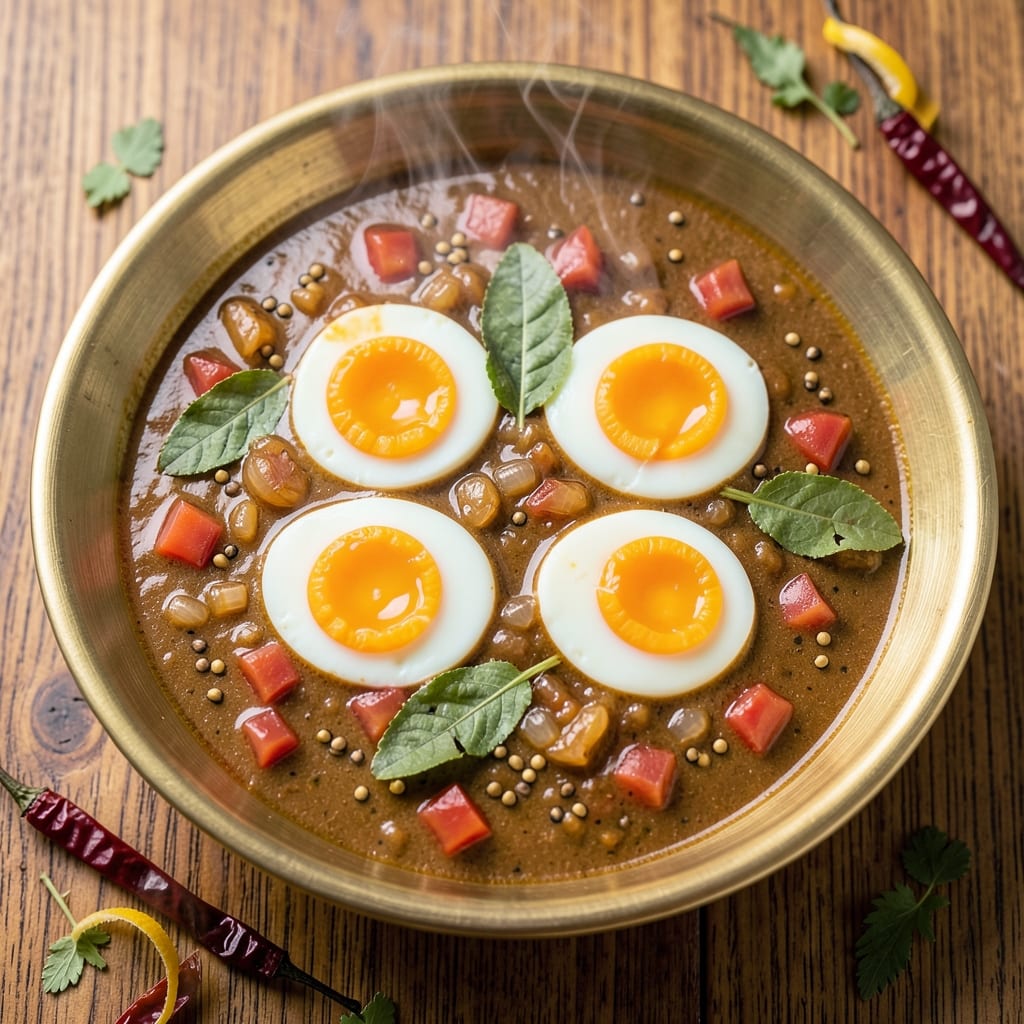
This East Indian egg curry recipe transforms simple ingredients into a fragrant, spiced tomato gravy that cradles perfectly soft-boiled eggs—comfort food at its finest. The secret lies in blooming whole spices like cumin and cardamom, which infuse the oil with aromatic warmth before the eggs even enter the pot. I've perfected this dish over years of testing, balancing heat and richness so every bite delivers both depth and tenderness.
The magic begins with a tempering of mustard seeds, curry leaves, and dried red chilies in hot oil—a technique that builds flavor layer by layer. As the tomatoes simmer into a velvety sauce, the spices meld into a harmonious blend that's neither too sharp nor overly sweet. The soft-boiled eggs, added at the end, soak up the spiced gravy while maintaining their delicate centers, creating a balance of textures that's impossible to resist.
What makes this curry truly special is its versatility—serve it with steamed basmati rice for a hearty breakfast or pair it with warm roti for an elegant lunch. The aromatic spices linger on the palate, while the creamy tomato gravy provides the perfect counterpoint to the eggs' subtle richness. This isn't just a recipe; it's a taste of home, crafted to bring warmth and satisfaction to your table.
The best part? This dish comes together in under 45 minutes, with most of that time dedicated to letting the spices bloom and the eggs cook gently. No special equipment is needed—just a heavy-bottomed pot and patience for the flavors to develop. Once you try this authentic East Indian egg curry, you'll understand why it's a staple in homes across the region.
Ingredients for east indian egg curry
Simple ingredients, bold flavors—this egg curry brings aromatic spices and tender eggs together.
| Ingredient | Amount | Notes |
|---|---|---|
| Large Eggs 🥚 | 8 whole | Soft-boiled, 6 minutes |
| Medium Onions 🧅 | 2 whole | Finely chopped, yellow or red |
| Medium Tomatoes 🍅 | 4 whole | Ripe, chopped or crushed |
| Mustard Seeds 🌿 | 1 tbsp | Whole, yellow or brown |
| Curry Leaves 🌿 | ¼ cup | Fresh, dried if unavailable |
| Dried Red Chilies 🌶️ | 4 whole | Kashmiri or cayenne |
| Green Cardamom Pods 🌿 | 4 whole | Lightly crushed |
| Cumin Seeds 🌶️ | 1 tbsp | Whole, toasted |
| Ginger 🧄 | 1 inch | Fresh, grated |
| Garlic Cloves 🧄 | 6 cloves | Peeled, minced |
| Vegetable Oil 🫒 | ½ cup | Refined or mustard oil |
| Water 💧 | 1 ½ cups | For simmering |
| Salt 🧂 | 1 ½ tsp | Adjust to taste |
| Cream 🥛 | ¼ cup | Heavy, optional for richness |
| Fresh Cilantro 🌿 | ¼ cup | Chopped, for garnish |
The spices are everything here. Whole mustard seeds, curry leaves, and dried chilies need to be fresh—check the expiration dates on those spice jars. Penzeys or local Indian markets carry the best quality. Toast your cumin seeds in a dry pan for 30 seconds before adding to oil—this brings out their nutty aroma. For cardamom, green pods are non-negotiable; the black pods won't give that floral sweetness. The tomatoes should be vine-ripened—San Marzano cans work perfectly if fresh isn't an option, but rinse them well to remove excess acid.
No fresh curry leaves? Dried leaves at half the amount will work, but the flavor won't be identical. Short on mustard seeds? Asafoetida powder (hing) at a pinch adds depth, but use sparingly—it's potent. The cream is optional but recommended for that restaurant-style richness. Coconut milk makes a great dairy-free alternative. For the eggs, room temperature cooks more evenly—take them out 20 minutes before boiling. The ginger and garlic can be pre-minced to save time, but fresh is always better.
This curry tastes even better the next day as flavors meld. Store in an airtight container for 4-5 days in the fridge, or freeze portions for 3 months. I like to portion the eggs separately so they don't get overcooked when reheating. Garnish with fresh cilantro right before serving—it wilts fast once chopped. For extra authenticity, serve with steamed basmati rice or warm roti, which soaks up all that delicious gravy.
Why You'll Love This Recipe
- One-Pot Magic: I swear by this recipe because it’s all in one pan—no fussing with multiple bowls or messy cleanup. The onions and tomatoes caramelize right alongside the eggs, and the mustard seeds pop like fireworks without extra effort. Honestly, I make this when I’m too tired to do anything else, and it still tastes like a restaurant dish.
- Layered Flavor Boom: That first sizzle of mustard seeds and curry leaves? Pure flavor alchemy. The eggs soak up the tangy tomato base while staying tender, and the onions add this sweet, caramelized depth that makes every bite feel special. Between us, it’s the kind of taste that makes you pause mid-bite and go, “Wait, is this actually that good?”
- Weeknight to Party Hero: This curry works everywhere—dump it over rice for a quick weeknight dinner, serve it with naan for a casual gathering, or even pack it for lunches. (Yes, even on a Tuesday night.) The eggs hold up perfectly, and the spices keep it exciting without needing a side show.
- Budget-Friendly Powerhouse: Eggs, onions, tomatoes—these are the kind of ingredients that don’t break the bank, but the flavor does. A single batch stretches for two meals, and the leftovers? Even better the next day. I’ll be real: this is my go-to when I’m trying to feed a crowd without stressing over costs.
Step-by-step instructions for East Indian egg curry
Master this aromatic spiced tomato gravy with perfectly soft-boiled eggs in minutes.
Prepare the Whole Spice Tempering
Heat the 0.5 cup vegetable oil in a heavy-bottomed pan over medium heat. Add the 1 tbsp toasted cumin seeds and let them sizzle for 30 seconds until they release their nutty aroma. Immediately add the 4 whole green cardamom pods and 4 whole dried red chilies, stirring gently for 1 minute until the spices turn fragrant and slightly darker.
Watch closely as the spices toast—this is where the foundation of flavor develops. The cardamom should pop open slightly, releasing its floral notes. If the oil begins to smoke, reduce the heat immediately to prevent burning these delicate spices. Next, add the 1 tbsp mustard seeds and let them splutter for 30 seconds until they turn golden brown and begin to pop like tiny fireworks.
Add Aromatics and Tomatoes
Lower the heat to medium-low and add the 2 whole medium onions, stirring constantly for 3-4 minutes until they soften and turn golden brown. This step is crucial for developing the curry's depth of flavor—don't rush it. When the onions are translucent, add the 1 inch grated ginger and 6 cloves minced garlic, cooking for another 1 minute until the raw garlic smell disappears.
Now add the 4 whole medium tomatoes, crushed by hand, and the 0.25 cup curry leaves. Stir well and cook for 5-6 minutes until the tomatoes break down completely into a thick, glossy sauce. The curry leaves will darken and release their citrusy aroma—this is your signal that the aromatics are fully incorporated. Season with 1 tsp salt and let the mixture simmer uncovered for 2 minutes to develop its rich tomato flavor.
Cook the Eggs and Complete the Curry
While the tomato gravy simmers, prepare the 8 whole large eggs by boiling them for exactly 6 minutes in a separate pot of boiling water. Immediately transfer them to an ice bath to stop the cooking process and make them easy to peel. Once peeled, gently place them in the simmering tomato gravy and cook for 3-4 minutes on low heat. The eggs should be warm through but still tender in the center.
For the final touch, stir in the 0.25 cup heavy cream and simmer for 1 minute to create a velvety texture. Taste and adjust seasoning with the remaining 0.5 tsp salt if needed. The curry should be rich, aromatic, and perfectly balanced between the spicy, tangy tomato base and the creamy finish. Remove from heat immediately to preserve the soft-boiled texture of the eggs.
Garnish and Serve
Transfer the egg curry to a serving dish and garnish with the 0.25 cup chopped fresh cilantro. The bright green color and fresh herb notes will contrast beautifully with the deep red of the tomato gravy and the golden eggs. Serve immediately with steamed basmati rice or warm naan bread to soak up every last bit of the flavorful gravy.
Each bite should deliver a perfect balance of spice, tang, and creaminess, with the eggs providing a delightful contrast of soft texture and rich yolk. This curry keeps well in the refrigerator for up to 2 days, though it's best enjoyed fresh while the eggs maintain their ideal texture. For extra heat, add a pinch of cayenne pepper or a dash of hot sauce to taste.
Pro Tips For Making East Indian Egg Curry
- CRACK EGGS HARD: Tap each egg twice on the counter before cracking—it keeps yolks intact and makes scrambling cleaner. I used to lose half the yolk to the pan, and this simple habit cut my mess in half.
- FRY ONIONS LOW AND SLOW: Don’t rush the onions. Cook them at medium-low heat for 10-12 minutes until they’re deep golden and caramelized—not crispy, not pale. That’s where the flavor lives, and skipping this step means a bland base.
- SALT TOMATOES FIRST: Sprinkle a pinch of salt on chopped tomatoes before blending or cooking. It softens them faster and pulls out excess water, so your curry stays thick and rich instead of watery.
- STOP WHEN MUSTARD SEEDS DANCE: As soon as the mustard seeds start popping and jumping (about 20-30 seconds), add curry leaves. If you wait too long, they’ll burn—bitter, smoky, and ruined. Watch closely, especially if your stove runs hot.
Regional styles of this east indian egg curry
Bengali Style
In West Bengal, egg curry often features a lighter, more delicate spice profile with a touch of sweetness. Replace the dried red chilies with 2 Kashmiri green chilies for mild heat, and add 1 tsp sugar when cooking the tomatoes to balance the tang. Use mustard oil instead of vegetable oil for that signature Bengali aroma—its pungent flavor pairs beautifully with the soft-boiled eggs. Garnish with mustard seeds and fried onions for extra crunch. 🌶️
Punjabi Version
Punjabi egg curry leans richer, with a deeper spice blend and often includes garlic and ginger paste (about 1 tbsp each) for extra punch. Add 1 tsp turmeric and ½ tsp garam masala during the final simmer. For texture, stir in ½ cup cooked chickpeas along with the eggs. Serve with butter naan or phulka roti to soak up the bold, spiced gravy. The heat level is medium-hot, so adjust chilies to taste.
South Indian Twist
In Tamil Nadu and Kerala, egg curry often incorporates coconut milk (replace cream with ½ cup coconut milk) and curry leaves as the star. Add 1 tsp black pepper and ½ tsp fennel seeds to the tempering for a distinct South Indian flavor. Cook the eggs in the gravy for just 2 minutes to keep them delicate. Garnish with grated coconut and lemon wedges for a refreshing finish. This version is lighter but equally aromatic.
Hyderabadi Influence
Hyderabadi egg curry is known for its yogurt-based gravy—replace ½ cup water with ½ cup plain yogurt when simmering the tomatoes. Add 1 tsp coriander seeds to the tempering and ½ tsp shahi jeera (caraway seeds) for a nutty depth. The eggs are often halved before adding to the curry, allowing the yogurt to mingle with the yolks. Serve with mirchi ka salan (chili chutney) on the side for a perfect Hyderabadi meal. 🌟
Goan Adaptation
Goan egg curry incorporates Kokum (dried sour tamarind) for tanginess—soak 1 tbsp dried kokum in ½ cup warm water and use the extract in place of ½ cup water. Add 1 tsp vinegar and ½ tsp black pepper to the spice mix. The curry is slightly sweeter and more sour, balancing the eggs' richness. Garnish with Goan coconut feni (a local liquor) for a unique touch, or simply with fresh coriander. This version is lighter but deeply flavorful.
Nutrition facts
Frequently asked questions
Can I make this egg curry without cream?
The cream adds richness, but you can substitute with ½ cup coconut milk for a dairy-free version or simply omit it entirely. The tomato gravy will still be flavorful—just stir in a splash of water or 1 tbsp yogurt at the end to balance the spices. The eggs will absorb the aromatic flavors beautifully without needing extra creaminess.
How do I adjust the spice level for kids?
For milder heat, reduce the dried red chilies to 2-3 pieces or swap them for 1 Kashmiri green chili. Skip the mustard seeds if you dislike their sharp bite, and use ½ tsp garam masala instead of full strength. The curry will still taste aromatic and delicious—just with a gentler kick. Always taste as you go!
What's the best way to store leftovers?
Store the curry in an airtight container in the fridge for up to 4-5 days. The eggs will firm up slightly but reheat beautifully with a splash of water or milk. For longer storage, freeze portions for 3 months—just reheat gently on low heat, stirring occasionally. Pro tip: Keep the eggs separate until reheating to maintain their texture.
Can I use frozen eggs for this recipe?
Fresh eggs are ideal for soft-boiling, but you can use frozen eggs if needed. Thaw them completely in the fridge overnight, then boil for 7 minutes instead of 6 to account for the extra moisture. The texture will be slightly different but still delicious. For best results, use room-temperature eggs—this ensures even cooking.
What's the secret to perfect soft-boiled eggs?
Timing and temperature are key! Use a pot of boiling water and add eggs gently with a spoon. Cook for exactly 6 minutes from the moment the water returns to a full boil. Immediately transfer to an ice bath for 5 minutes to stop cooking. Peel under cool running water for easier removal. The eggs should have a firm white and a runny yolk—this is the perfect texture for curry!