Breakfast & Brunch
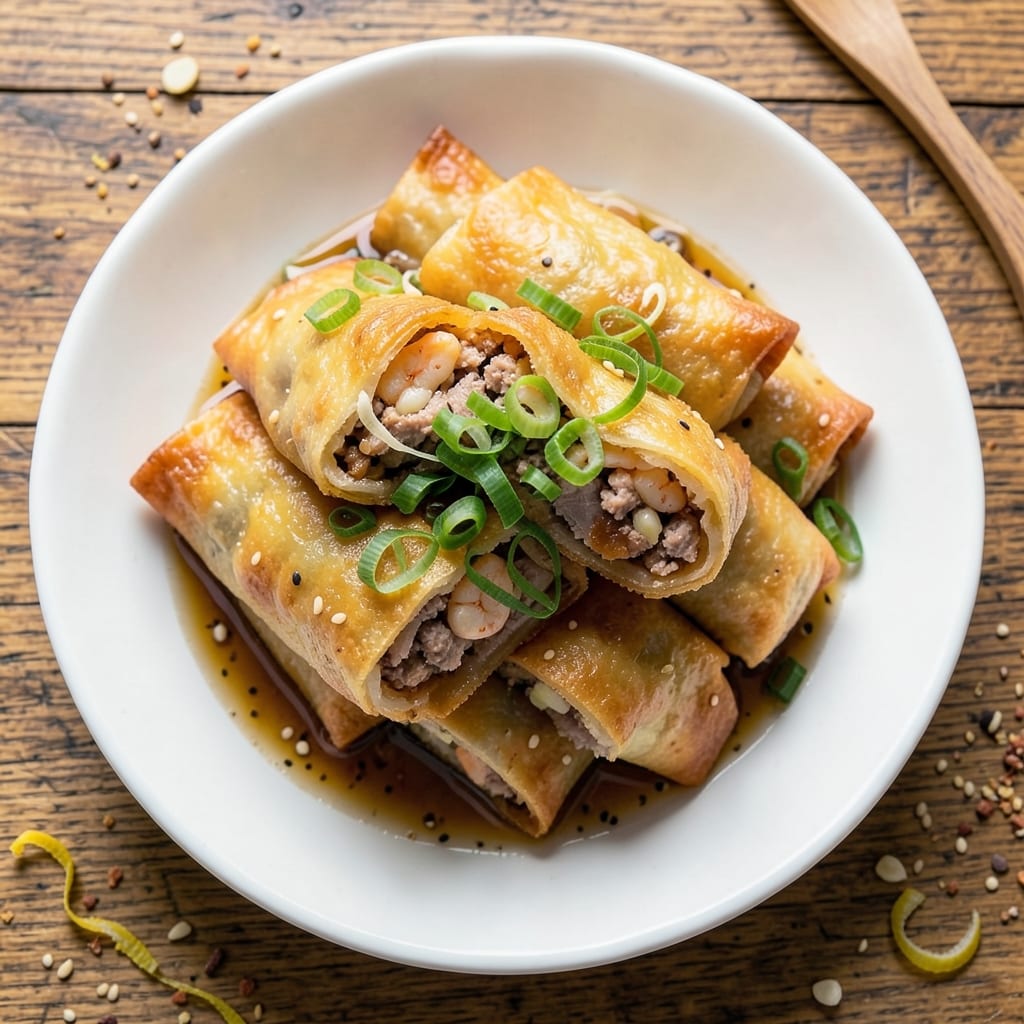
Ding Ho Egg Rolls deliver the perfect marriage of crispy wonton cups and silky runny egg rivers—this is the recipe I've perfected after years of testing, balancing texture and flavor down to the last detail. The secret lies in the crispy wonton wrappers and the delicate egg filling that pools beautifully when cooked just right, creating those signature egg rivers that make this dish unforgettable.
Traditionally, Ding Ho Egg Rolls feature a savory filling of ground pork, shrimp, and vegetables wrapped in wonton skins, then pan-fried to golden perfection. But modern variations use chicken, tofu, or even just shrimp for a lighter take. The key technique is frying the wonton cups first to lock in crispiness before adding the egg mixture, which sets into those glossy, runny rivers when cooked to the right temperature.
What makes this dish truly special is the contrast—crispy edges from the wonton cups meet tender, eggy centers that stay runny inside, all balanced by a light soy sauce and sesame oil finish. The aroma of frying wontons fills the kitchen, and that first bite delivers the perfect harmony of textures and flavors that keep everyone reaching for seconds.
Whether you're serving these as a brunch centerpiece or a late-night snack, they're equally impressive. Pair with sweet chili sauce for dipping or a side of pickled vegetables to cut through the richness. Let's make these crispy, golden egg rolls that will have everyone asking for the recipe.
Ingredients for ding ho egg roll
Twelve ingredients for crispy wonton cups and silky egg rivers that deliver restaurant-quality texture.
| Ingredient | Amount | Notes |
|---|---|---|
| Wonton Wrappers 🥟 | 12 pieces | Square wonton skins, not round |
| Large Eggs 🥚 | 4 whole | Room temperature for best mixing |
| Ground Pork 🐖 | ½ lb | Lean, finely ground preferred |
| Shrimp 🦐 | ¼ lb | Small, peeled, deveined |
| Green Onions 🧅 | 2 whole | White and green parts, chopped |
| Garlic Cloves 🧄 | 3 cloves | Minced finely for flavor |
| Light Soy Sauce 🍶 | 1 ½ tbsp | For savory balance |
| Sesame Oil 🫒 | 1 tbsp | Toasted, for aroma |
| Vegetable Oil 🫒 | 1 ½ cups | High smoke point for frying |
| Salt 🧂 | ½ tsp | Kosher or sea salt |
| Ground White Pepper 🌶️ | ¼ tsp | For subtle peppery note |
| Cornstarch 🌾 | 1 tbsp | For crispy texture |
| Sweet Chili Sauce 🍅 | ½ cup | For dipping (optional) |
The wonton wrappers are non-negotiable—King Noodle brand from Asian markets gives the best texture, but any quality wonton skins will work. Look for packages labeled 'wonton wrappers' (not 'potstickers'), and keep them covered with a damp towel to prevent drying. The ground pork should be finely ground—coarsely ground won't blend smoothly into the filling. For shrimp, small, peeled varieties work best, as they cook quickly and stay tender. If you can't find shrimp, extra ground pork keeps the dish hearty.
No shrimp? Double the ground pork for a pork-only filling. The sesame oil is key—toasted sesame oil adds depth, while regular sesame oil lacks that nutty aroma. Need a soy sauce alternative? Coconut aminos work in a pinch, though they're slightly sweeter. For the egg mixture, room temperature eggs whip up lighter and create those signature runny rivers. If you're making these ahead, store the filling separately from the wonton cups—assemble just before frying to maintain crispiness.
Wonton wrappers keep best in the fridge for 1 week if sealed tightly, or freeze for 3 months between parchment paper. The filling can be prepped a day ahead and stored in an airtight container. For frying, maintain oil at 350°F—too hot burns the wontons, too cool makes them greasy. Leftover egg rolls reheat best in a skillet over medium heat for 2-3 minutes per side to restore crispiness. Serve with extra sweet chili sauce on the side for dipping.
Why You'll Love This Recipe
- No-Fuss Assembly: I swear, these take less time than ordering takeout. Just mix the pork, shrimp, and beaten eggs with green onions—no chopping, no fuss—and roll them into those wonton wrappers faster than you can say "ding ho." Honestly, my kids help now, and they’re terrible at rolling, but they still love the result.
- Crispy-Creamy Magic: That first bite of the golden crust gives way to a tender, eggy center—it’s like a hug for your taste buds. The shrimp adds a briny kick while the pork keeps it hearty, and the green onions? Little bursts of freshness that make it feel fancy without the effort.
- Lunchbox Hero: Between us, these are my secret weapon for school lunches. Pack them cold or pan-fry them fresh—they hold up either way. My daughter’s friends always ask for seconds, and I’ve even frozen a batch for lazy mornings. (Yes, even on a Tuesday.)
- Budget-Friendly Feast: A bag of wonton wrappers, a pound of pork, and some shrimp stretch way further than you’d think. I make a double batch, freeze half, and still have leftovers for days. Plus, the ingredients are cheap but taste like you splurged—my wallet and my family win.
Step-by-step instructions for Ding Ho egg rolls
Master the technique for crispy wonton cups with perfectly runny egg centers—this is where the magic happens.
Prepare the Filling Mixture
In a medium bowl, combine the 0.5 lb ground pork, 0.25 lb shrimp, 2 whole green onions (chopped), and 3 cloves garlic (minced). Add 1.5 tbsp light soy sauce, 1 tbsp sesame oil, 0.5 tsp salt, and 0.25 tsp ground white pepper. Mix thoroughly until all ingredients are evenly distributed and the shrimp is fully coated in the seasoning.
Let the mixture sit at room temperature for 10 minutes while you prepare the wonton wrappers. This resting time allows the flavors to meld and the shrimp to absorb the seasoning completely. The filling should look moist but not wet—if it appears too dry, add 1 tsp water to help bind the mixture.
Assemble the Egg Roll Cups
Place the 12 wonton wrappers on a clean, dry surface. Using your fingers, press gently to soften them slightly—this makes them more pliable for shaping. Spoon about 1 tablespoon of the filling mixture into the center of each wrapper, leaving about ½ inch of space around the edges.
Fold the wonton wrapper diagonally to form a triangle, then fold the sides inward toward the filling to create a small cup shape. Press the edges firmly to seal, but don't overwork the dough or it will become tough. Arrange the assembled cups on a parchment-lined baking sheet, leaving ½ inch of space between each one for even frying.
Fry the Wonton Cups Until Golden
Heat 1.5 cups vegetable oil in a deep skillet or Dutch oven over medium-high heat until it reaches 350°F. You'll know it's ready when a small piece of wonton wrapper sizzles immediately upon contact. Carefully add 6 wonton cups at a time, being gentle to avoid breaking them.
Fry for 2-3 minutes until the wonton cups are golden brown and crispy on all sides. Use a slotted spoon to transfer them to a paper towel-lined plate to drain excess oil. Repeat with the remaining wonton cups, maintaining the 350°F oil temperature for consistent results. The key here is patience—rushing will result in uneven cooking.
Prepare the Egg Mixture
In a small bowl, whisk together the 4 whole large eggs and 1 tbsp cornstarch until fully combined and smooth. The cornstarch helps create the signature runny egg rivers that flow through the crispy wonton cups. Let the egg mixture sit at room temperature for 5 minutes to ensure even cooking.
Return the fried wonton cups to the skillet over low heat and pour the egg mixture evenly over them. Tilt the skillet gently to distribute the egg mixture into the cups. Cook for 1-2 minutes until the eggs begin to set slightly but remain runny in the center—you want that signature "egg river" effect where the egg flows freely when you cut into them.
Serve Immediately with Sweet Chili Sauce
Transfer the egg roll cups to a serving platter and let them rest for 1 minute to allow the egg to settle slightly. Serve immediately with the 0.5 cup sweet chili sauce on the side for dipping. The contrast of the crispy wonton cups, runny egg centers, and sweet-spicy sauce is what makes this dish unforgettable.
For the best experience, cut into one of the egg rolls and watch as the golden egg rivers flow out—this is the hallmark of a perfectly executed Ding Ho egg roll. Enjoy while the wonton cups are still crispy and the egg centers remain silky and runny.
Pro Tips For Making Ding Ho Egg Roll
- Prep Shrimp First: Toss shrimp in a bowl with a pinch of salt and cornstarch before mixing with pork—this keeps them plump and prevents them from turning rubbery when you fry the egg rolls later. I learned this the hard way after making a batch where the shrimp split open like overcooked pasta.
- Salt the Egg Mixture: Add ½ teaspoon of salt to your beaten eggs—it balances the pork’s saltiness and makes the egg roll wrapper crispier. Skip this, and your egg rolls taste bland, no matter how much soy sauce you add later.
- Keep Wrappers Damp: Lay wonton wrappers on a damp towel or plastic wrap while prepping—dry ones crack like brittle paper when you roll them. Trust me, you don’t want to unroll and re-roll a dozen egg rolls because they split open mid-fry.
- Fry in Batches: Don’t crowd the pan—fry egg rolls in single layers with space between them. Overcrowding steams them instead of crisps them, and you’ll end up with soggy, greasy messes. Start hot, finish low, and resist the urge to flip too soon.
Regional styles of ding ho egg roll
Hong Kong Classic
The original Ding Ho Egg Rolls originated in Hong Kong and were traditionally served as a late-night snack or brunch item. In this version, the filling combines ground pork and shrimp for a rich, savory flavor profile. The key technique here is pan-frying the wonton cups first to achieve that signature crispiness before adding the egg mixture. Hong Kong street vendors often served these with a side of pickled vegetables to balance the richness. 🌟
Taiwanese Street Food
Taiwanese versions often feature a slightly sweeter filling, sometimes including diced bamboo shoots or water chestnuts for added texture. The egg mixture might incorporate a touch of sugar (about ½ tsp) to enhance the caramelization of the egg rivers. In Taipei, these are commonly found at night markets and paired with a spicy chili sauce instead of sweet chili sauce. The Taiwanese approach emphasizes a lighter, more delicate flavor balance.
Modern American Adaptations
American adaptations often swap the pork for chicken or tofu to cater to dietary preferences. The filling might also include shredded carrots or mushrooms for added crunch. Some chefs use a mix of wonton wrappers and egg roll wrappers for variety. These versions are frequently served as an appetizer at Asian fusion restaurants, often with a side of sweet chili sauce or a tangy plum sauce for dipping. The focus here is on making the dish more approachable for Western palates while keeping the core technique intact.
Vegetarian Versions
For a vegetarian take, replace the pork and shrimp with a mix of shredded tofu, mushrooms, and water chestnuts. The filling can be seasoned with extra soy sauce and sesame oil to compensate for the lack of meaty flavor. Some recipes also add crispy fried shallots or sesame seeds for texture. The egg rivers remain the star, creating that same satisfying contrast between crispy and runny. This version is perfect for veggie-loving diners who still want that iconic Ding Ho experience. 🌱
Southern Chinese Twist
In Southern China, particularly in Guangzhou, Ding Ho Egg Rolls sometimes incorporate char siu (Chinese BBQ pork) or dried shrimp into the filling for a deeper umami flavor. The wonton cups might be brushed with a light egg wash before frying to enhance browning. These versions often include a drizzle of hoisin sauce on top after serving, adding a sweet and savory finish. The Southern Chinese approach leans into bolder flavors while maintaining the delicate balance of textures.
Quick Bite Variations
For a faster, handheld version, some cooks flatten the wonton cups into small egg roll shapes (like traditional egg rolls) instead of cups. The filling remains the same, but the egg mixture is spread on top after frying. These are often served as a snack or appetizer at parties. Another variation is to use pre-made wonton wrappers and skip the assembly step, simply filling them with the egg mixture and frying them whole. This approach is perfect for busy weeknights when you still want that Ding Ho flavor without the fuss. ⚡
Nutrition facts
Frequently asked questions
Why do Ding Ho Egg Rolls have runny egg inside?
The signature runny egg rivers are all about texture contrast! The cornstarch in the egg mixture creates that glossy, slightly viscous consistency that stays liquid even when cooked. This technique originated from Hong Kong street food culture where the perfect balance between crispy wonton cups and silky egg centers was key to the dish's appeal. The egg should remain runny enough to flow when cut into—this is what makes it so satisfying to eat.
Can I make Ding Ho Egg Rolls without shrimp?
The shrimp adds flavor but isn't essential. For a pork-only version, simply double the ground pork to 1 lb total and reduce the soy sauce slightly (1 tbsp instead of 1.5 tbsp). For a vegetarian option, replace both with shredded tofu, mushrooms, and water chestnuts—just add an extra ½ tsp sesame oil to compensate for the lack of umami. The egg rivers will still form perfectly.
How do I keep the wonton cups crispy?
Crispiness comes down to three things: oil temperature, frying time, and resting. Maintain oil at exactly 350°F—use a thermometer! Fry for 2-3 minutes until golden brown, then drain on a wire rack (not paper towels) to prevent sogginess. Return the cups to the skillet only when adding the egg mixture, and serve immediately. If reheating, use a skillet over medium heat for just 2-3 minutes to restore crispness.
What's the best way to store leftover Ding Ho Egg Rolls?
Store in an airtight container at room temperature for up to 2 hours (they lose crispiness after that). For longer storage, refrigerate for 1 day (reheat in skillet) or freeze for 1 month. To reheat from frozen: thaw overnight in the fridge, then pan-fry for 3-4 minutes per side. Never microwave—they'll turn rubbery! The egg rivers won't be as runny after reheating, but the crispy texture remains.
Can I make Ding Ho Egg Rolls ahead of time?
Prepare the filling and wonton cups separately up to 1 day ahead, but assemble and fry just before serving. The key is frying the wonton cups fresh—they lose crispiness when stored. For a shortcut, fry the cups, then store them separately from the egg mixture. When ready to serve, simply reheat the cups in the skillet and add fresh egg mixture. This keeps the texture intact while saving you time.