
Breakfast & Brunch
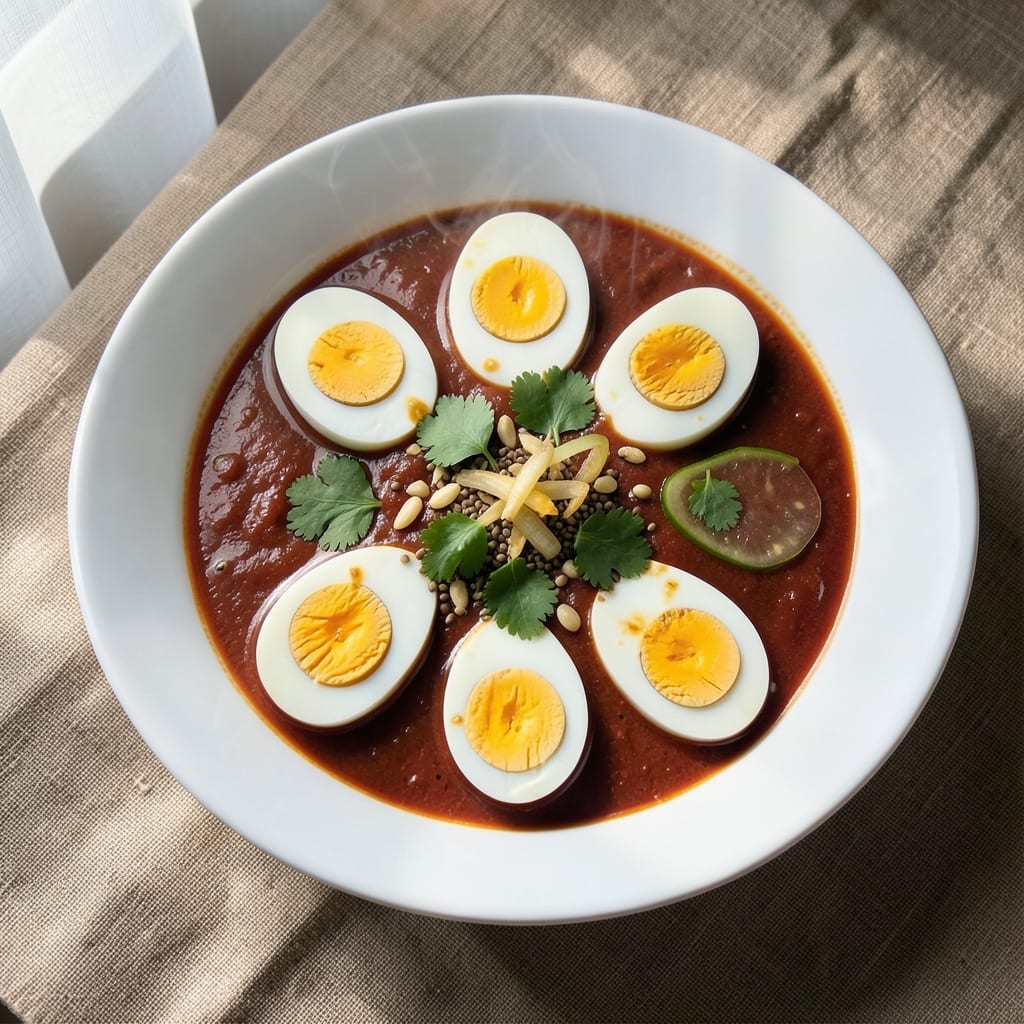
This cut egg curry recipe delivers the perfect balance of silky egg yolks and aromatic spiced tomato gravy that transforms breakfast into a flavorful experience. The technique involves boiling eggs until just set, then slicing them thinly to create delicate ribbons that melt into the rich curry sauce. What sets this dish apart is the harmony of warm spices like turmeric, cumin, and chili, which infuse the coconut milk base with depth and complexity.
The process begins with hard-boiled eggs, cooled and sliced into paper-thin rounds—this is where the magic happens. The curry sauce simmers gently with onions, garlic, ginger, and a blend of spices, allowing the flavors to meld before adding the sliced eggs and coconut milk. The result is a dish that's both comforting and elegant, with the egg yolks releasing their creamy essence into the fragrant gravy.
This recipe is incredibly versatile—prepare it as a vegetarian dish or add protein like tofu or chicken for a heartier meal. The silky texture of the egg slices contrasts beautifully with the slightly tangy, spiced tomato base, making every bite a satisfying experience. Perfect for brunch or a light lunch, this curry is sure to impress with its balance of simplicity and sophistication.
Whether you're serving it with steamed rice or crusty bread, the rich, velvety gravy and tender egg slices create a dish that feels both indulgent and refined. The secret lies in the slow simmering of the sauce and the precise slicing of the eggs—both essential for achieving the perfect texture and flavor. Ready to elevate your breakfast game?
Ingredients for cut egg curry
Eggs, spices, and coconut milk—this curry transforms simple ingredients into velvety yolk magic.
| Ingredient | Amount | Notes |
|---|---|---|
| Large Eggs 🥚 | 8 whole | Fresh, room temperature preferred |
| Onions 🧅 | 1 whole | Yellow or red, finely chopped |
| Garlic Cloves 🧄 | 6 cloves | Minced for aromatic base |
| Fresh Ginger 🌿 | 1 ½ tbsp | Finely grated, peeled |
| Canned Tomato Puree 🍅 | 1 cup | San Marzano preferred for sweetness |
| Coconut Milk 🥥 | 1 can | Full-fat for creaminess |
| Vegetable Oil 🫒 | 2 tbsp | For gentle sautéing |
| Ground Turmeric 🌶️ | 1 tsp | Freshly ground for vibrant color |
| Ground Cumin 🌿 | 1 tsp | Toasted for deeper flavor |
| Ground Coriander 🍃 | 1 tsp | For citrusy warmth |
| Red Chili Powder 🔥 | ½ tsp | Adjust for heat preference |
| Salt 🧂 | 1 tsp | Diamond Crystal preferred |
| Black Pepper 🌶️ | ½ tsp | Freshly cracked |
| Steamed White Rice 🍚 | 2 cups | Cooked, for serving |
The eggs are the star—fresh, room-temperature eggs slice beautifully and cook evenly. Trader Joe's or Whole Foods carry the best quality, but any grocery store eggs work. For slicing, use a sharp knife and a mandoline if you're feeling fancy. The ginger and garlic? Freshly grated and minced make all the difference—pre-minced garlic loses flavor fast. If you're short on time, frozen ginger works in a pinch, but it won't have the same punch. The tomato puree is where the sauce builds—San Marzano is worth the splurge for its natural sweetness and smooth texture.
No fresh ginger? Powdered ginger at half the amount works, but you'll miss that bright zing. Running low on coconut milk? Heavy cream plus a splash of coconut extract mimics the richness. The spices are non-negotiable—toast the whole cumin seeds in a dry pan for 30 seconds before grinding for deeper flavor. No red chili powder? Cayenne at a quarter teaspoon gives heat, but you'll lose the smoky depth. The rice? Any long-grain white rice works—just make sure it's steamed to perfection. Undercooked rice ruins the whole dish, so don't skip this step.
Hard-boiled eggs keep for 5 days in the fridge—peel and store them in a sealed container with a paper towel to absorb moisture. The curry sauce reheats beautifully—simmer gently to avoid breaking the eggs. It keeps for 4 days in the fridge or 3 months frozen. For freezing, portion into airtight containers and thaw overnight in the fridge. The rice? Cook it fresh the day you serve—leftover rice gets gummy when reheated. This curry tastes even better the next day as the flavors meld—worth making ahead for a stress-free brunch.
Why You'll Love This Recipe
- The secret’s in the technique: those sliced eggs fry until golden, then soak up the tangy tomato-ginger sauce. You get that satisfying crunch with every bite, but the sauce clings like a hug. Between us, it’s the kind of dish that disappears faster than my willpower on a sugar crash.
- Fewer Ingredients, More Magic: I swear by this recipe—just eggs, onions, garlic, ginger, and tomato puree. That’s it. No fancy pantry items or last-minute grocery runs. Honestly, the way the ginger and garlic bloom in the oil while the eggs poach? It’s like a flavor shortcut.
- Crispy-Creamy Contrast: The secret’s in the technique: those sliced eggs fry until golden, then soak up the tangy tomato-ginger sauce. You get that satisfying crunch with every bite, but the sauce clings like a hug. Between us, it’s the kind of dish that disappears faster than my willpower on a sugar crash.
- Weeknight to Weekend: Make a big batch on Sunday—it reheats like a dream (yes, even the eggs stay tender). Too good for leftovers? Serve it with rice at a potluck or toss it into a wrap for a quick lunch. I’ve fed it to skeptical teens and foodie friends; everyone’s been hooked.
Step-by-step instructions for cut egg curry
Here's how to make this silky, restaurant-quality curry with perfectly poached eggs and rich spiced gravy.
Prepare the Spiced Tomato Base
Heat the 2 tablespoons vegetable oil in a large, heavy-bottomed pot over medium heat. Add the 1 whole finely chopped onions and sauté for 5-6 minutes until soft and translucent, stirring occasionally. You'll know it's ready when the onions turn golden and their edges begin to caramelize slightly.
Add the 6 cloves minced garlic cloves and 1.5 tablespoons finely grated fresh ginger, cooking for another 1-2 minutes until fragrant. This aromatic base forms the flavor foundation of your curry. Immediately stir in the 1 teaspoon ground turmeric, 1 teaspoon ground cumin, and 1 teaspoon ground coriander, letting the spices toast for 30 seconds until their essential oils are released and the mixture smells deeply aromatic.
Build the Silky Gravy
Pour in the 1 cup canned tomato puree and stir well to combine with the spices. Let it simmer uncovered for 10-12 minutes over medium-low heat, stirring occasionally, until the mixture thickens and reduces by about one-third. You'll notice the sauce darken slightly and develop a rich, concentrated tomato flavor.
Once the tomato base has thickened, reduce the heat to low and carefully stir in the 1 can coconut milk. The curry will immediately lighten in color and become luxuriously creamy. Add the 0.5 teaspoon red chili powder, 1 teaspoon salt, and 0.5 teaspoon black pepper, stirring well to distribute the spices evenly. Let the mixture simmer gently for 5 minutes to allow all the flavors to meld together.
Poach the Eggs Perfectly
While the curry simmers, bring a separate pot of water to a gentle boil over medium heat. Crack each of the 8 whole large eggs into a small bowl, then carefully slide each egg into the boiling water using a spoon. Poach for exactly 3 minutes for runny yolks or 3.5 minutes for slightly firmer yolks. The whites should be just set but still slightly translucent in the center.
Using a slotted spoon, transfer the poached eggs to a plate lined with paper towels to drain. Here's the trick: gently shake the plate to remove excess water, then carefully slice each egg in half lengthwise with a sharp knife. The eggs should hold their shape while still maintaining that perfect silky yolk center.
Combine and Finish
Return the curry to a gentle simmer and carefully add the sliced eggs, nestling them into the sauce. Stir gently just once to distribute the eggs evenly. The residual heat will keep the curry warm while the eggs maintain their perfect texture. Let it simmer for 2-3 minutes to allow the eggs to absorb some of the rich flavors from the gravy.
Taste and adjust seasoning if needed, adding a pinch more salt or chili powder if desired. The curry should be balanced with just enough heat to complement the creamy coconut and tangy tomato flavors. Serve immediately over 2 cups steamed white rice, spooning the curry and eggs generously over each portion. The silky yolk streams should create beautiful patterns as you eat, making each bite a luxurious experience.
Pro Tips For Making Cut Egg Curry
- CUT EGGS FIRST: Don’t wait until the end—chop those eggs into ¼-inch pieces before you start cooking. They’ll soak up the flavors better and stay tender, not rubbery. Trust me, I’ve tried adding them last, and they turn out dry every time.
- SOAK ONIONS IN ICE WATER: After slicing onions for the curry, dump them in a bowl of ice water for 10 minutes. The cold stops them from releasing too much liquid while frying, so your base stays crisp, not soggy. I learned this the hard way when my curry turned into onion soup.
- LOW AND SLOW FOR TOMATOES: Simmer the tomato puree on low heat for at least 10 minutes—no rushing. High heat makes it turn to glue, and you’ll end up with a thick, pasty mess instead of a smooth, velvety base. This is the thing that matters most for that restaurant-quality texture.
- USE OLD EGGS FOR BATCH COOKING: If you’re making this ahead, grab eggs that are 3–5 days old—the whites hold their shape better when cut and reheated. Fresh eggs? They’ll turn mushy faster. I skip this when I’m lazy, but the difference is noticeable in leftovers.
Common mistakes when making perfect results
Overcooked Eggs
Poaching eggs for too long ruins their delicate texture. I’ve learned the hard way—3 minutes for runny yolks is perfect, but even 30 seconds extra turns the whites rubbery. Use a timer and watch closely as the whites set but yolks stay creamy. If your eggs overcook, try reheating them gently in the curry sauce for just 1-2 minutes to restore some moisture. 💡
Skipping the Spice Toast
Never skip toasting your spices! Those 30 seconds of dry-toasting cumin, coriander, and turmeric unlock their full aroma. I once made curry without toasting and was disappointed by the flat flavor. Use a small dry pan to toast whole spices first, then grind them—this adds depth you can’t get from pre-ground powders. 🌶️
Under-Reducing the Sauce
The tomato base needs time to thicken and deepen in flavor. If you rush this step, your curry will taste thin and watery. Simmer uncovered for 10-12 minutes—stir occasionally to prevent sticking. The sauce should reduce by about one-third before adding coconut milk. Pro tip: Use a heavy-bottomed pot to prevent scorching. ⏱️
Adding Eggs Too Early
Adding sliced eggs too soon causes them to overcook in the sauce. Wait until the curry is just simmering before gently folding in the eggs. They’ll warm through in 2-3 minutes without losing their silky texture. If your eggs get rubbery, try reheating them separately in a small pan with a splash of coconut milk. 🥚
Ignoring the Rice
Don’t underestimate your rice! Undercooked rice turns gummy when reheated, while overcooked rice becomes mushy. Cook 2 cups of long-grain white rice until just tender—15 minutes after boiling. Serve immediately alongside the curry for perfect texture contrast. For extra fluffiness, spread hot rice on a tray after cooking. 🍚
Overmixing the Eggs
Once the eggs are in the sauce, stir just once—gentle movement prevents breaking. Overmixing turns the eggs into a scrambled mess. Instead, nestle them into the sauce and let the residual heat warm them through. For plating, use a slotted spoon to arrange whole slices for that restaurant-style presentation. ✨
Nutrition facts
Frequently asked questions
Can I make this cut egg curry vegetarian?
This recipe is naturally vegetarian-friendly since it relies on eggs, vegetables, and coconut milk. For extra protein, add 1 block firm tofu (pressed and cubed) to the curry during the last 5 minutes of simmering. The tofu absorbs the rich flavors beautifully while keeping the dish plant-based.
How do I get the perfect egg slices?
Start with room-temperature eggs that are just set (not overcooked). After poaching for 3 minutes, let them cool slightly before slicing with a sharp chef's knife. For even slices, place the egg on a cutting board and cut lengthwise from one end to the other—this creates clean halves that hold their shape in the sauce.
Can I use frozen eggs for this recipe?
Fresh eggs are ideal, but if you must use frozen, thaw them overnight in the fridge first. The texture won't be as perfect as fresh eggs, but they'll still work. For best results, poach the thawed eggs for 1 extra minute to account for any moisture loss during freezing.
What's the best way to reheat leftovers?
Reheat gently in a saucepan over low heat for 3-4 minutes with a splash of water or coconut milk to prevent drying. Never microwave—it makes the eggs rubbery. The curry reheats beautifully and tastes even better the next day as flavors meld. Store leftovers in an airtight container for up to 4 days.
Can I add other vegetables to this curry?
Yes! Stir in 1 cup chopped bell peppers or 1 zucchini sliced thinly during the last 5 minutes of cooking. For heartier versions, add 1 cup cauliflower florets—they soak up the spiced gravy perfectly. Just avoid adding watery veggies like tomatoes until the very end to maintain the sauce's consistency.