
Breakfast & Brunch
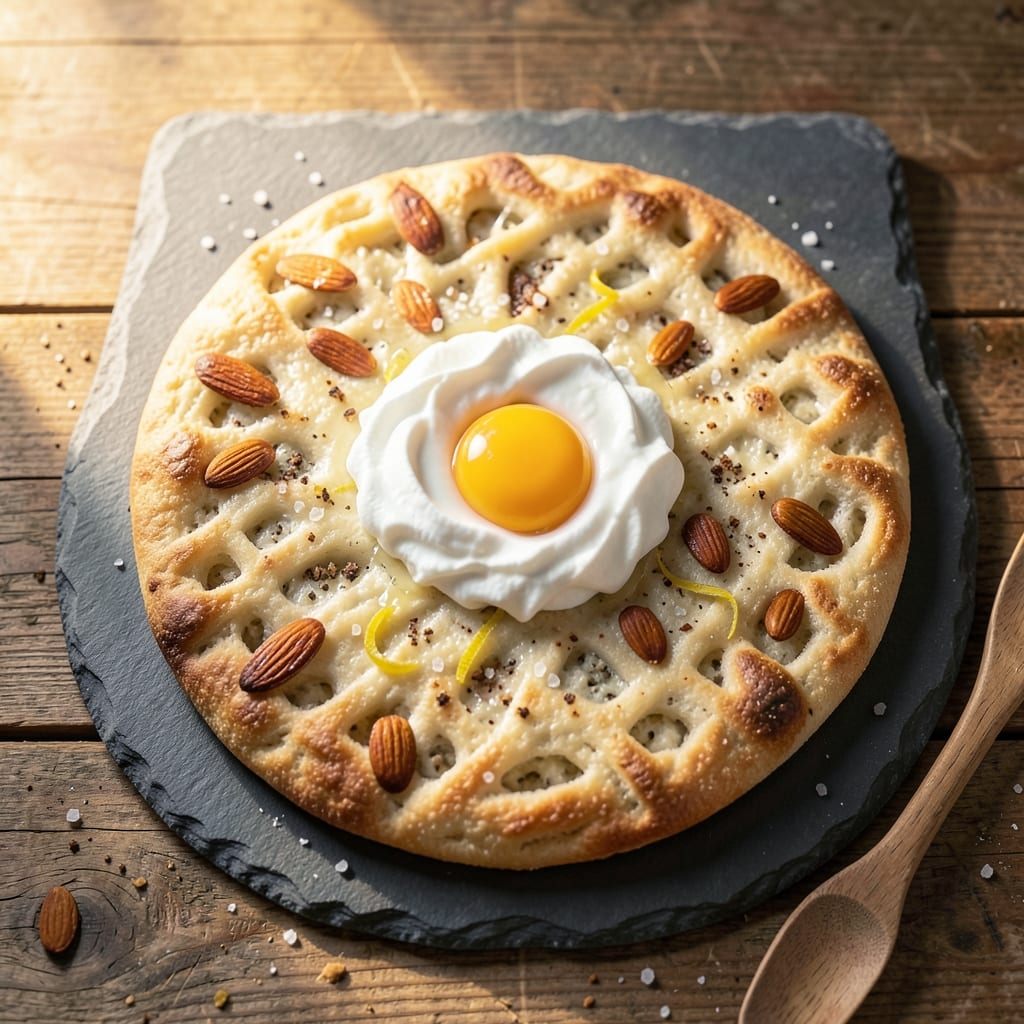
This cottage cheese egg almond flour flatbread delivers fluffy, golden perfection with a protein-packed twist that surprises even skeptics. 💛 The secret lies in blending cottage cheese's moisture with almond flour's structure—creating a tender, airy flatbread that holds up to dips or wraps without crumbling. I developed this recipe after struggling to find a gluten-free breakfast option that wasn't dense or bland. The beauty of this flatbread is its versatility—it works as a breakfast wrap, a low-carb tortilla, or even a crispy flatbread for dipping. The egg binds everything together while the cottage cheese adds a subtle tang, balancing the nutty almond flour. No yeast, no waiting—just a 15-minute prep and 12-minute bake for restaurant-quality results at home. What makes this recipe stand out is the texture: crisp edges with a soft, pillowy center that's impossible to resist. The flatbread stays fresh for days when stored properly, making it perfect for meal prep. Whether you're serving it with hummus, scrambled eggs, or as a wrap for lunch, this flatbread is a game-changer for anyone looking for a nutritious yet indulgent option. Best of all, it's vegetarian-friendly and naturally gluten-free, proving you don't need traditional flour for a satisfying flatbread. Let's get started!
Ingredients for cottage cheese egg almond flour flatbread
Eight ingredients transform into a protein-rich, gluten-free flatbread with crisp edges and pillowy centers.
| Ingredient | Amount | Notes |
|---|---|---|
| Large Eggs 🥚 | 2 whole | Room temperature for even blending |
| Large Egg Whites 🥚 | 2 whole | Separated from yolks for extra fluffiness |
| Cottage Cheese 🧀 | 1 cup | Full-fat for optimal moisture retention |
| Almond Flour 🌰 | 2 cups | Finely ground for smooth texture |
| Baking Powder 🍞 | 1 ½ tsp | Aluminum-free for gentle leavening |
| Diamond Crystal Kosher Salt 🧂 | ½ tsp | Fine grain for even distribution |
| Extra-Virgin Olive Oil 🫒 | 2 tbsp | For crisp edges and golden browning |
| Ground Flaxseed 🌾 | 1 tbsp | Mixed with water as egg substitute |
| Water 💧 | 3 tbsp | For flax egg mixture |
| Garlic Powder 🧄 | ½ tsp | For subtle savory depth |
| Ground Black Pepper 🌶️ | ¼ tsp | Freshly cracked for aroma |
| Sesame Seeds 🌱 | 1 tbsp | Optional for crunchy garnish |
The cottage cheese is the game-changer here—full-fat ensures optimal moisture without making the flatbread dense. Trader Joe's or Whole Foods carry excellent quality in 2% or 4% varieties, but any full-fat will work. Almond flour should be finely ground (not almond meal)—check the packaging or grind your own for the smoothest texture. Eggs should be room temperature when you start; this helps them blend seamlessly with the cottage cheese. For the flax egg, mix the ground flaxseed with water and let it sit for 5 minutes to thicken properly. This acts as a binder without adding density.
No almond flour? Blended walnuts or cashews work in a pinch, though texture will differ slightly. Running short on cottage cheese? Greek yogurt at half the amount provides similar moisture, though the flavor profile shifts. The baking powder must be aluminum-free—Diamond Crystal is the gold standard, but any brand labeled 'double-acting' will suffice. For extra fluffiness, whip the egg whites separately to soft peaks before folding them into the batter. The garlic powder and black pepper are subtle but essential—they balance the nuttiness of the almond flour and complement the cottage cheese's tang.
This flatbread stays fresh for 4-5 days when stored in an airtight container at room temperature, though it's best enjoyed within 24 hours for peak crispness. For longer storage, wrap individual flatbreads in parchment paper and freeze for up to 3 months. To reheat, warm in a dry skillet over medium heat for 30 seconds per side. The sesame seeds, if using, should be toasted in a dry pan for 30 seconds before sprinkling—they add a delightful crunch that contrasts perfectly with the soft interior. Make a double batch and freeze extras; they're perfect for quick lunches or dipping with hummus.
Why You'll Love This Recipe
- I’ll be real: almond flour isn’t cheap, but this recipe uses just a cup, and the rest of the ingredients are pantry basics. Eggs, cottage cheese, and baking powder stretch my grocery budget, and a batch makes enough for leftovers—or freezing for lazy mornings.
- No-Fuss Mixing: I swear by this recipe because it’s just stir, pour, bake—no kneading, no rolling pins, no stress. The almond flour and cottage cheese blend into a thick batter that spreads like butter, and the egg whites give it that perfect lift without fuss.
- Creamy-Crisp Magic: Here’s what sold me—the outside gets golden and crispy, while the inside stays tender and just slightly tangy from the cottage cheese. It’s like a cross between a flatbread and a pancake, but way more interesting.
- Breakfast or Snack: Between us, I make these for breakfast with peanut butter, lunch as a wrap with deli meat, or even as a quick snack with hummus. The almond flour keeps it low-carb, but the cottage cheese makes it feel hearty enough for any meal.
Step-by-step instructions for cottage cheese egg almond flour flatbread
Here's the precise method for creating light, airy flatbread with a tender crumb and crisp edges.
👨🍳 Step 1: Prepare the Flax Egg and Whisk Wet Ingredients
In a small bowl, combine the 1 tablespoon ground flaxseed with 3 tablespoons water. Let this mixture sit for 5 minutes until it thickens into a gel-like consistency—this will serve as our egg substitute. Meanwhile, separate the 2 whole large egg whites from the yolks and place them in a medium mixing bowl.
To the egg whites, add the 2 whole large eggs, 1 cup cottage cheese, 2 tablespoons extra-virgin olive oil, 0.5 teaspoon garlic powder, and 0.25 teaspoon ground black pepper. Using a hand mixer or whisk, beat all ingredients together on medium speed for 2-3 minutes until fully emulsified and smooth. The mixture should become pale and slightly thickened—this ensures proper aeration for that signature fluffy texture.
👨🍳 Step 2: Combine Dry Ingredients and Form the Dough
In a separate bowl, whisk together the 2 cups almond flour, 1.5 teaspoons baking powder, and 0.5 teaspoon diamond crystal kosher salt. Sift this mixture directly into the wet ingredients, then gently fold together using a spatula until just combined. Avoid overmixing—you should still see some flour streaks in the batter.
Transfer the dough to a lightly oiled surface and knead gently for 1-2 minutes until it comes together into a cohesive mass. The dough will be quite soft and slightly sticky, which is normal given the high moisture content from the cottage cheese. Divide the dough into 8 equal portions (about 2 tablespoons each) and roll each portion into a 5-inch round using your hands or a rolling pin. The goal is ¼-inch thickness—press down gently but firmly to maintain even thickness throughout.
🔥 Step 3: Preheat and Cook the Flatbreads
Heat a non-stick skillet or griddle over medium-high heat until it's hot but not smoking—you should see a light sheen of oil when you add a drop of water. Working in batches to avoid overcrowding, place 2 flatbread rounds in the skillet. Cook for 2-3 minutes per side until golden brown spots appear and the edges begin to crisp slightly.
Here's the key: you'll know they're ready when small bubbles form on the surface and the bottom releases easily from the pan. Transfer the cooked flatbreads to a wire rack or clean kitchen towel to keep them warm. Repeat with remaining dough, adding a light brush of extra-virgin olive oil to the skillet between batches if needed to maintain even browning.
🥘 Step 4: Garnish and Serve Warm
While still warm, sprinkle each flatbread with 1 tablespoon sesame seeds, pressing them gently into the surface. The seeds will add a delightful crunch contrast to the tender interior. Serve immediately for the best texture—these flatbreads are at their peak when warm and slightly crisp around the edges.
For optimal results, stack them on a plate covered with a clean kitchen towel to maintain warmth and softness. Each flatbread should have a light, airy crumb with a slightly crisp exterior—the cottage cheese provides moisture without heaviness, while the almond flour creates that signature tender texture. The garlic powder and black pepper infuse subtle savory depth throughout.
Pro Tips For Making Cottage Cheese Egg Almond Flour Flatbread
- Mix Cottage Cheese Cold: I learned this the hard way—warm cottage cheese blends like glue. Scoop straight from the fridge, mix it into the eggs and egg whites last, and keep everything chilled until the dough comes together. The texture stays light, not gummy, and your flatbread won’t turn out dense like my first three attempts.
- Press Dough Thin and Even: Skip the uneven thickness—your flatbread will cook in patches. Roll or press the dough to ¼-inch thickness (use a ruler if you’re skeptical like I was). Press harder in the center where the dough naturally thickens, then flip and repeat. That’s how you get crisp edges and a tender middle every time.
- Preheat Pan Until Smoking: A lukewarm pan means soggy flatbread. Heat your skillet or griddle over medium-high until it’s smoking hot—then drop the dough in. The sear locks in flavor and prevents the almond flour from absorbing too much oil. (Yes, even if you’re impatient like me, wait for that smoke.)
- Rest Dough 10 Minutes: I used to skip this, and the dough fought me—stretching unevenly or tearing. Let it sit, covered, for 10 minutes after mixing. The almond flour absorbs the egg better, and the gluten (yes, there’s a little) relaxes. Your flatbread will hold shape and cook more evenly. Trust the wait.
Essential equipment for this recipe
Non-Stick Skillet
Your non-stick skillet is the MVP for this recipe—I swear by a 10-inch cast iron skillet with a non-stick coating like GreenPan or Calphalon. The even heat distribution ensures consistent browning without sticking. If you don’t have non-stick, use a lightly oiled cast iron (like Lodge) and add a bit more olive oil to the dough for easier release. 🔥
Mixing Tools
A hand mixer or electric whisk is ideal for blending the wet ingredients into a smooth batter, but a sturdy whisk works too. For the dry ingredients, a fine-mesh sieve ensures even distribution of baking powder and salt. I’ve even used a fork in a pinch—just mix longer to avoid lumps. The key is thorough blending without overworking the dough.
Rolling Pin
A wooden rolling pin (like OXO Good Grips) gives the best control for even thickness, but a clean wine bottle or even your hands work in a pinch. Press gently to avoid tearing the delicate dough. For extra crispiness, I sometimes use a lightweight glass rolling pin to create slightly thinner edges. Keep the dough on a lightly floured surface (almond flour works best) to prevent sticking.
Measuring Tools
Precision matters here—use a digital kitchen scale for the almond flour (it’s lighter than regular flour) and a small measuring cup for cottage cheese. For spices, a spice scoop ensures accurate amounts. I keep a set of nesting measuring spoons handy for the baking powder, salt, and flaxseed mixture. A spatula helps scrape every last bit of batter from the bowl.
Sesame Seed Toasting
For that perfect crunch, toast the sesame seeds in a small dry skillet over medium heat for 30 seconds until fragrant. A toaster oven works too—just spread them on a tray at 300°F for 2 minutes. Toasting enhances their flavor and prevents them from burning during cooking. Store extra seeds in an airtight container for future use. 🌱
Storage Containers
Keep cooked flatbreads fresh in a stackable airtight container (like Rubbermaid Brilliance) or wrapped in parchment paper inside a ziplock bag. For freezing, use quart-sized freezer bags with 1 inch headspace to prevent freezer burn. Label with the date—these stay good for 3 months in the freezer. A wire rack is perfect for cooling finished flatbreads to maintain crispness.
Nutrition facts
Frequently asked questions
Why does this flatbread need egg whites AND whole eggs?
The whole eggs bind the ingredients together while the egg whites add lightness and structure. The whites create air pockets when whipped, giving that signature fluffy texture. Using just whole eggs would make the flatbread denser—this combo keeps it airy yet sturdy enough to hold fillings.
Can I make these flatbreads without a rolling pin?
Use your hands to shape them into 5-inch rounds by pressing gently. For extra crisp edges, press harder around the perimeter. A clean wine bottle or even a sturdy glass works too—just keep the dough on a lightly floured surface to prevent sticking.
How do I fix flatbreads that stick to the pan?
If they stick, your pan isn't hot enough. Heat the skillet over medium-high heat until a drop of water sizzles instantly, then add a tiny bit more olive oil to the dough before shaping. Work in smaller batches to avoid overcrowding. For stubborn sticking, use a thin metal spatula to gently lift edges while cooking.
Are these flatbreads truly gluten-free?
Yes, this recipe is naturally gluten-free since it uses only almond flour. Just ensure your baking powder and any other additives are certified gluten-free. The cottage cheese and eggs are also gluten-free, making this a safe option for gluten-sensitive diets. Always check labels when substituting ingredients.
Can I make these ahead of time?
Yes! Store cooked flatbreads in an airtight container at room temperature for 4-5 days or freeze for 3 months. To reheat, warm in a dry skillet over medium heat for 20-30 seconds per side until crisp again. For best texture, freeze them after cooling completely.