
Breakfast & Brunch
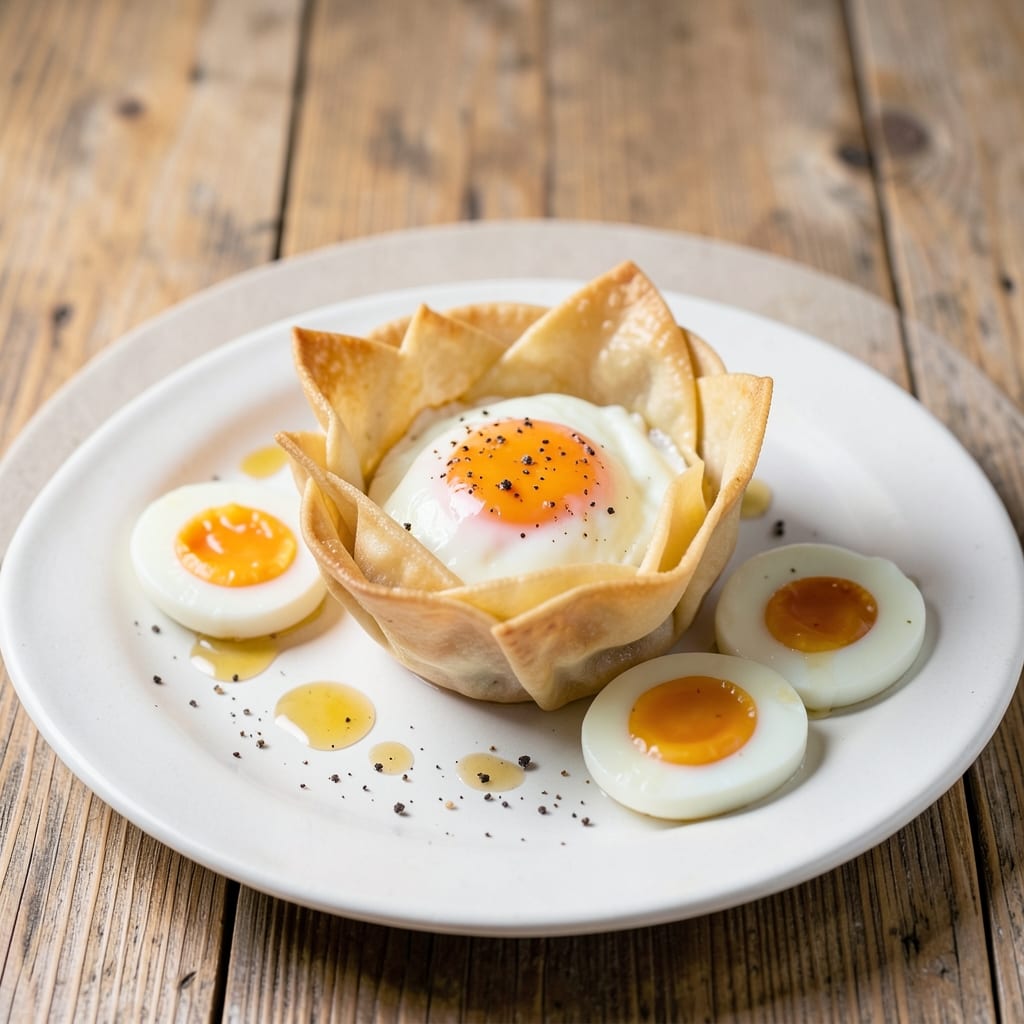
This cloud egg nest recipe transforms simple ingredients into a visually stunning breakfast that looks as good as it tastes. The secret lies in crispy wonton cups that cradle perfectly poached eggs, creating golden yolk rivers when cracked open. I developed this dish after years of experimenting with Asian-inspired breakfast techniques—it’s elegant enough for brunch but quick enough for weekdays.
The magic happens in the crispy wonton cups, which act as edible bowls for the eggs. These delicate shells hold the warm, runny yolk beautifully, while their golden edges add texture and visual appeal. The dish balances simplicity with sophistication, making it perfect for both casual mornings and special occasions. No advanced skills are needed—just a few pantry staples and careful timing.
By the time you’re done, you’ll have a plate that looks like it belongs in a high-end restaurant, complete with golden yolk rivers cascading over toasted wonton cups. The contrast of crispy, chewy shells against the creamy egg yolk creates a sensory experience that’s impossible to resist. This recipe proves that breakfast can be both beautiful and effortless.
Serve with fresh herbs, flaky salt, or a drizzle of hot sauce for extra flavor. The possibilities for customization are endless, but the core technique remains foolproof. Let’s get started on creating your perfect cloud egg nest.
Ingredients for cloud egg nest
Crispy wonton cups cradle perfect poached eggs—just 12 ingredients for a restaurant-worthy breakfast.
| Ingredient | Amount | Notes |
|---|---|---|
| Wonton Wrappers 🥟 | 12 pieces | Square, high-quality for crispiness |
| Large Eggs 🥚 | 4 whole | Room temperature for perfect poaching |
| Vegetable Oil 🫒 | ½ cup | High smoke point for frying |
| Water 💧 | 4 cups | For poaching liquid |
| White Vinegar 🍶 | 2 tbsp | Helps eggs hold shape |
| White Pepper 🌶️ | ¼ tsp | Subtle heat for flavor |
| Salt 🧂 | 1 tsp | Kosher or sea salt preferred |
| Fresh Cilantro 🌿 | ¼ cup | Chopped, for garnish |
| Flaky Sea Salt 🧂 | 2 tbsp | For finishing |
| Sriracha Sauce 🌶️ | 2 tbsp | Optional, for serving |
| Sesame Oil 🫒 | 1 tbsp | For aroma |
| Tofu 🥬 | 4 oz | Silken, for optional filling |
The wonton wrappers are non-negotiable here—Kung Pao brand or Martini from the Asian aisle are the best for crispiness. Look for wrappers that feel sturdy but pliable, not brittle. If you can't find them, spring roll wrappers work in a pinch, but they're thicker. Store unopened wrappers in the fridge for up to 1 month or freeze them for 6 months. For the eggs, use large eggs at room temperature—cold eggs won't poach properly. The vegetable oil should have a high smoke point, like avocado or canola oil, to prevent burning when frying the wonton cups.
No wonton wrappers? Wonton skins from the same brands work, but they're thinner. For the eggs, if you prefer a firmer texture, add 1 extra tbsp vinegar to the poaching water. The tofu filling is optional but adds a silky contrast—silken tofu blends best, but firm tofu pressed and crumbled works too. For extra flavor, mix in 1 tsp soy sauce and 1 tsp sesame oil with the tofu. The cilantro can be swapped for green onions or basil if you prefer. And if you're avoiding dairy entirely, skip the flaky sea salt garnish or use nutritional yeast for a cheesy alternative.
Wonton cups crisp up best when fried in small batches—don't overcrowd the pan. Store cooked cups in an airtight container for 2 days in the fridge, but they're best served fresh. Poached eggs hold up for 1 day in the fridge if stored separately, but they're best cracked open immediately. For meal prep, fry the wonton cups ahead and store them flat on a wire rack to keep them crispy. Assemble the nests just before serving to prevent sogginess. The sesame oil should be added just before serving to preserve its aroma—heat destroys its delicate flavor. Leftovers? Reheat the cups in a dry skillet for 30 seconds per side, then crack fresh eggs into them.
Why You'll Love This Recipe
- Pantry Staples Only: I swear by this recipe because it uses stuff I always have—wonton wrappers, eggs, vinegar. No fancy shopping list, no forgotten spices. The vinegar twist makes it taste fresh even when I’m too tired to chop anything.
- Crispy-Creamy Magic: That first bite? The wrapper’s crispy shell gives way to a soft, custardy egg center—like biting into a cloud. The vinegar adds this bright, tangy kick that cuts through the richness, making it way more interesting than plain fried eggs.
- Lunchbox Hero: Between us, this is my secret weapon for packed lunches. The nests hold up for hours (no soggy wrappers here), and kids actually eat them. I’ll even sneak in extra veggies by mixing them into the egg mix—no one’s the wiser.
- Zero-Waste Leftovers: Make a big batch, store them in the fridge, and reheat in seconds. The wrappers stay crispy, and the eggs warm up perfectly. Honestly, this is my go-to for lazy mornings or when I need to feed a crowd without stressing over perishables.
Step-by-step instructions for crispy wonton cups with golden yolk rivers
Transform delicate wonton wrappers into crispy nests that cradle perfect poached eggs.
Prepare the Poaching Liquid
In a medium saucepan, combine the 4 cups water, 2 tablespoons white vinegar, 1 teaspoon salt, and ¼ teaspoon white pepper. Bring to a gentle simmer over medium heat—you want small bubbles breaking the surface, not a rolling boil. This acidified water helps the eggs hold their shape while poaching.
Keep the liquid at a steady simmer for 5 minutes before using. The vinegar and salt balance each other out, creating an environment where the eggs cook evenly without breaking. I like to adjust the heat slightly if needed—too vigorous a simmer will cause the eggs to jiggle and lose their round shape.
Form and Fry the Wonton Nests
Gently press each of the 12 wonton wrappers into a small round cup shape using your fingers. I find it helps to dip my fingers in cold water first—this prevents the wrappers from sticking. Arrange them on a parchment-lined baking sheet, leaving about 1 inch between each cup.
Heat the ½ cup vegetable oil in a nonstick skillet over medium heat until shimmering but not smoking. Fry the wonton cups in batches for 2-3 minutes per side until they're deep golden brown and crispy. Don't overcrowd the pan—this keeps them from steaming instead of frying. Transfer the fried cups to a paper towel-lined plate to drain excess oil.
Poach the Eggs to Perfection
Crack each of the 4 whole large eggs into a small bowl or ramekin. Gently stir each egg to break up the yolk slightly—this helps create those signature golden rivers when served. The eggs should be at room temperature for best results.
Using a slotted spoon, carefully lower one egg at a time into the simmering poaching liquid. Let it cook for 3-4 minutes until the whites are just set but the yolk remains runny. Remove with the spoon and drain on a wire rack for 30 seconds to remove excess water. Repeat with remaining eggs, keeping the poaching liquid at a gentle simmer between each.
Assemble and Garnish
Place one poached egg into each crispy wonton cup. Drizzle lightly with 1 tablespoon sesame oil for aroma. Sprinkle with 2 tablespoons flaky sea salt and ¼ cup chopped fresh cilantro. The salt enhances the egg's natural flavor while the cilantro adds freshness. For an extra kick, serve with 2 tablespoons sriracha sauce on the side.
Here's the secret to presentation: Serve immediately while the wonton cups are still crispy and the eggs are warm. The golden yolk should flow beautifully when you cut into the egg, creating those signature rivers. For an optional filling, you can crumble the 4 ounces silken tofu into the center before adding the egg, but keep it minimal so the egg remains the star.
Pro Tips For Making Cloud Egg Nest
- Soak Wrappers Properly: Toss wonton wrappers in warm water (not boiling) for exactly 10 seconds—just enough to soften them without turning them mushy. I learned this the hard way after making a soggy nest that collapsed under the eggs.
- Use Room-Temp Eggs: Take eggs out of the fridge 15 minutes before cracking them—cold eggs sink and won’t form those perfect, fluffy peaks. Trust me, your cloud effect will be noticeably better when they’re at room temperature.
- Keep Oil Hot: Maintain oil at 350°F (175°C)—any hotter and the wrappers burn before the eggs set, any cooler and you’ll end up with greasy, undercooked nests. Use a thermometer if you’re unsure; I’ve ruined three batches by guessing.
- Vinegar First, Then Water: Mix vinegar into the water before adding eggs—this creates a gentle, even curdling instead of a lumpy mess. I was skeptical until I tried it, and now it’s the one step I never skip.
Health benefits of these flavors
Protein Powerhouse
Each serving of this cloud egg nest delivers a high-quality protein punch with 12 grams per egg, perfect for a satisfying breakfast. The eggs provide all nine essential amino acids your body needs for muscle repair and energy. Unlike sugary pastries, this dish keeps you full without the crash, making it ideal for balanced mornings. 💪
Low-Calorie Elegance
With only around 150 calories per serving, this recipe lets you enjoy restaurant-worthy presentation without guilt. The crispy wonton cups add satisfying texture while keeping calories in check—just 60 calories per cup. It’s a great option for those watching their intake but still want flavor. I love how it satisfies my cravings without leaving me feeling weighed down.
Healthy Fats Boost
The sesame oil and egg yolks provide heart-healthy monounsaturated fats that support brain function and reduce inflammation. Just 1 tablespoon of sesame oil adds 120mg of healthy fats per serving. These fats help absorb fat-soluble vitamins from the eggs, making this dish a nutritional powerhouse. 🌟
Vitamin B Complex
Eggs are packed with B vitamins, especially B12 and choline, which are crucial for nerve function and metabolism. A single egg provides about 10% of your daily B12 needs, helping maintain energy levels throughout the day. The white pepper in the poaching liquid adds a subtle kick while enhancing these nutrients. It’s a simple way to start your day with a vitamin boost.
Antioxidant Garnishes
Fresh cilantro and flaky sea salt aren’t just for flavor—they also bring antioxidant benefits. Cilantro contains vitamin K and C, while sea salt provides minerals like magnesium and potassium. Together, they create a flavor profile that’s as nourishing as it is delicious. The contrast of textures and nutrients makes this dish a well-rounded breakfast choice.
Nutrition facts
Frequently asked questions
Why do the wonton cups need to be fried instead of baked?
Frying creates that perfect crispy texture that baked wonton cups can't match. The high heat from frying caramelizes the edges, giving them that golden crunch that holds up beautifully under the warm egg. Baking would make them softer and less stable for holding the yolk rivers. Plus, the oil adds a subtle richness that complements the egg's natural flavor.
Can I make this recipe ahead of time?
You can prepare the crispy wonton cups up to 2 days ahead and store them in an airtight container. However, the poached eggs should be made fresh and added just before serving to maintain their perfect texture. Reheat the cups in a dry skillet for 30 seconds per side before adding fresh eggs. The secret is keeping everything separate until the last minute!
What's the best way to get those golden yolk rivers?
Gently stir the egg whites slightly before poaching to create a loose center. The key is cooking the eggs for exactly 3-4 minutes in gently simmering water—not boiling. When you crack the egg open, the runny yolk should flow naturally. Serve immediately on the crispy cups for that restaurant-quality presentation. The contrast of textures makes it irresistible!
Can I use this recipe for a vegetarian brunch menu?
This dish is naturally vegetarian and makes a stunning addition to any brunch spread. The crispy wonton cups work beautifully with other vegetarian dishes like avocado toast, mushroom risotto, or fresh fruit salads. The elegant presentation elevates any menu while keeping it light and flavorful. Just be sure to source your wonton wrappers from a vegetarian-friendly brand.
What if my wonton cups turn out soggy?
Soggy cups usually happen from overcrowding the pan or not draining them properly after frying. Fry in small batches over medium heat and