Breakfast & Brunch
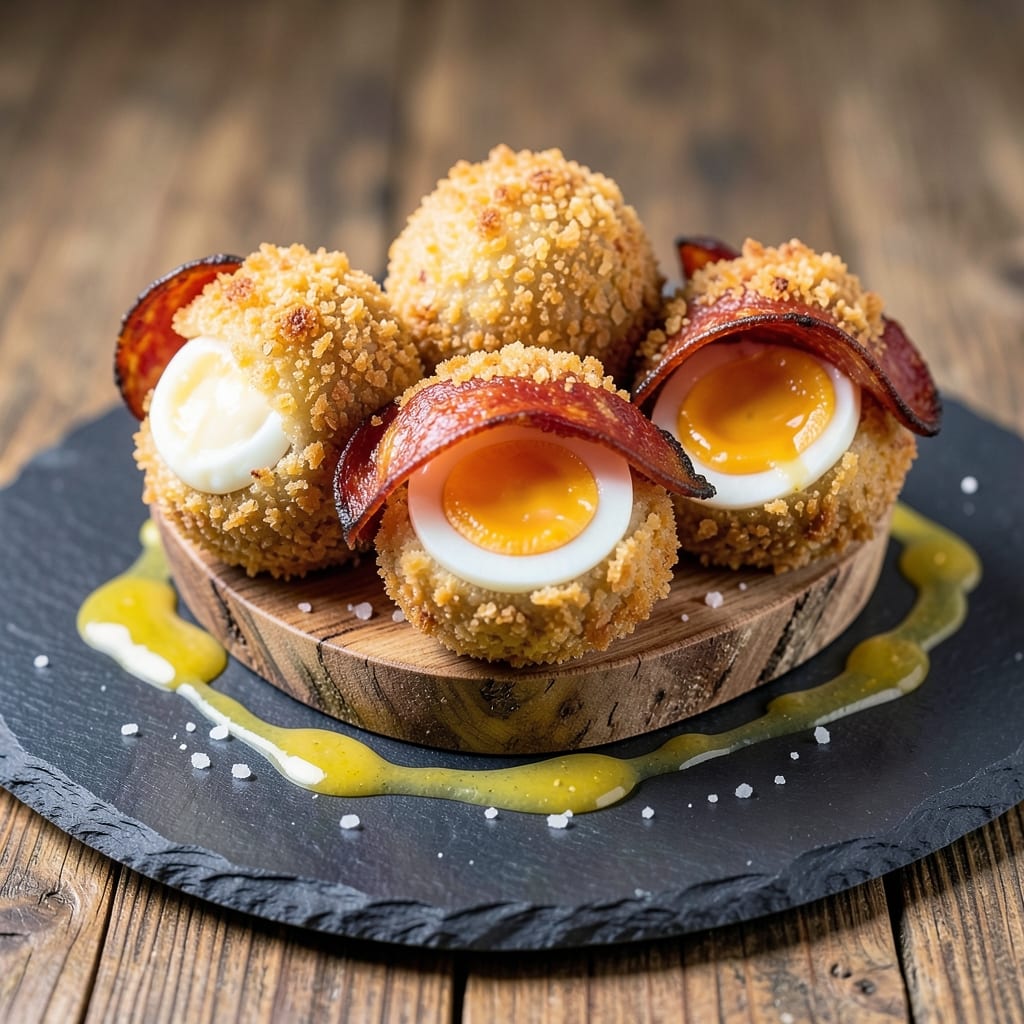
This chorizo scotch egg recipe transforms a classic breakfast staple into a bold, spicy showstopper with every bite. The secret lies in wrapping hard-boiled eggs in seasoned chorizo before breading and frying—creating a perfect balance of crispy, smoky, and runny-yolk indulgence. I developed this version after years of perfecting the technique, ensuring the chorizo stays flavorful while the yolk remains gloriously liquid at the center.
What sets these apart is the two-step cooking process: first, the eggs are hard-boiled and wrapped in chorizo slices (no peeling needed!), then coated in a crispy panko-parmesan crust. The high-heat frying creates that signature crunch while keeping the inside perfectly tender. This isn't just breakfast—it's a restaurant-worthy appetizer or party bite that disappears faster than you can say "runny yolk."
The result is a dish where textures collide in the best way: shatteringly crispy exterior, juicy chorizo pockets, and that golden yolk that oozes when cut. The smoky-sweet chorizo adds depth beyond traditional Scotch eggs, making these ideal for brunch spreads, game day, or whenever you crave something bold and satisfying. Ready in about 45 minutes, they're perfect for feeding a crowd without spending all day in the kitchen.
Serve with a side of spicy mayo or chimichurri for dipping—trust me, the first bite will have everyone asking for seconds. The key to success? Don't overcrowd the pan during frying, and work in batches for even cooking. Let's make these chorizo Scotch eggs that steal the show!
Ingredients for chorizo scotch egg
Eight bold ingredients create restaurant-worthy chorizo Scotch eggs with crispy crunch and smoky-spicy chorizo pockets.
| Ingredient | Amount | Notes |
|---|---|---|
| Large Eggs 🥚 | 8 whole | Room temperature for even cooking |
| Spanish Chorizo Slices 🌭 | 12 oz | High-quality, not pre-cooked |
| Panko Breadcrumbs 🍞 | 2 cups | Light and crispy preferred |
| Parmesan Cheese 🧀 | ½ cup | Freshly grated, fine texture |
| All-Purpose Flour 🌾 | ½ cup | For dredging, fine sifted |
| Large Eggs (for dredge) 🥚 | 2 whole | Beaten lightly for coating |
| Vegetable Oil 🫒 | 3 cups | High smoke point for frying |
| Dijon Mustard 🌶️ | 1 tbsp | For extra flavor binding |
| Smoked Paprika 🌶️ | 1 tsp | Enhances chorizo flavor |
| Ground Black Pepper 🌶️ | ½ tsp | Freshly cracked for heat |
| Kosher Salt 🧂 | 1 tsp | For balancing flavors |
| Spicy Mayo (for dipping) 🥫 | ½ cup | Homemade or store-bought |
| Fresh Cilantro 🌿 | ¼ cup | Chopped, for garnish |
The chorizo is non-negotiable for that signature smoky-sweet kick. Spanish chorizo (like La Querencia or El Teide) delivers the best flavor—avoid pre-cooked varieties, which lack moisture. Look for fresh chorizo with visible fat marbling; it should smell rich and slightly funky, not overly processed. If you can't find Spanish chorizo, Mexican chorizo works in a pinch, but it's spicier. The eggs? Room temperature is key—takes 30 minutes to adjust, but worth it for even cooking. I always grab large eggs from Trader Joe's or my local butcher—they're consistently high quality for this technique.
No panko? Crushed cornflakes or regular breadcrumbs work, but panko gives that signature shatteringly crispy texture. The Parmesan should be freshly grated—pre-grated gets clumpy and doesn't stick well. For the dredge, I mix the beaten egg with Dijon mustard (trust me, it makes the crust stick like glue) and a pinch of smoked paprika for extra depth. The spicy mayo? Hellmann's or Duke's with a dash of hot sauce is my go-to, but homemade (mayo + cayenne + lime juice) takes it to the next level. If you're short on time, store-bought chimichurri pairs beautifully too—just add a squeeze of lemon.
These keep for 2 days in the fridge, but honestly? They're best served fresh. The yolk stays perfectly runny when made right, but if you reheat, use the oven at 300°F for 10 minutes—microwaving turns them rubbery. I always make a double batch: one for dinner, one for the next day's brunch. The chorizo-wrapped eggs reheat beautifully, but the crust loses some crunch. For parties, assemble them ahead, then fry just before serving—crowds disappear these faster than you can say "spicy yolk explosion."
Why You'll Love This Recipe
- No-Fuss Assembly: I swear by this recipe because it’s about as hands-off as a Scotch egg can get. You’re basically wrapping chorizo around an egg, dredging it in flour and panko, and calling it a day—no fancy shaping or rolling required. The chorizo’s natural stickiness holds everything together, so even if your breading isn’t perfectly even, it still tastes like a winner.
- Umami Bomb: That Spanish chorizo? It’s the star. The smoky, slightly spicy, paprika-kissed flavor cuts through the richness of the egg yolk like a knife through butter, while the Parmesan breading adds a salty, nutty crunch. Honestly, the first bite makes me wonder why I’ve ever had a plain Scotch egg before.
- Picnic or Party: These are my go-to for anything—packed in a cooler for a beach day, served at game day with mustard and sriracha mayo, or just grabbed straight from the fridge when I’m too lazy to cook. They reheat beautifully (or you can eat them cold, no judgment) and disappear fast at gatherings. My daughter even sneaks them when she thinks I’m not looking.
- Budget-Friendly Powerhouse: A dozen eggs, a pack of chorizo, and some panko stretch into dozens of eggs—way cheaper than buying pre-made Scotch eggs or takeout. Plus, the leftovers? Even better the second day. I’ve reheated mine in the air fryer, toaster oven, or just microwaved them wrapped in a paper towel. They’re my secret weapon for lazy nights and full fridges.
Step-by-step instructions for chorizo Scotch eggs
Here's how to create the perfect crunchy exterior and molten yolk center with bold chorizo flavor.
Prepare the Chorizo-Wrapped Eggs
Start by boiling the 8 whole large eggs for 9 minutes in a pot of salted water. Immediately transfer them to an ice bath to stop the cooking process—this ensures they stay perfectly runny when you crack them open later. While they cool, carefully wrap each egg in 2 slices of Spanish chorizo, pressing gently to seal the edges. I like to overlap the slices slightly for extra security during frying.
Place the wrapped eggs on a wire rack to dry completely. This step is crucial—any moisture left on the chorizo will prevent the breadcrumb coating from sticking properly. Let them air-dry for about 15 minutes while you prepare the coating mixture. The chorizo should feel firm to the touch when you're ready for the next step.
Create the Crispy Coating
In a large bowl, combine the 2 cups Panko breadcrumbs, 0.5 cup freshly grated Parmesan cheese, 1 tsp smoked paprika, 0.5 tsp freshly cracked black pepper, and 1 tsp kosher salt. Mix thoroughly to distribute the seasonings evenly. In a separate shallow bowl, beat the 2 whole large eggs (for dredge) lightly with 1 tbsp Dijon mustard—this helps bind the coating to the eggs.
For the perfect texture, I press the chorizo-wrapped eggs into the beaten egg mixture first, letting any excess drip off, then roll them in the breadcrumb mixture, pressing firmly to ensure an even, thick coating. Work quickly but carefully—each egg should be completely covered. Place the coated eggs on a clean wire rack to rest for 5 minutes before frying. This resting period helps the coating adhere better and prevents it from falling off during frying.
Fry to Golden Perfection
Heat the 3 cups vegetable oil in a deep skillet over medium heat until it reaches 350°F—use a thermometer for accuracy. Fry 2-3 eggs at a time, being careful not to overcrowd the pan. Fry for 3-4 minutes until the coating is deep golden brown and the chorizo slices are crispy. You'll know it's ready when the coating releases easily from the pan and the oil sizzles gently around the eggs.
Transfer the fried eggs to a paper towel-lined plate to drain excess oil. The internal temperature should reach 160°F when checked with a meat thermometer. Keep them warm in a 200°F oven while you fry the remaining batches. The key here is maintaining consistent oil temperature—if it gets too hot, the coating will burn before the eggs cook through.
Assemble and Serve
Slice each fried egg in half horizontally, being careful not to let the yolk spill out. Arrange the halves on a serving platter, ensuring the runny yolks are visible. Drizzle with the 0.5 cup spicy mayo and garnish with the 0.25 cup chopped fresh cilantro. The contrast of the crispy chorizo-wrapped exterior with the creamy, runny yolk is what makes these Scotch eggs truly special.
Serve immediately while everything is hot and crispy. The spicy mayo adds a perfect finishing touch that complements the smoky chorizo and rich egg yolk. These Scotch eggs are best enjoyed right away when the coating is at its crispiest and the yolk is still perfectly molten—every bite delivers that satisfying crunch followed by the creamy, spicy goodness inside.
Pro Tips For Making Chorizo Scotch Egg
- Preheat Pan Properly: Spanish chorizo loves heat, and a cold pan will make it sweat instead of sizzle. Crank that stovetop to medium-high—you should see a shimmer of oil before adding the eggs, or your chorizo will turn into a sad, greasy mess instead of crispy, caramelized perfection.
- Dry the Eggs: Pat those eggs thoroughly with a paper towel before dredging in flour. Wet eggs = soggy breading. I learned this the hard way when my first batch turned out like a sad, gluey dumpling instead of a golden-crisp scotch egg.
- Press the Chorizo: When wrapping the chorizo around the egg, press it firmly—no gaps. I used to slap it on loosely, and half the chorizo would flake off during frying. A tight wrap means every bite has that smoky, spicy payoff.
- Double-Crust the Parmesan: Mix half the Parmesan into the panko first, then sprinkle the rest after the first breading layer. This keeps the crust extra crispy on the outside while locking in flavor—no more dusty, flavorless crumbs that fall apart at the first bite.
Serving suggestions for leftovers
Spicy Mayo Dip
I can't recommend enough how spicy mayo transforms these Scotch eggs from good to unforgettable. Mix ½ cup mayonnaise (I love Hellmann's) with 1 tsp hot sauce (like Tabasco) and ½ tsp smoked paprika for depth. For extra heat, add ½ tsp cayenne pepper—trust me, it balances the chorizo's richness perfectly. Serve this in a small bowl with toothpicks for dipping so guests can customize their spice level. 🌶️
Chimichurri Squeeze
Fresh chimichurri adds a bright, herby contrast to the smoky chorizo. Store-bought works in a pinch, but homemade elevates everything: blend ½ cup parsley, 2 garlic cloves, 2 tbsp red wine vinegar, ½ cup olive oil, and ½ tsp red pepper flakes. Drizzle over the plated eggs just before serving—it cuts through the richness while highlighting the chorizo's flavor. 🌿
Crispy Slaw Side
A shredded cabbage slaw with a tangy kick keeps these rich eggs in check. Toss 3 cups coleslaw mix with 2 tbsp buttermilk ranch dressing and 1 tsp celery seed for extra crunch. The acidity cleanses your palate between bites, making each chorizo-wrapped egg feel like a fresh start. Serve chilled for maximum contrast. 🥬
Pickled Onions
Quick-pickled red onions add a sharp, sweet crunch that pairs perfectly with the smoky chorizo. Thinly slice 1 red onion and soak in ½ cup apple cider vinegar, 1 tbsp sugar, and ½ tsp salt for 15 minutes. Drain and scatter over the platter—they add color, texture, and a bright acidity that cuts through the richness. 🍎
Warm Tortilla Strips
For a fun, interactive touch, serve warm blue corn tortilla strips on the side. Cut 4 small tortillas into strips, toss with 1 tbsp olive oil, and bake at 375°F for 8 minutes until crispy. The slight sweetness of the corn tortillas complements the chorizo beautifully while adding a satisfying crunch. 🌯
Protein Pairings
For a full meal, serve these Scotch eggs alongside chorizo-spiked black beans or a smoky sausage hash. The beans soak up any leftover spicy mayo, while the hash adds hearty texture. If keeping it light, a simple avocado salad with lime and cilantro balances the richness without overpowering the chorizo's star quality. 🍳
Nutrition facts
Frequently asked questions
Can I use pre-cooked chorizo for this recipe?
I recommend using fresh, uncooked Spanish chorizo for the best flavor and texture. Pre-cooked chorizo loses moisture and won't wrap the eggs as securely, which can cause the coating to fall off during frying. If you must use pre-cooked, pat it very dry first and press it extra firmly around the eggs.
How do I keep the yolk perfectly runny?
The secret is in the boiling time—exactly 9 minutes for large eggs in salted water, followed by an immediate ice bath. This stops the cooking process while keeping the yolk liquid. Also, don't overcrowd the pan during frying—keep the oil at 350°F and fry just 2-3 eggs at a time for 3-4 minutes total.
What if my coating falls off during frying?
This usually happens if the eggs weren't dried properly or the coating wasn't pressed firmly enough. Let the chorizo-wrapped eggs dry completely on a wire rack for 15 minutes before coating, and press the breadcrumbs extra hard when rolling. For extra adhesion, add 1 tbsp Dijon mustard to the beaten egg mixture—it acts like glue!
Can I make these ahead of time?
You can prep everything up to the frying stage, then refrigerate the coated eggs for up to 4 hours. Let them sit at room temperature for 15 minutes before frying to prevent moisture buildup. For best results, fry them fresh—the coating loses crispiness when reheated. The uncooked wrapped eggs can be refrigerated for 2 days if stored properly.
What's the best way to reheat leftovers?
Reheat in a 300°F oven for 10-12 minutes to restore some crispiness. For microwave reheating, use 30-second intervals on low power—just enough to warm through without turning the yolk rubbery. The coating will never be as crisp as fresh, so plan to make extra if you know you'll have leftovers!