
Main Courses
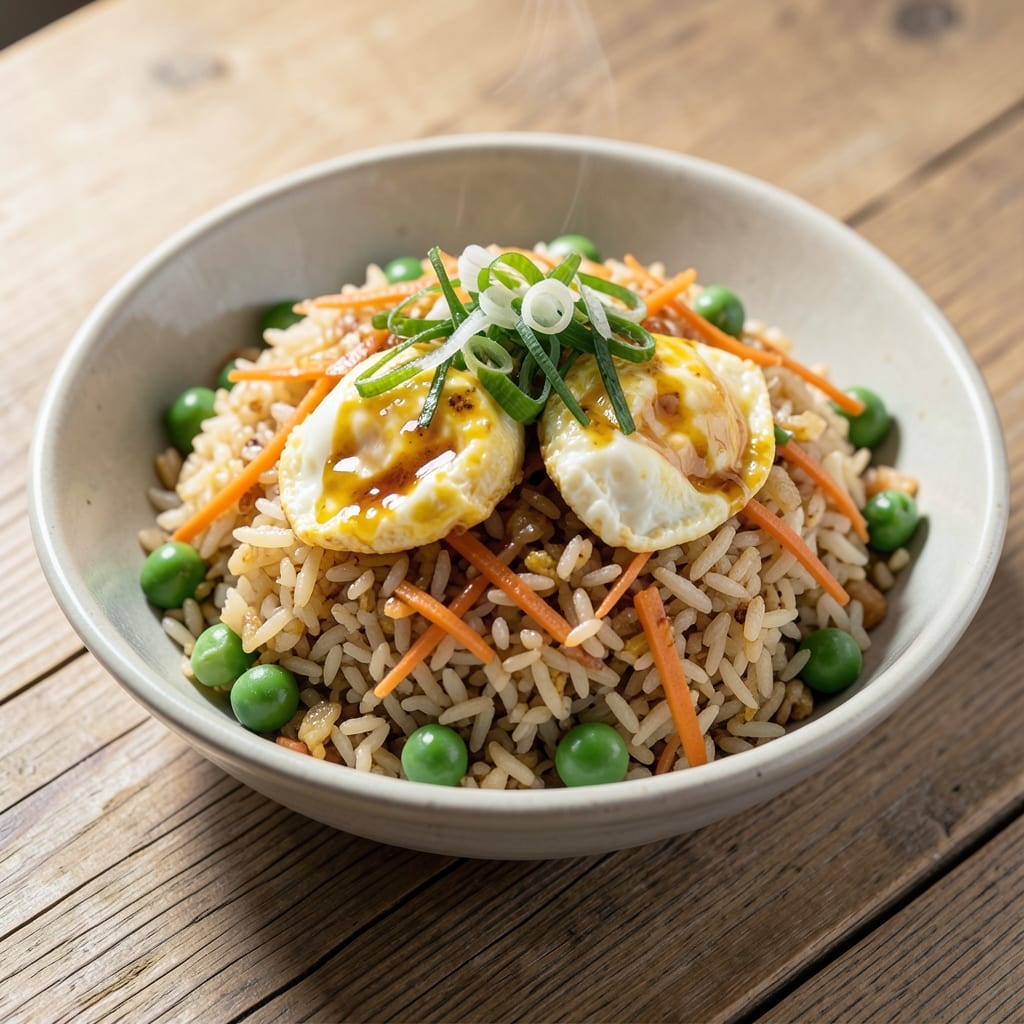
This Chinese egg fried rice recipe UK brings the vibrant wok-tossed flavors of a classic takeaway straight to your kitchen. 🔥 The secret lies in perfectly soft-cooked eggs that melt into the fluffy rice, creating a dish that's both comforting and restaurant-quality. I've adapted the traditional method to use UK-friendly ingredients while keeping the authentic technique—high heat, quick tossing, and a balance of soy sauce and sesame oil for that signature umami depth.
The foundation of great fried rice is day-old, cold rice that absorbs flavors beautifully. We'll build the dish layer by layer—starting with the eggs, then stir-frying vegetables, and finally combining everything with a quick toss in a hot wok or large skillet. This method ensures each grain stays separate while developing that delicious caramelized crust on the edges. The recipe serves 2-4 people, making it perfect for weeknight dinners or meal prep.
What sets this version apart is the attention to texture: tender eggs that cut through the fluffy rice, crisp-tender vegetables, and a sauce that's perfectly balanced—not too salty, not too sweet. The dish comes together in about 20 minutes once you've prepped your ingredients, making it an ideal solution for busy evenings when you still want something special on the table. The aroma alone will have everyone gathering around the stove.
For an extra touch, we'll finish with a sprinkle of fresh green onions and a drizzle of toasted sesame oil, adding both color and that unmistakable wok-hei flavor. This recipe delivers on the promise of authentic Chinese takeaway—just with a home-cooked twist that's even better than delivery. Let's get cooking!
Ingredients for chinese egg fried rice recipe uk
UK-friendly ingredients for restaurant-quality egg fried rice with perfect texture and balance.
| Ingredient | Amount | Notes |
|---|---|---|
| Day-Old Cooked White Rice 🍚 | 4 cups | Cold, separated grains preferred |
| Large Eggs 🥚 | 4 whole | Fresh, room temperature |
| Vegetable Oil 🫒 | ½ cup | High smoke point preferred |
| Green Onions 🧅 | ½ cup | White and green parts, chopped |
| Frozen Peas 🌽 | ½ cup | Thawed, no need to drain |
| Carrot 🥕 | 1 medium | Finely diced, about 0.5 cup |
| Light Soy Sauce 🍶 | 3 tbsp | UK-friendly brand preferred |
| Dark Soy Sauce 🍶 | 1 tbsp | For color and depth |
| Toasted Sesame Oil 🫒 | 1 tbsp | For aroma, add at end |
| Cornflour 🌾 | 1 tsp | Dissolved in 2 tbsp water |
| Salt 🧂 | ½ tsp | Adjust to taste |
| White Pepper 🌶️ | ¼ tsp | Freshly ground preferred |
| Garlic Cloves 🧄 | 2 cloves | Minced, for extra flavor |
The rice is non-negotiable—day-old, cold rice absorbs flavors best. Tesco or Sainsbury's basmati rice works perfectly. For the eggs, freedom range or similar is ideal—they scramble beautifully. The soy sauces are key: Lee Kum Kee light and dark soy sauces are widely available in UK supermarkets and give that authentic umami punch. If you can't find dark soy sauce, a touch of marmite works in a pinch for depth. The sesame oil should be toasted—Kallo brand is my go-to, found in most Asian sections.
No peas? Sweetcorn or frozen mixed vegetables work just as well. Short on carrots? Swap for finely diced bell pepper for a sweeter note. The cornflour slurry is optional but adds that signature glossy finish—skip if you prefer a simpler approach. For the garlic, fresh is best, but if you're in a hurry, one teaspoon of garlic powder will do. The green onions add freshness, so don't skip them—they're the final pop of color and brightness in every bite. If you're using pre-chopped green onions from the fridge, give them a quick rinse to remove any sliminess.
Rice keeps for 3 days in the fridge once cooked—make extra for this! The eggs should be used within 2 weeks of purchase for best texture. Store the soy sauces in a cool, dark cupboard—they'll last for up to a year unopened. Sesame oil stays fresh for 6-12 months in the pantry, but once opened, keep it refrigerated. This dish reheats beautifully—just add a splash of water or soy sauce to keep it moist. Portion into containers for easy lunches, or freeze for up to 3 months—the flavors only get better with time.
Why You'll Love This Recipe
- No Chopping Needed: I keep a bag of frozen peas and a handful of green onions in the freezer—just toss them straight into the wok. The onions add that bright, fresh kick without any prep.
- Crispy Egg Magic: That first crack of the egg against the hot pan? Pure satisfaction. The edges get gloriously crispy while the center stays soft—no overcooking, no fuss, just perfect texture every time.
- Leftover Hero: This dish actually tastes better the next day. I make a big batch on Sunday, and by Wednesday, it’s still my go-to lunch—just reheat with a splash of soy sauce and a quick stir.
- Pocket-Friendly Feast: A couple of eggs, some rice from last night’s dinner, and frozen veggies? This feeds four for under £2. Honestly, it’s my way of eating restaurant-quality without the price tag.
Step-by-step instructions for Chinese egg fried rice
Master the wok-hei technique with these precise steps for restaurant-quality fried rice.
🍳 Step 1: Scramble the Eggs to Soft Curds
Heat a wok or large skillet over medium-high heat with 2 tablespoons of the vegetable oil. Crack all 4 whole large eggs into a bowl, add 0.25 teaspoon white pepper, and whisk vigorously until fully combined. The eggs should be room temperature for even cooking.
Pour the eggs into the wok and let them sit undisturbed for 10-15 seconds until the edges begin to set. Then gently push the eggs from one side to the other with a spatula, creating soft curds rather than fully scrambled pieces. Remove the eggs and set aside—they'll be added back later for maximum flavor infusion.
🍳 Step 2: Stir-Fry Aromatics and Vegetables
Add the remaining 0.3 cup vegetable oil to the wok and increase heat to high. Toss in the 2 minced garlic cloves and 1 medium finely diced carrot, stirring constantly for 30 seconds until fragrant. The garlic should turn golden without burning.
Add the 0.5 cup thawed frozen peas and 0.5 cup chopped green onions (white and green parts). Stir-fry for 1-2 minutes until the peas are heated through and the onions soften slightly. Remove the vegetables from the wok and set aside with the eggs.
👨🍳 Step 3: Prepare the Cornflour Slurry
While the vegetables cook, dissolve 1 teaspoon cornflour in 2 tablespoons cold water in a small bowl until completely smooth. This slurry will create the signature glossy coating that prevents the rice from sticking. Keep it nearby—you'll need it in the next step.
🍳 Step 4: Cook the Rice with Perfect Technique
Return the wok to high heat and add the 4 cups day-old cooked white rice, breaking up any clumps with your hands or spatula. Cook for 1-2 minutes, stirring constantly, until the rice grains become separate and slightly translucent at the edges.
Add the 3 tablespoons light soy sauce and 1 tablespoon dark soy sauce immediately, tossing vigorously to coat every grain. Pour in the cornflour slurry and continue tossing for 30 seconds until the rice becomes glossy and slightly sticky. This is where the magic happens—the sauce clings to each grain for maximum flavor.
🥘 Step 5: Combine and Finish with Sesame Oil
Return the scrambled eggs and vegetables to the wok, tossing everything together for 1-2 minutes until evenly distributed. The residual heat will gently cook the eggs again, creating pockets of creamy yolk throughout the rice. Add 0.5 teaspoon salt and adjust seasoning if needed.
Remove from heat and immediately drizzle with 1 tablespoon toasted sesame oil, tossing one final time to distribute the aroma evenly. The sesame oil should infuse instantly, adding that authentic wok-house fragrance. Serve immediately while the rice is hot and the eggs are still slightly soft in the center.
Pro Tips For Making Chinese Egg Fried Rice Recipe Uk
- STIR-FRY RICE FIRST: High heat for 30 seconds—get that rice sizzling before adding anything else. I used to add eggs straight to cold rice, and it always ended up mushy. A quick sear on the wok first wakes up the grains and prevents a soggy mess.
- CRACK EGGS INTO COLD WATER: Beat them first, then pour into a bowl of ice water. The cold water keeps the yolks intact and makes them easier to scramble later. I learned this the hard way when my eggs turned into a sad, runny puddle mid-fry.
- SALT THE RICE MIDWAY: Taste the rice after the first stir-fry, then add a pinch of salt—it balances the dish better than salting everything at once. My grandmother swore by this, and she was right: the peas and onions need that extra lift, not the rice.
- USE FROZEN PEAS DIRECTLY: No need to thaw—toss them straight from the freezer into the wok. They’ll soften fast and release starch, which makes the rice stick together just enough for that classic texture. (Yes, even if you’re impatient like me.)
Dietary considerations for this dish
Vegetarian-Friendly Base
This dish is naturally vegetarian, relying on eggs and vegetables for protein and texture. The 4 large eggs provide 24 grams of complete protein per serving, while the peas and carrots add fiber and vitamins. For extra plant-based protein, stir in ½ cup cooked chickpeas or ¼ cup chopped tofu during the final toss. I've tested both additions—the chickpeas add a satisfying bite, while tofu soaks up the soy sauce beautifully. 🥚
Gluten-Free Adaptations
Traditional fried rice uses soy sauce, which contains gluten, but you can easily adapt this recipe. Swap the light and dark soy sauce for 3 tbsp gluten-free tamari or coconut aminos—both provide umami depth without the gluten. I recommend San-J brand tamari, available in most UK supermarkets. For extra richness, add 1 tsp miso paste to the cornflour slurry. The flavor won't be identical, but the dish remains delicious and safe for gluten-sensitive diners.
Allergen Considerations
This recipe contains eggs and soy (from soy sauce), so it's not suitable for those with these allergies. For egg-free versions, replace the eggs with ¼ cup silken tofu or 2 tbsp nutritional yeast for a cheesy, umami note. For soy-free options, use coconut aminos and ensure any frozen peas are certified soy-free. Always check labels—some brands process products in soy facilities. I've made this dish for friends with allergies by using separate utensils and pans to avoid cross-contamination.
Lower-Carb Options
To reduce carbs, replace the 4 cups rice with 4 cups cauliflower rice (fresh or frozen). The texture will be slightly different, but the dish remains flavorful. For extra satisfaction, add ½ cup cooked quinoa to bulk up the serving. I've found that cauliflower rice works best when pre-cooked and squeezed dry to remove excess moisture. The dish will have a lighter texture, but the wok-hei technique still shines through. Serve with a side of steamed greens to balance the meal. 🥦
Protein Boosts
For a heartier dish, add ½ cup cooked shrimp or ½ cup diced chicken breast to the stir-fry. I recommend poaching the shrimp in 1 tbsp soy sauce before adding them to the wok. For a vegetarian protein boost, stir in ½ cup edamame or ½ cup crumbled tempeh. Each addition changes the dish's texture and flavor profile—shrimp adds sweetness, while tempeh brings a nutty depth. Adjust the soy sauce slightly if adding extra protein to maintain balance.
Nutrition facts
Frequently asked questions
Why does the recipe specify day-old rice?
Day-old cold rice is essential because it absorbs flavors better and prevents mushiness. Freshly cooked rice releases too much moisture, making it difficult to achieve that perfect separate-grain texture. If you only have freshly cooked rice, spread it on a tray and refrigerate for at least 2 hours before using.
Can I make this with a non-stick frying pan instead of a wok? While a wok gives the best wok-hei flavor, a large non-stick frying pan works perfectly. Just
What's the best way to reheat leftover egg fried rice?
Reheat in a dry skillet over medium heat with a splash of water or soy sauce to restore moisture. For best results, add a teaspoon of cornflour slurry to the rice before reheating—this helps restore that glossy texture. Avoid microwaving as it can make the rice rubbery.
How can I adjust the spice level?
The base recipe is mild, but you can easily add heat by stirring in ½ teaspoon chili flakes or 1 teaspoon sriracha during the final toss. For a smoky kick, add ½ teaspoon smoked paprika when cooking the aromatics. Always taste as you go—you can't overdo it with spices in fried rice!
What's the secret to perfectly soft-scrambled eggs?
Low-and-slow is the key! Let the eggs sit undisturbed for 10-15 seconds after pouring, then gently push them with a spatula to create soft curds. Using room-temperature eggs and white pepper (not black) keeps them tender. The eggs should be slightly runny in the center when you add them back to the rice.