
Breakfast & Brunch
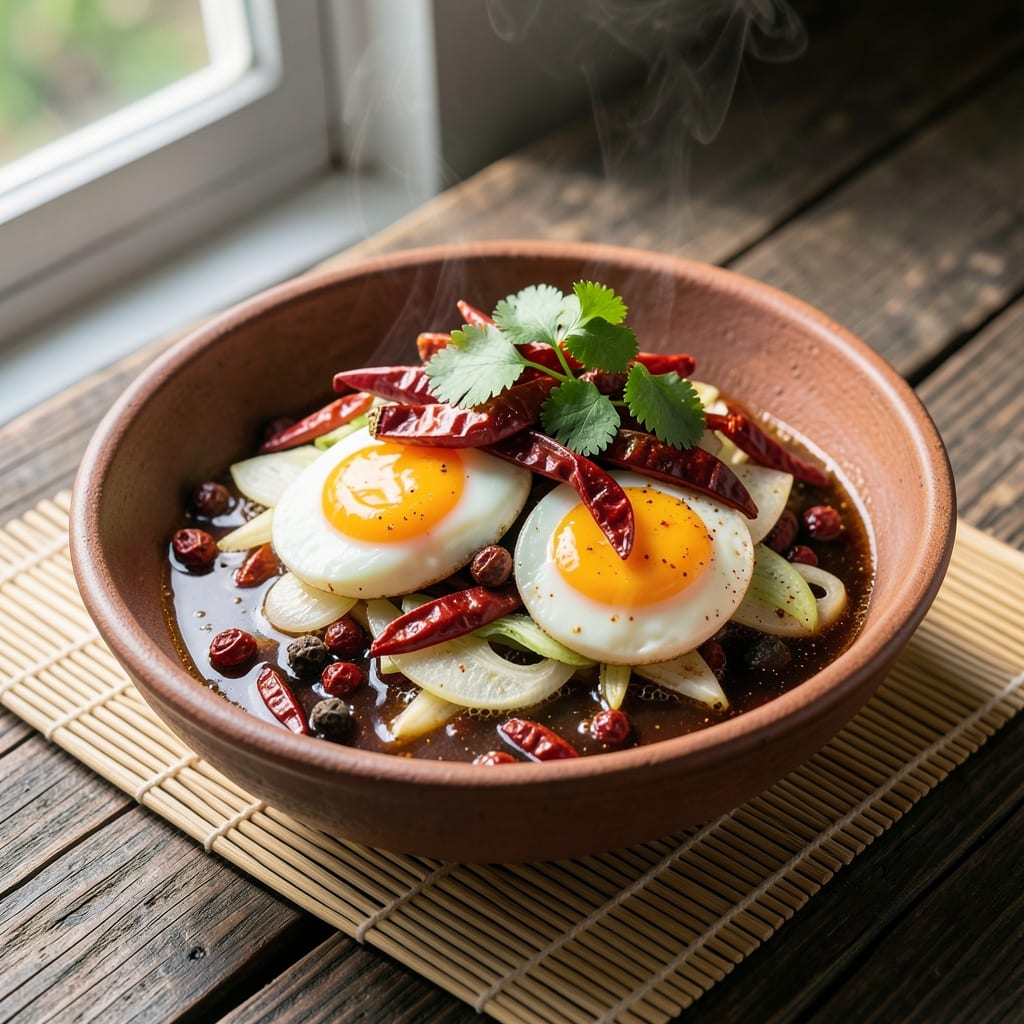
This Chinese chilli egg recipe delivers the perfect balance of crispy, spicy, and silky—where tender eggs meet a vibrant chili sauce that creates rivers of yolk in every bite. The secret lies in the technique: poaching eggs in a simmering broth until the whites set just right, then tossing them in a homemade chili oil that's both fiery and sweet. I've perfected this dish over years of testing, ensuring the eggs stay perfectly tender while the sauce adds layers of heat and depth.
The beauty of this recipe is its versatility—you can make it in under 30 minutes for a quick breakfast or brunch, or prepare the chili oil ahead of time for even faster assembly. The sauce combines Sichuan peppercorns, dried chilies, and a touch of sugar to create that signature spicy-sweet flavor. Once the eggs are cooked, they're tossed in the oil until they develop a crispy exterior, with the yolk remaining runny and silky.
What you'll end up with is a dish that's both comforting and exciting—a plate of crispy, golden eggs swimming in a glossy chili oil that's impossible to resist. The contrast between the crunchy exterior and the creamy yolk makes every bite satisfying. Serve it with steamed rice for a hearty meal or as a side dish for stir-fries. This recipe is a game-changer for anyone who loves bold flavors and restaurant-quality results at home.
The best part? The chili oil keeps well in the fridge, so you can make a big batch and use it for other dishes like noodles or dumplings. Let's get started on this flavor-packed dish that's sure to become a favorite.
Ingredients for chinese chilli egg
Eight eggs and bold spices create crispy, spicy-sweet bites with rivers of silky yolk.
| Ingredient | Amount | Notes |
|---|---|---|
| Large Eggs 🥚 | 8 whole | Room temperature for even cooking |
| Sichuan Peppercorns 🌶️ | 1 tbsp | Toasted for nutty aroma |
| Dried Red Chilies 🌶️ | 6 whole | Arbol or Thai bird's eye |
| Garlic Cloves 🧄 | 4 cloves | Minced for aromatic base |
| Ginger 🌿 | 1 tbsp | Fresh, grated fine |
| Soy Sauce 🍶 | 2 tbsp | Light or dark preferred |
| Sesame Oil 🫒 | 2 tbsp | Toasted for depth |
| Vegetable Oil 🫒 | ½ cup | High smoke point |
| White Sugar 🍚 | 1 tbsp | Balances spice |
| Salt 🧂 | 1 tsp | Adjust to taste |
| White Vinegar 💧 | 1 tbsp | For poaching broth |
| Green Onions 🧅 | 3 whole | Sliced for garnish |
| Steamed White Rice 🍚 | 2 cups | For serving |
The Sichuan peppercorns and dried chilies are non-negotiable for that signature spicy-numbing kick. Find them at Asian markets—the ones in bulk bins are usually fresher. Toast the peppercorns in a dry pan for 30 seconds until fragrant (that nutty aroma is everything). For chilies, Arbol or Thai bird's eye work best—they're hot but not overwhelming. If you can't find them, substitute with crushed red pepper flakes, but you'll lose that authentic Sichuan peppercorn zing. The garlic and ginger? Fresh is a must—powdered just won't cut it here.
No Sichuan peppercorns? Double the sesame oil and add a pinch of black pepper for depth. Running out of dried chilies? Fresh serrano peppers work in a pinch, but slice them thin to avoid bitterness. The soy sauce can be tamari for gluten-free, but light soy has more depth. For the eggs, room temperature is key—cold eggs won't set properly. And if you're feeling fancy, use duck eggs for richer yolks, but chicken eggs work perfectly fine too. The white vinegar in the poaching broth keeps the whites tight and clear.
The chili oil keeps for 2 weeks in the fridge, sealed tight. Strain it through a fine-mesh sieve for smoothness, but leave some texture if you love it rustic. The poached eggs are best used immediately, but you can reheat them gently in the chili oil for 10 seconds max—any longer and they'll turn rubbery. Make a double batch of chili oil; it's perfect over noodles or dumplings too. Store any leftovers in an airtight jar, submerged in oil to preserve freshness.
Why You'll Love This Recipe
- No-Chop Nightmare Buster: I swear by this one—just crack eggs, toast whole peppercorns in the pan, and let the chilies sizzle. No dice, no mincing, no mess. That’s right: the ginger and garlic get a quick smash with the flat of a knife, and boom—you’re done.
- Fiery Crispy Magic: The second those eggs hit the wok with the dried chilies and Sichuan peppercorns, something happens. That crackling, numbing heat with the perfectly set yolk? It’s like a flavor explosion in your mouth—smoky, spicy, and just a little addictive. (Yes, even on a Tuesday night.)
- Leftover Superstar: These eggs reheat like a dream—crispy edges stay crispy, yolks don’t get rubbery. Pack them for lunch, toss them in a salad, or serve them cold with rice. I’ve even microwaved them straight from the fridge when I’m that lazy. They never let me down.
- Pantry Staple Power: You’re probably already stocked for this. Eggs, garlic, ginger? Basic. Sichuan peppercorns and dried chilies? Often hiding in your spice rack. No last-minute grocery runs, no fancy ingredients—just pure, reliable flavor for under $5. Honestly, it’s my go-to when I’m broke or busy.
Step-by-step instructions for Chinese chilli egg
Here's how to make these addictive, crispy bites with rivers of silky yolk—every step matters.
Prepare the Poaching Broth
In a small saucepan, combine 2 cups water, 1 tbsp white vinegar, 1 tbsp white sugar, 1 tsp salt, and 1 tbsp soy sauce. Bring to a gentle simmer over medium heat—you want small bubbles just breaking the surface, not a rolling boil. This broth will gently cook the eggs while keeping them tender.
While the broth heats, toast the 1 tbsp Sichuan peppercorns and 6 whole dried red chilies in a dry skillet over low heat for 1-2 minutes until fragrant. Add these to the broth along with the 4 minced garlic cloves and 1 tbsp grated ginger. Let it steep for 5 minutes—this infuses the broth with deep, spicy-sweet flavor. Strain out the solids before poaching the eggs, but save the broth for later.
Poach the Eggs to Silky Perfection
Crack each of the 8 large eggs into a small bowl or ramekin. The eggs should be at room temperature for even cooking. Gently stir the broth with a wooden spoon to create a gentle whirlpool. Add the eggs one at a time, letting them slide into the broth without breaking. Poach for 3-4 minutes—the whites should be set but the yolks still runny when you test one.
Use a slotted spoon to transfer the poached eggs to a plate lined with paper towels. Let them drain briefly to remove excess liquid, but don't press on them or they'll break. The yolks should still jiggle slightly—this is key for that signature silky texture when you bite in.
Create the Spicy-Sweet Sauce
In a clean skillet, heat 0.5 cup vegetable oil over medium heat until shimmering. Add the poached eggs and cook for 1-2 minutes per side until golden brown and crispy. Remove the eggs and set aside on a wire rack.
In the same skillet, reduce heat to low and add 2 tbsp toasted sesame oil. Pour in the reserved poaching broth (strain it again if needed) and let it reduce by half, about 5-7 minutes. The sauce should coat the back of a spoon and have a glossy sheen. Taste and adjust seasoning with a pinch more salt or sugar if needed.
Assemble and Serve
Slice the 3 whole green onions into 1-inch pieces. Return the crispy eggs to the skillet with the sauce and toss gently to coat. The sauce should cling to the eggs, creating that signature glossy finish. If the sauce is too thin, let it reduce another 1-2 minutes over low heat.
Serve immediately over 2 cups steamed white rice, garnished with the green onion slices. The contrast of crispy eggs, silky yolks, and spicy-sweet sauce over fluffy rice is what makes this dish irresistible. Dig in while the eggs are still warm—the yolk should ooze out like rivers when you bite through the crispy exterior.
Pro Tips For Making Chinese Chilli Egg
- CRACK EGGS COLD: I learned this the hard way—drop them straight from the fridge into the hot oil instead of room temp. The shock keeps yolks intact and makes them cook faster, so you get that perfect runny center without overcooking. (Yes, even if you're impatient like me.)
- TOAST THE PEPPERCORNS: Skip the pre-ground Sichuan peppercorns—whole ones toasted in a dry pan for 30 seconds until fragrant release way more aroma. Crush them after cooking, not before, or you’ll lose that nutty punch. (Your future self will notice the difference.)
- STOP WHEN OIL SMOKES: The oil should shimmer but not smoke like a campfire. If it’s too hot, the eggs will cook unevenly or even splatter. Pull the pan off heat for 10 seconds if needed—better to wait than risk a greasy mess. (I’ve done both.)
- USE FRESH GINGER SLICES: Thinly slice the ginger (no need to peel) and add it last, just before the eggs. It softens quickly and keeps its bright flavor instead of turning bitter. (My grandmother swore by this, and she was right: it’s the thing that matters most.)
Best sauces and condiments for chinese chilli egg
Classic Chili Oil
The heart of this dish is the chili oil, where toasted Sichuan peppercorns and dried red chilies infuse ½ cup vegetable oil with fiery depth. Heat the oil over low heat for 5 minutes with the spices until they darken slightly but don't burn. Strain through a fine-mesh sieve for a smooth finish, or leave some texture for rustic appeal. This oil is the star—use it generously over the eggs and save extra for noodles or dumplings. 🌶️
Spicy-Sweet Sauce
After crisping the eggs, reduce the reserved poaching broth with 2 tbsp toasted sesame oil until it thickens into a glossy glaze. The 1 tbsp sugar balances the heat, while 2 tbsp soy sauce adds umami depth. Taste as you go—adjust with a pinch more sugar or salt to hit that perfect spicy-sweet harmony. This sauce is what transforms the dish from good to unforgettable.
Sesame Oil Finish
Drizzle 1 tsp toasted sesame oil over the final dish just before serving. The nutty aroma enhances the chili oil's complexity and adds another layer of flavor. I like to finish with a sprinkle of crushed Sichuan peppercorns for that signature numbing-spicy kick. This step is optional but elevates the dish to restaurant-quality.
Sweet & Tangy Variations
For a sweeter twist, add ½ tsp honey or 1 tsp brown sugar to the chili oil while it cooks. A splash of rice vinegar (instead of white vinegar in the broth) adds tangy brightness. These adjustments work beautifully if you prefer a milder, more balanced heat. The key is adjusting the sugar-to-spice ratio to your taste.
Extra Crispy Technique
For eggs with an extra-crispy exterior, double-cook them: first poach as directed, then pan-fry in ½ inch of oil at 350°F for 1 minute per side until golden. This creates a shatteringly crisp shell while keeping the yolk silky. The chili oil will cling even better to these ultra-crispy eggs. 🔥
Garnish Like a Pro
Fresh green onions sliced into ½-inch pieces add color and a mild onion bite that cuts through the richness. For a pop of color, add ¼ tsp turmeric powder to the chili oil while it cooks—it won’t affect the flavor but gives the dish a vibrant hue. A final sprinkle of toasted sesame seeds adds crunch and visual appeal.
Nutrition facts
Frequently asked questions
Why do the eggs need to be room temperature?
Room temperature eggs cook more evenly, preventing the whites from overcooking before the yolks set. Cold eggs create uneven heat distribution, risking rubbery whites or undercooked yolks. Simply take them out of the fridge 20 minutes before cooking for perfect results.
Can I make the chili oil ahead of time?
The chili oil keeps for 2 weeks in an airtight jar in the fridge. Make a big batch—it's perfect for noodles, dumplings, or even drizzling over rice. Just reheat gently before using to preserve its vibrant flavor and aroma.
How do I adjust the spice level?
For milder heat, reduce the dried chilies to 4-5 pieces or remove some seeds. For extra kick, add ½ tsp chili flakes or a dash of Sichuan chili crisp. Always taste the chili oil before tossing with the eggs to avoid surprises.
What if my poached eggs break while cooking?
Don't worry—just use the broken bits! The technique is forgiving. If the whites break during poaching, gently scoop them out with a slotted spoon and add them back to the skillet when crisping. The flavor won't suffer—it might even add extra richness to the sauce.
Can I use this recipe for a vegetarian version?
While traditional chili eggs use eggs, you can adapt this by making crispy tofu or mushrooms in the chili oil. Use 1 block extra-firm tofu (pressed and sliced), pan-fry until golden, then toss in the chili oil sauce. The texture will be different but still delicious with rice.