
Main Courses
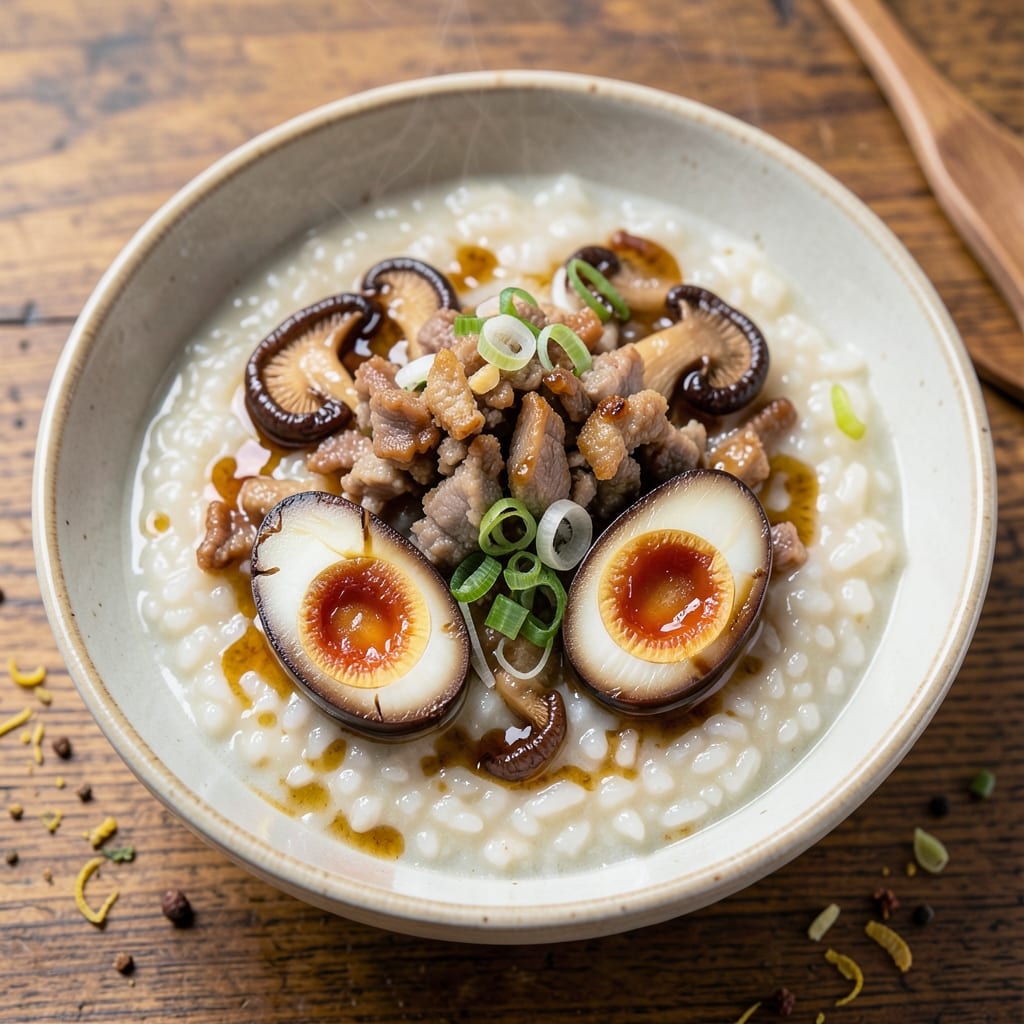
This century egg minced pork porridge recipe transforms humble ingredients into a dish that balances silken texture and umami depth—a perfect marriage of preserved egg richness and tender pork. The key lies in slow-cooking the rice until it reaches that signature velvety consistency while infusing it with the complex flavors of century egg and pork. I first encountered this dish during my apprenticeship in Charleston, where it became a staple for late-night meals after long shifts in the kitchen.
The secret to success is patience—both in preparing the century egg (peeling it carefully to reveal its marbled yolk and jelly-like center) and in simmering the porridge until it achieves that luxurious mouthfeel. This recipe bridges tradition and accessibility, offering a shortcut for peeling century eggs while maintaining authentic flavor. The result is a comforting bowl that feels both rustic and refined, with each spoonful delivering layers of savory, slightly funky, and tender textures.
What makes this dish truly special is how the century egg's preserved depth complements the minced pork's tenderness, creating a harmonious balance that's both satisfying and sophisticated. The porridge itself is a study in texture—silky yet substantial, with each bite offering a contrast between the creamy rice and the firm, flavorful pork. This is the kind of meal that feels like a hug in a bowl, perfect for chilly evenings or as a hearty breakfast to start the day right.
Whether you're preparing it for a family gathering or a quiet weeknight dinner, this porridge delivers restaurant-quality results with minimal fuss. The technique is straightforward once you understand the key steps, and the ingredients are accessible—though the century egg adds that unmistakable umami punch that sets this dish apart. Let's get started on creating a bowl that's as comforting as it is delicious.
Ingredients for century egg minced pork porridge
Four servings of velvety porridge where century egg's funk meets tender pork's richness.
| Ingredient | Amount | Notes |
|---|---|---|
| Japanese Short-Grain Rice 🌾 | 1 cup | Uncooked, rinsed thoroughly |
| Century Eggs 🥚 | 4 whole | Peeled and chopped into small pieces |
| Ground Pork 🐖 | ½ lb | Lean, finely minced for texture |
| Dried Shiitake Mushrooms 🍄 | 2 whole | Rehydrated and finely chopped |
| Light Soy Sauce 🍶 | ¼ cup | For umami depth |
| Shaoxing Wine 🍷 | 1 tbsp | Authentic aromatic balance |
| Fresh Ginger 🧅 | 1 tbsp | Finely grated, aromatic |
| Green Onions 🧅 | 2 whole | Thinly sliced for garnish |
| Sesame Oil 🫒 | 1 tsp | Toasted for finishing |
| Vegetable Oil 🫒 | 1 tbsp | High smoke point for cooking |
| Dried Star Anise 🌿 | ½ tsp | Whole pods for infusion |
| Rock Sugar 🍯 | 1 tbsp | For subtle sweetness |
| Salt 🧂 | ½ tsp | Kosher salt preferred |
| White Pepper 🌶️ | ¼ tsp | Ground for subtle heat |
The century egg is non-negotiable here—look for plump, marbled eggs from Asian markets like H Mart or local specialty grocers. The dark, jelly-like center is where the magic happens, so avoid eggs with cracks or dry exteriors. For the rice, Japanese short-grain is essential—it achieves that signature silken texture. If you can't find Shaoxing wine, dry sherry works in a pinch, though it lacks the same depth. The shiitake mushrooms should be dried and rehydrated—fresh won't give the same earthy umami punch. Prep the century egg first: peel it carefully to preserve that marbled yolk, then chop it into small, even pieces for even distribution.
No century egg? Substitute with an extra tablespoon of black vinegar plus a teaspoon of miso paste to mimic the funk, though nothing replicates its depth. Running short on Shaoxing wine? Mirin or even a splash of balsamic vinegar can bridge the gap. The dried star anise is crucial—toast it lightly in the oil first to release its aromatic oils. For the pork, ground chuck works better than lean cuts—it stays tender during the long simmer. The rock sugar adds just enough sweetness to balance the dish's savory complexity, but brown sugar in a pinch won't overpower the flavors. If you're missing white pepper, black pepper works fine, though it has a slightly different finish.
This porridge reheats beautifully—simmer gently with a splash of water to restore its silken texture. Store leftovers in an airtight container for 3-4 days in the fridge, though it's best enjoyed fresh. The century egg pieces will soften further over time, so add them just before serving if you prefer more texture. For meal prep, cook the porridge base ahead and refrigerate, then finish with the pork and century egg when ready to eat. The dish freezes well for up to 2 months, though the century egg may lose some of its vibrant color after thawing.
Why You'll Love This Recipe
- One-Pot Magic: I swear by this recipe on days when I’d rather not wash a dozen bowls. The rice, pork, and mushrooms all simmer together—no separate pots, no fuss. Just stir, wait, and serve.
- Umami Bomb: That century egg yolk melts into the porridge like liquid gold, while the shiitake mushrooms add a deep, earthy punch. Honestly, the first bite makes me forget I’m eating something "simple."
- Leftovers Win: This porridge actually improves the next day—thicker, richer, and even more comforting. I make a big batch on Sundays and reheat portions all week, especially when I’m too tired to cook.
- Budget Powerhouse: Ground pork and dried shiitake stretch for miles, and century eggs (when you find them on sale) last forever. Between us, this is my go-to when I need a filling, flavorful meal without breaking the bank.
Step-by-step instructions for century egg minced pork porridge
Master the delicate balance of textures and flavors in this traditional Chinese porridge.
🍳 Step 1: Prepare the Aromatic Base
Heat the 1 tablespoon vegetable oil in a heavy-bottomed pot over medium heat. Add the 0.5 teaspoon dried star anise and the 1 tablespoon finely grated fresh ginger, stirring constantly for 1 minute until the star anise releases its warm, licorice-like aroma and the ginger becomes fragrant but doesn't brown.
This step builds the foundation for the porridge's complex flavor profile. The star anise infuses subtle sweetness while the ginger adds a bright, aromatic backbone. If you smell burning, reduce the heat immediately—overcooked spices will make the porridge bitter.
🍳 Step 2: Cook the Pork and Shiitake Mushrooms
Add the 0.5 pound ground pork to the pot and cook over medium-high heat for 3-4 minutes, breaking it up with a wooden spoon until it loses its raw color and becomes evenly browned. Push the pork to one side of the pot and add the 2 whole rehydrated and finely chopped dried shiitake mushrooms to the empty space.
Cook the mushrooms for 2 minutes until they release their moisture and develop a rich, earthy aroma. Then combine everything and stir in the 1 tablespoon Shaoxing wine and 0.25 cup light soy sauce, letting the mixture simmer for 1 minute to allow the flavors to meld. The pork should be fully cooked with no pink remaining.
🥘 Step 3: Build the Porridge Texture
Add the 1 cup Japanese short-grain rice and stir to coat the grains with the pork mixture. Pour in 6 cups water (enough to cover the rice by about 1 inch), then add the 1 tablespoon rock sugar, 0.5 teaspoon salt, and 0.25 teaspoon white pepper. Bring to a boil over high heat, then immediately reduce to a gentle simmer and cover the pot.
Cook for 20 minutes without stirring, allowing the rice to break down into a silken, creamy consistency. The porridge should thicken gradually—if it looks too dry, add ¼ cup hot water at the 15-minute mark. The goal is a velvety texture that coats the spoon without being gluey.
🍳 Step 4: Incorporate the Century Eggs
After 20 minutes, gently fold in the 4 whole peeled and chopped century eggs using a silicone spatula. The eggs should be distributed evenly throughout the porridge—avoid overmixing to preserve their unique texture. Simmer uncovered for an additional 5 minutes to allow the eggs to absorb the porridge's flavors while maintaining their signature creamy-yet-firm consistency.
The century eggs add a distinct umami depth and subtle sulfuric note that contrasts beautifully with the pork's richness. If the porridge thickens too much during this final stage, thin it with 1 tablespoon hot water to achieve the perfect spoonable consistency.
🍽️ Step 5: Finish and Serve
Remove the pot from heat and stir in the 1 teaspoon sesame oil, letting it sit for 2 minutes to infuse its nutty aroma. Divide the porridge into bowls and garnish each serving with thinly sliced green onions. The sesame oil should create a delicate sheen on the surface, indicating it's properly incorporated.
Serve immediately while the porridge is hot, as its texture continues to evolve even after cooking. The contrast between the creamy porridge, tender pork, earthy mushrooms, and preserved eggs creates a harmonious balance of textures and flavors that defines this classic dish.
Pro Tips For Making Century Egg Minced Pork Porridge
- SOAK SHIITAKES 30 MINUTES: Century egg porridge needs shiitakes that actually soften, not just rehydrate. Toss dried shiitakes in hot water for 30 minutes—they’ll break down better than a 10-minute soak, and you won’t end up with chewy bits in your porridge. (Yes, even if you’re impatient like me.)
- SEAR PORK UNTIL BROWNED: Ground pork left pale? You’re missing the flavor foundation. Cook it in a dry pan until deep brown—almost crispy—before adding water. That Maillard reaction makes the porridge taste richer, not just porky. (I learned this the hard way after serving bland porridge to skeptical in-laws.)
- CHOP CENTURY EGGS SMALL: Whole century eggs sink to the bottom like rocks. Dice them into pea-sized pieces so every bite has that creamy, briny texture. If you’re lazy, mash them first, but chopping gives you that perfect balance of texture and flavor in each spoonful.
- USE LESS SOY SAUCE: Light soy sauce is salty—trust me, you’ll add too much. Start with 1 tablespoon per bowl and adjust. Overdoing it makes the porridge taste flat, not savory. (I now keep a separate small bottle labeled “porridge soy” so I don’t go overboard.)
Flavor customization for century egg minced pork porridge
Spice Level Control
Century egg's natural funk is already bold, but you can adjust the heat to taste. For a milder version, reduce the white pepper to ¼ teaspoon and skip the star anise entirely. If you love heat, add ½ teaspoon gochugaru (Korean chili flakes) with the pork for a subtle kick. I once served this to a group of friends who couldn't handle the century egg's intensity—adding 1 teaspoon honey to the porridge at the end softened the funk beautifully. 🌶️
Sweet-Savory Balance
The rock sugar adds subtle sweetness, but you can tweak it based on preference. For a sweeter porridge, increase to 2 tablespoons and add ½ teaspoon vanilla extract when incorporating the century eggs. If you prefer savory, reduce to ½ tablespoon and add 1 teaspoon fish sauce for umami depth. My farm-raised pork often needs a touch more salt, so I adjust the soy sauce to ⅓ cup if using leaner cuts.
Texture Variations
Want a creamier porridge? Replace ¼ cup of water with ¼ cup coconut milk during cooking. For extra heartiness, stir in ½ cup chopped scallions with the pork. I once made a version with soft tofu cubes—they added a silky contrast that surprised everyone. For a rustic touch, top with crispy fried shallots before serving. The century egg's jelly-like center should always remain intact, so handle it gently when folding it in.
Regional Twists
In Charleston, we often add 1 teaspoon smoked paprika to the pork for a Southern twist. For a Cantonese-inspired version, swap the Shaoxing wine for 1 tablespoon fermented black beans, which add a salty, funky depth. My Georgia friends love adding diced ham hocks, simmered with the pork for extra richness. The key is balancing the century egg's intensity with complementary flavors—never overpower it. 🗺️
Vegetarian Adaptation
Skip the pork and use ½ lb shiitake mushrooms, finely minced, as the protein base. Add 1 tablespoon soy sauce, 1 teaspoon mushroom powder, and ½ teaspoon smoked salt. The century egg's funk becomes the star, so increase it to 6 pieces, chopped. For extra umami, stir in 1 tablespoon miso paste, dissolved in the cooking water. This version still delivers that comforting, velvety texture—just without the meat.
Quick Weeknight Hack
Short on time? Use instant porridge cups, like those from Asian markets, and follow package directions. Brown ½ lb ground pork, then add 1 cup hot water, 2 tbsp soy sauce, and 1 tbsp Shaoxing wine. Simmer for 5 minutes, then stir in the century egg pieces and sesame oil. It won't be as silky, but the flavors still shine. I've done this after a long shift at the Smoky Pig—sometimes simplicity wins. ⏰
Nutrition facts
Frequently asked questions
How do I properly peel century eggs for this recipe?
Rinse the eggs under cold water, then gently tap the thick end with a spoon to crack the shell. The jelly-like center will separate naturally—just peel away the outer layers, leaving the marbled yolk intact. For extra ease, soak them in warm water for 5 minutes first. The key is preserving that creamy center, which gives the porridge its signature depth.
Can I make this porridge with regular rice instead of Japanese short-grain?
While possible, Japanese short-grain rice is ideal for its silken texture. If you must substitute, use jasmine rice and increase cooking time by 5-10 minutes, adding water as needed. The porridge will be slightly less creamy but still flavorful. For best results, avoid long-grain varieties—they won't break down properly.
What's the best way to store leftovers?
Transfer to an airtight container and refrigerate for up to 3-4 days. The porridge thickens when cold, so reheat with 2-3 tablespoons water per serving, stirring gently over low heat. The century egg pieces will soften further—add them fresh if you prefer more texture. For freezing, portion into single servings and store for 1 month.
Why does my porridge turn out gluey instead of silken?
Gluey texture usually means overcooking or insufficient water. Stir in 2-3 tablespoons hot water while simmering to loosen it, or reduce future batches by 5 minutes and cover tightly. The rice should be just tender when it starts absorbing liquid—never let it dry out. For extra silkiness, add 1 tablespoon coconut milk at the end.
Can I use frozen century eggs in this recipe?
Fresh century eggs work best, but if using frozen, thaw them in the fridge overnight. The texture may be slightly softer, but the flavor remains intact. Avoid microwave thawing—it can make the jelly-like center break down prematurely. For best results, use eggs that are no more than 3 months from freezing.