
Breakfast & Brunch
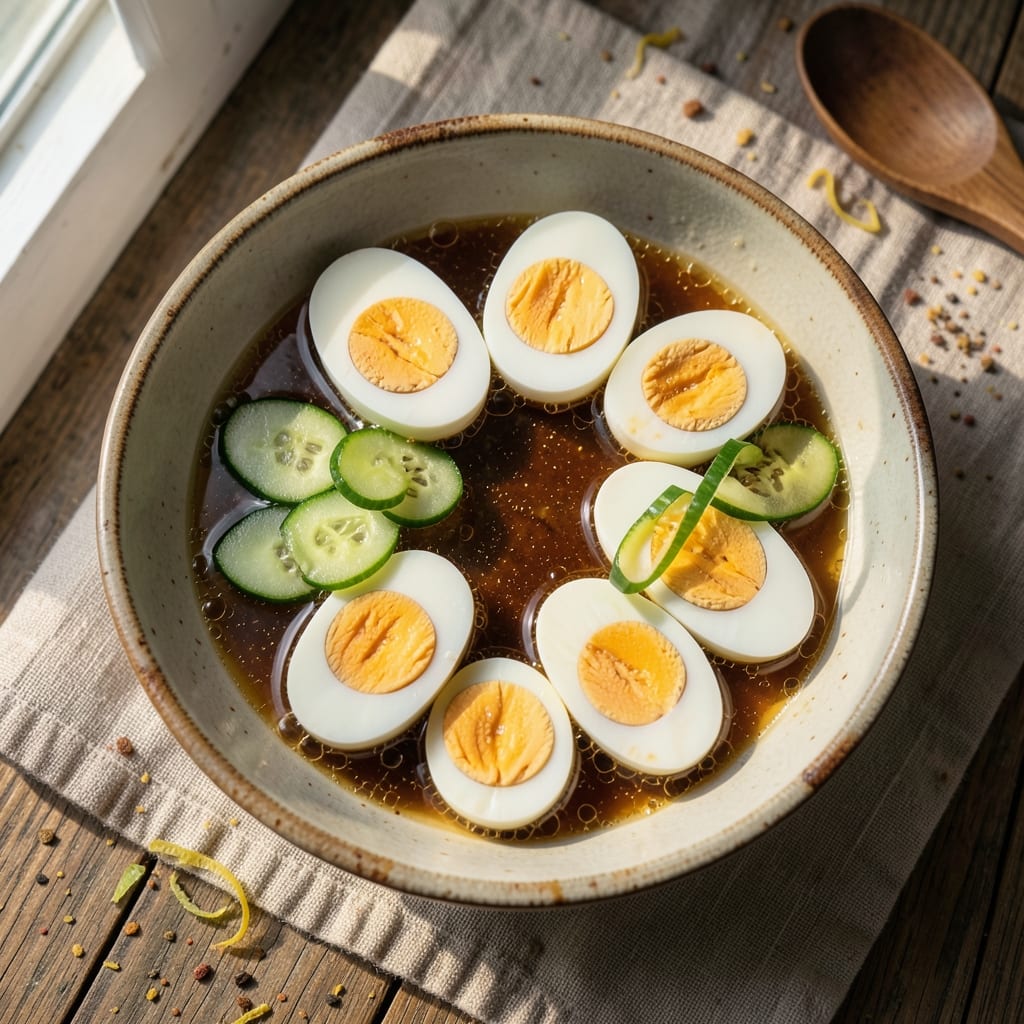
This boiled egg pickle recipe transforms simple hard-boiled eggs into zesty, crunchy bites that taste like a restaurant-quality appetizer. The key lies in a tangy cucumber-infused brine that penetrates the eggs, creating a perfect balance of acidity and texture. I developed this recipe after realizing how often store-bought pickled eggs fell short—too soft, too salty, or lacking that satisfying crunch.
The process is straightforward but requires patience: a carefully measured brine of vinegar, water, and spices simmers until fully infused with cucumber flavor. Salt and sugar act as natural preservatives, ensuring your eggs stay fresh for weeks in the refrigerator. What sets this recipe apart is the optional flavor variations—garlic for depth, mustard for a subtle kick, or chili for heat lovers.
By the time your eggs emerge from the curing process, they’ll have a crisp exterior and a tangy, slightly sweet interior that’s impossible to resist. The brine’s vibrant color and aroma alone make this recipe worth trying, but the first bite—where the crunch meets the zesty flavor—is truly transformative.
Perfect for meal prep, charcuterie boards, or quick snacks, these pickled eggs keep for weeks, making them an ideal make-ahead solution. Whether you’re hosting a gathering or simply craving a flavorful bite, this recipe delivers restaurant-quality results with minimal effort.
Ingredients for boiled egg pickle
These simple, vibrant ingredients create a tangy brine that transforms eggs into restaurant-quality pickles.
| Ingredient | Amount | Notes |
|---|---|---|
| Hard-Boiled Eggs 🥚 | 12 whole | Large eggs, peeled immediately after boiling |
| White Vinegar 💧 | 2 cups | Distilled white vinegar preferred |
| Water 💧 | 2 cups | Filtered or bottled preferred |
| Granulated Sugar 🍚 | ½ cup | White or raw sugar works |
| Diamond Crystal Kosher Salt 🧂 | ½ cup | Not iodized salt preferred |
| Fresh Cucumber 🥒 | 1 whole | English or Persian cucumber sliced |
| Garlic Cloves 🧄 | 4 cloves | Optional for depth of flavor |
| Yellow Mustard Seeds 🌶️ | 1 tsp | Optional for subtle kick |
| Red Chili Flakes 🌶️ | 1 tsp | Optional for heat lovers |
| Fresh Dill Weeds 🌿 | ¼ cup | Chopped, optional for freshness |
The cucumber is the flavor backbone here. Use a fresh, firm cucumber—avoid those with soft spots, as they’ll turn the brine mushy. Whole Foods or local farmers markets often carry the best quality. If you're short on time, Trader Joe's pre-sliced cucumbers work in a pinch, but they lack the same punch. For garlic lovers, roast the cloves first—toss them in a 400°F oven for 10 minutes to deepen their flavor. The mustard seeds and chili flakes are optional but add layers of complexity if you're feeling adventurous.
No cucumber? Add an extra tablespoon of lemon juice to compensate for the missing freshness. Short on vinegar? Apple cider vinegar works too, though it’ll give a slightly fruity twist. The sugar and salt ratio is crucial—don’t skip either, as they balance the acidity and preserve the eggs. For a smokier profile, swap half the vinegar for smoked apple cider vinegar. If you’re making this ahead, use smaller jars so the eggs cure faster—they’ll be ready in just 24 hours instead of 48.
Store the pickled eggs in an airtight container in the fridge, submerged completely in the brine. They’ll keep for up to 6 weeks, though the flavor peaks after 3-4 days. For meal prep, portion into small containers—perfect for snacking or charcuterie boards. The brine can be reused for 2-3 batches if stored properly, but always ensure the eggs are fully submerged to prevent spoilage. Freezing isn’t recommended, as it alters the texture.
Why You'll Love This Recipe
- Here’s what sold me: that satisfying crack when you bite into the shell, followed by the creamy yolk and the vinegar brine’s sharp kick. The eggs stay firm but tender, and the brine soaks in just enough to make every bite tangy and bright.
- I’ll be real: I make this when I’m low on time or cash. A dozen eggs and a splash of vinegar stretch into a week’s worth of snacks or quick bites. Plus, the leftovers? They just get better with time—like a slow-brewed flavor bomb that’s always ready.
Step-by-step instructions for zesty cucumber-infused egg pickles
Here's the precise method for creating vibrant, tangy egg pickles that stay crisp for weeks.
Prepare the Brine Solution
In a large heatproof bowl, combine the 2 cups white vinegar and 2 cups water. Add the 0.5 cup granulated sugar and 0.5 cup Diamond Crystal kosher salt, stirring until both dissolve completely. The solution should be fully transparent with no visible sugar or salt crystals remaining.
Place the bowl over a saucepan filled with about 2 inches of simmering water (double boiler method). Heat the mixture to 180°F while stirring occasionally. This gentle heating ensures the sugar and salt fully integrate without scorching. Remove from heat once the temperature is reached—this will be your flavorful base.
Assemble the Pickle Jar Components
Slice the 1 whole fresh cucumber into ¼-inch thick rounds (about 12-15 slices). Peel and smash the 4 cloves garlic with the side of a knife to release their oils. In a small bowl, combine the 1 tsp yellow mustard seeds, 1 tsp red chili flakes, and 0.25 cup chopped fresh dill weeds—this forms your aromatic blend.
Arrange half the cucumber slices in the bottom of a quart-sized mason jar. Sprinkle half of the garlic, mustard seeds, chili flakes, and dill evenly over the cucumbers. Repeat with the remaining ingredients, finishing with a layer of cucumber slices. This layering ensures every egg gets equal exposure to the flavors.
Add Eggs and Seal the Jar
Gently place the 12 peeled hard-boiled eggs into the jar, packing them snugly but not tightly. Pour the warm brine over the eggs until completely submerged, leaving about ½-inch headspace at the top. Tap the jar gently on the counter to remove any air bubbles trapped between the eggs.
Seal the jar tightly with the lid and let it cool to room temperature. This cooling process creates a partial vacuum seal, which is crucial for long-term preservation. Once cooled, store the jar in the refrigerator for at least 24 hours before eating—this allows the flavors to fully meld.
Maintain and Enjoy
After the initial 24-hour infusion, these pickles will keep in the refrigerator for up to 3 months. The eggs will maintain their firm texture while absorbing the bright, tangy flavors of the cucumber, garlic, and vinegar. The mustard seeds add a subtle crunch, while the chili flakes provide a gentle heat that lingers.
Serve the pickles chilled as a snack, on charcuterie boards, or as a tangy accompaniment to sandwiches. The acidity from the vinegar preserves the eggs while creating a complex flavor profile that's both refreshing and satisfying. For best results, consume within 2 months for peak texture and flavor.
Pro Tips For Making Boiled Egg Pickle
- Crack Eggs First: Peel those eggs before adding them to the vinegar—it’s easier to handle and avoids the mess of peeling them later, especially if they’re older. I learned this after struggling with slippery, half-peeled eggs that kept rolling around in the jar.
- Use 1:1 Vinegar Ratio: For every cup of vinegar, add a cup of water—this balance keeps the eggs crisp without making the brine too harsh. Too much vinegar? The eggs turn rubbery. Too little? The flavor fades fast. Stick to equal parts.
- Add Salt Last: Toss in the salt and sugar after the eggs are submerged, then stir gently. If you add it first, you’ll end up with clumps at the bottom of the jar—trust me, you don’t want to fish those out later.
- Cover and Wait: Seal the jar and let it sit for at least 24 hours before eating—this is when the flavor really sinks in. I know, you’re eager, but rushing it means a milder, less satisfying pickle. Patience here makes all the difference.
Essential equipment for perfect results
Mason Jar Essentials
A quart-sized mason jar with a tight-sealing lid is your best friend for this recipe—I recommend Ball or Kerr brand for reliability. The ½-inch headspace between eggs and brine is crucial for creating that perfect vacuum seal during cooling. If you don't have mason jars, glass canning jars with silicone lids from Amazon work just as well. 💫
Double Boiler Setup
For heating the brine, a double boiler is essential to prevent scorching. I use a stainless steel mixing bowl placed over a saucepan with 2 inches of simmering water. If you don't have a double boiler, a heatproof glass measuring cup works in a pinch. Keep the heat at medium-low to maintain a steady 180°F temperature—any hotter risks burning the sugar.
Precision Tools
A thermometer is non-negotiable for accurate brine temperature control. I swear by the OXO Good Grips Instant Read Thermometer—it's affordable and reliable. For slicing cucumbers evenly, a mandoline with a ¼-inch thick slice setting ensures perfect consistency. If you're skipping the mandoline, a sharp chef's knife and steady hand will do, but be patient with those slices! 🌡️
Optional Flavor Tools
For garlic lovers, a garlic press saves time and ensures even distribution of those flavorful oils. If you're using mustard seeds, a mortar and pestle gives them a light crush before adding to the jar. The red chili flakes should be measured using a spice scoop for precision—never eyeball it! A fine-mesh strainer comes in handy if you want to strain the brine for a clearer presentation later.
Storage Containers
For meal prep, smaller airtight containers (like 4-ounce glass jars) are perfect for portioning. I love Leviton glass containers because they stack neatly in the fridge. If you're making this ahead for a party, a large glass storage bowl with a lid works for serving directly from the fridge. Just ensure everything stays fully submerged in brine to maintain freshness and flavor.
Nutrition facts
Frequently asked questions about boiled egg pickles
How long do these pickled eggs last in the fridge?
Your cucumber-infused pickled eggs will stay fresh for up to 3 months when stored properly in the refrigerator. For peak flavor and texture, consume them within 2 months. Always ensure the eggs remain fully submerged in the brine to prevent spoilage.
Can I use apple cider vinegar instead of white vinegar?
Yes! Apple cider vinegar works beautifully and adds a subtle fruity depth to the flavor profile. Just note it may slightly alter the color of the brine and eggs. For the classic tang, white vinegar is preferred, but both options create delicious results.
Why do my pickled eggs turn rubbery?
Rubbery eggs usually result from overcooking during boiling or improper curing. Use 9-minute hard-boiled eggs (not longer) and ensure they're fully submerged in the 180°F brine for at least 24 hours. The sugar and salt balance is also critical—don't skip either ingredient.
What can I do with leftover brine?
Leftover brine makes an excellent marinade for meats, veggies, or even as a tangy salad dressing! Strain out any solids, store in an airtight container, and use within 1 week. For preservation, you can freeze it for up to 3 months—just thaw in the fridge before using.
Can I make these pickles without cucumbers?
For a cucumber-free version, boost the flavor with 1 tbsp lemon juice or ½ cup sliced dill pickles (packed in juice). You could also add ½ cup thinly sliced red onion or 1 tsp celery seeds for complexity. The key is maintaining the same brine ratio for preservation.