
Breakfast & Brunch
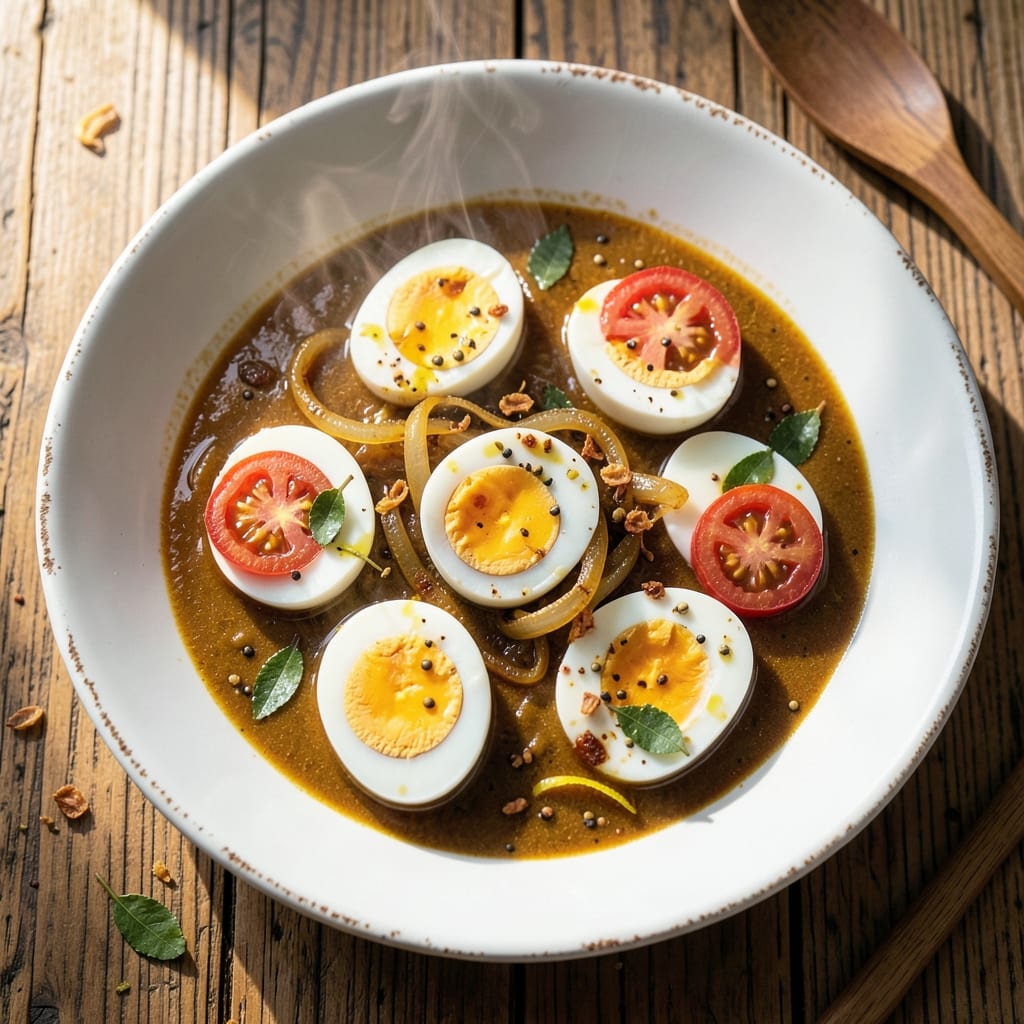
This boiled egg fry curry recipe transforms simple boiled eggs into a restaurant-worthy dish with rich, spiced gravy that clings to every tender bite. The secret lies in balancing warm spices with tangy tomatoes and creamy yogurt, creating a sauce that's both aromatic and deeply satisfying. I developed this recipe after years of experimenting with South Indian breakfasts, and it's become a staple in my home for its perfect harmony of textures and flavors.
The process starts with perfectly boiled eggs—firm but not rubbery—then gently fried in a vibrant curry made from onions, tomatoes, and a blend of mustard seeds, curry leaves, and turmeric. The sauce simmers until thick and fragrant, absorbing just enough of the egg's richness to create that signature velvety consistency. What makes this dish truly special is how the runny yolks blend into the gravy, creating pockets of creamy goodness in every spoonful.
By the time you serve this curry with steamed rice or soft roti, you'll have a meal that feels luxurious yet comes together in under 45 minutes. The spices mellow beautifully, the tomatoes add natural sweetness, and the yogurt keeps the sauce from becoming too heavy. It's the kind of dish that tastes even better the next day, making it perfect for meal prep or when you want to impress guests with minimal effort.
For extra depth, I recommend adding fresh cilantro at the end and a squeeze of lemon juice to brighten the flavors. The balance of spice, creaminess, and tang makes this curry versatile enough for breakfast or dinner, while the technique ensures foolproof results every time. Let's get cooking!
Ingredients for boiled egg fry curry
Eight simple ingredients transform boiled eggs into a velvety, spiced curry masterpiece.
| Ingredient | Amount | Notes |
|---|---|---|
| Large Eggs 🥚 | 8 whole | Firmly boiled, peeled |
| Yellow Onions 🧅 | 1 whole | Finely chopped |
| Medium Tomatoes 🍅 | 3 whole | Chopped, ripe but firm |
| Plain Yogurt 🥛 | ½ cup | Full-fat preferred |
| Mustard Seeds 🌶️ | 1 tsp | Whole, yellow variety |
| Curry Leaves 🌿 | 10 whole | Fresh, dried if unavailable |
| Turmeric Powder 🧂 | ½ tsp | Freshly ground preferred |
| Ground Cumin 🌿 | ½ tsp | Toasted for depth |
| Red Chili Powder 🌶️ | ½ tsp | Adjust to taste |
| Ghee or Vegetable Oil 🫒 | 3 tbsp | Ghee adds authentic flavor |
| Salt 🧂 | ¾ tsp | Kosher or sea salt |
| Fresh Cilantro 🌿 | ¼ cup | Chopped, for garnish |
| Lemon Juice 🍋 | 1 tbsp | Freshly squeezed |
The mustard seeds and curry leaves are non-negotiable for that authentic South Indian aroma. Whole mustard seeds toast beautifully in the ghee, releasing their nutty flavor—don't use powdered. For curry leaves, Indian grocery stores have them fresh year-round, but dried works in a pinch (use half the amount). The onions need to caramelize slowly for that sweet depth, so don't rush this step. I always grab yellow onions from the store's produce section—they're milder than red and sweeter when cooked. The yogurt should be plain and full-fat for that creamy texture that balances the spices perfectly.
No mustard seeds? Asafoetida powder (hing) at 1/4 tsp mimics the aroma. Fresh curry leaves unavailable? Dried oregano at 1/2 tsp adds earthiness. Want more heat? Add 1/4 tsp cayenne pepper with the chili powder. The tomatoes can be canned (San Marzano works best) if fresh aren't in season—just drain them well. For extra richness, stir in 1 tbsp coconut milk at the end. The eggs should be boiled exactly 9 minutes for that perfect runny yolk—set a timer, this isn't the time to eyeball it.
This curry tastes even better the next day as the flavors meld. Store in an airtight container in the fridge for up to 3 days. Freeze portions for 2 months—just reheat gently on low heat with a splash of water. I always make double batches because it disappears fast. The ghee can be reused once for another spiced dish, but store it in a cool, dark place. Fresh cilantro keeps for 5 days wrapped in damp paper towels in the fridge.
Why You'll Love This Recipe
- No-Fuss Boiled Egg Hack: I swear by this trick—boiling eggs ahead means no last-minute scrambling (or burning). Just toss them in while you prep the onions and tomatoes, and they’ll be ready when the curry hits the pan.
- Tangy Creamy Magic: That yogurt base isn’t just a binder—it’s the star. The mustard seeds pop first, then the onions caramelize just enough, and the tomatoes? They melt into a silky sauce that clings to the eggs like a hug. Honestly, the first bite makes me pause.
- Lunchbox Legend: Pack it for work or school—it reheats like a dream and keeps for days. My kids actually eat their veggies this way (no complaints about "yucky eggs"), and I’ve even brought it to potlucks. No one guesses how simple it is.
- Pocketbook Hero: Eggs are cheap, onions last forever, and a single tomato goes a long way. Between us, this feeds four for under $5, and the leftovers? Even better the next day. My wallet and my taste buds thank me every time.
Step-by-step instructions for boiled egg fry curry
Here's how to create this rich, spiced curry where tender eggs melt into aromatic gravy.
Boil the Eggs to Perfection
Place the 8 whole large eggs in a small pot and cover them with cold water by about 1 inch. Bring to a rolling boil over medium-high heat, then reduce to a gentle simmer and cook for exactly 9 minutes. This timing ensures firm yolks that hold their shape beautifully in the curry. Immediately transfer the eggs to an ice bath for 10 minutes to stop the cooking process and make peeling easier.
Peel the eggs carefully, reserving any broken yolks for the curry. I like to roll them gently on a cutting board before peeling to crack the shell all over. The eggs should be fully cooked but still vibrant yellow inside—this is your foundation for the creamy texture in the final dish.
Prepare the Spiced Base
Heat 2 tablespoons of the ghee or vegetable oil in a heavy-bottomed pan over medium heat. Add the 1 whole yellow onion and cook for 5-6 minutes until softened and golden. I like to stir occasionally so the onions caramelize slightly at the edges.
Add the 1 tsp mustard seeds and let them pop audibly for 30 seconds. Immediately stir in the 10 whole curry leaves and the 0.5 tsp ground cumin. The leaves should sizzle and release their aromatic oils—this is when the curry starts to smell amazing. Cook for another 1 minute until the spices are fragrant and the mustard seeds turn golden.
Build the Tomato Gravy
Add the 3 whole medium tomatoes and cook for 8-10 minutes until they break down into a thick paste. Stir occasionally and let the mixture darken slightly—this deepens the flavor. Add the 0.5 tsp turmeric powder and 0.5 tsp red chili powder, stirring well to distribute the spices evenly through the tomato mixture.
Pour in the 0.5 cup plain yogurt and cook for 2-3 minutes on low heat, stirring constantly. This step is crucial—it prevents the yogurt from curdling while adding creaminess to the base. You'll notice the mixture thicken slightly as the yogurt incorporates into the gravy.
Simmer with Eggs and Season
Add the peeled eggs to the pan and gently stir to coat them in the spiced gravy. Sprinkle with the remaining 1 tablespoon of ghee or vegetable oil and the 0.75 tsp salt. Simmer on low heat for 10-12 minutes, stirring occasionally, until the eggs are heated through and the gravy has thickened to a rich consistency.
Here's where it gets delicious—the eggs should be warm throughout but still hold their shape. The gravy should cling to the eggs and coat the back of a spoon. If it's too thick, add 2-3 tablespoons of water to loosen it slightly. Taste and adjust the seasoning if needed—you might want to add a pinch more salt or chili powder to taste.
Finish and Garnish
Remove the pan from heat and stir in the 1 tbsp lemon juice. This brightens the flavors and cuts through the richness of the yogurt and eggs. Let the curry sit for 2 minutes to allow the lemon to infuse.
Garnish with the 0.25 cup chopped fresh cilantro and serve hot with steamed rice or crusty bread. The eggs should be tender yet firm, floating in a fragrant, spiced gravy that's perfectly balanced between creamy and tangy. Each bite delivers that magical moment when the warm egg yolk melts in your mouth.
Pro Tips For Making Boiled Egg Fry Curry
- CRACK EGGS COLD: Grab those eggs straight from the fridge—no warm-up needed. The colder the water, the firmer the whites stay when boiling, and that means cleaner peeling later. I used to boil eggs at room temp, and half the time the shells stuck like glue.
- CHAR THE ONIONS: Don’t rush the onions—they’re the base of the flavor. Let them cook on medium-high heat until they’re deep golden, almost caramelized, with a little smoky edge. Skip this, and your curry tastes like it’s missing something.
- WHISK THE YOGURT: Thin out that yogurt with a splash of water before adding it to the pan—about ¼ cup per cup of yogurt. Thick yogurt burns faster and can make the curry grainy. Stir it in slowly, or you’ll regret it.
- PEEL EGGS RIGHT AWAY: Once boiled, transfer eggs to ice water for 5 minutes before peeling. The shock stops the cooking, and the shells slide off like magic. I learned this after struggling with rubbery eggs that fell apart in the curry.
Dietary considerations for boiled egg fry curry
Vegetarian-Friendly Base
This curry is naturally vegetarian, relying on eggs as the protein source while avoiding meat or fish. The yogurt adds creaminess without dairy alternatives, though you can substitute ½ cup coconut yogurt for a vegan version. For extra protein, stir in ½ cup cooked chickpeas during the final simmer—they absorb the flavors beautifully while adding texture. 🥚
Gluten-Free Adaptations
All core ingredients are gluten-free, but check your spice blends for hidden wheat. I use Bob's Red Mill gluten-free curry powder when needed, though the recipe's spices are typically safe. For extra assurance, toast your cumin seeds in a dry pan before grinding to ensure no cross-contamination. The ghee or oil base remains naturally gluten-free as well.
Low-Fat Modifications
Reduce the ghee to 2 tbsp total and use light olive oil instead for a lighter version. Skip the extra ghee when simmering the eggs, and replace the yogurt with ½ cup unsweetened almond milk> for a tangy alternative. The flavor stays rich, but the dish becomes significantly lighter. 🥛
Spice Sensitivity Options
For mild heat, reduce the red chili powder to ¼ tsp> or omit it entirely. Swap in ½ tsp smoked paprika> for a sweeter, less fiery flavor. If you're sensitive to mustard seeds, replace them with ¼ tsp asafoetida (hing)>—it mimics the aroma without the texture. Always taste the gravy before adding eggs to adjust seasoning.
Meal Prep Considerations
This curry reheats beautifully, making it perfect for meal prep. Store in an airtight glass container> for up to 4 days> in the fridge. For reheating, warm on low heat> with 2 tbsp water> to prevent drying. The eggs hold their texture well, though the yolks may firm up slightly—just add a splash of milk when serving to restore creaminess.
Nutrition facts
Frequently asked questions
Why do the eggs need to be boiled exactly 9 minutes?
This timing creates the perfect texture—firm whites that hold shape while yolks stay creamy and runny when heated in the curry. Overcooking makes yolks rubbery, while undercooking risks raw eggs. The ice bath after boiling stops cooking instantly for easier peeling and preserves that luxurious yolk texture.
Can I make this curry without curry leaves?
Yes! Use ½ teaspoon dried oregano or ¼ teaspoon asafoetida (hing) for a similar earthy aroma. For a milder option, add ½ teaspoon dried thyme instead. The dish will still taste delicious—curry leaves just add that signature South Indian flavor. Always toast your substitute spices first to release their oils.
How do I prevent the yogurt from curdling in the curry?
Cook the yogurt on low heat while stirring constantly for 2-3 minutes max. Never let it boil—just warm until it's fully incorporated into the sauce. For extra insurance, whisk the yogurt with 1 tablespoon water before adding. The slow, gentle heat prevents curdling while creating that creamy texture.
What's the best way to reheat leftovers?
Gently warm on low heat with 2 tablespoons water to prevent drying. Cover the pan to trap steam and stir occasionally. If the yolks firm up, add a splash of milk when serving. The curry actually tastes better the next day as flavors meld—just reheat until piping hot. Store in an airtight container for up to 4 days.
Can I use canned tomatoes instead of fresh?
Drain and chop 1 (14 oz) can San Marzano tomatoes for the same result. For extra depth, add ½ teaspoon tomato paste with the spices. Canned tomatoes work especially well if fresh ones aren't in season—they break down evenly and concentrate the flavor beautifully in the gravy.